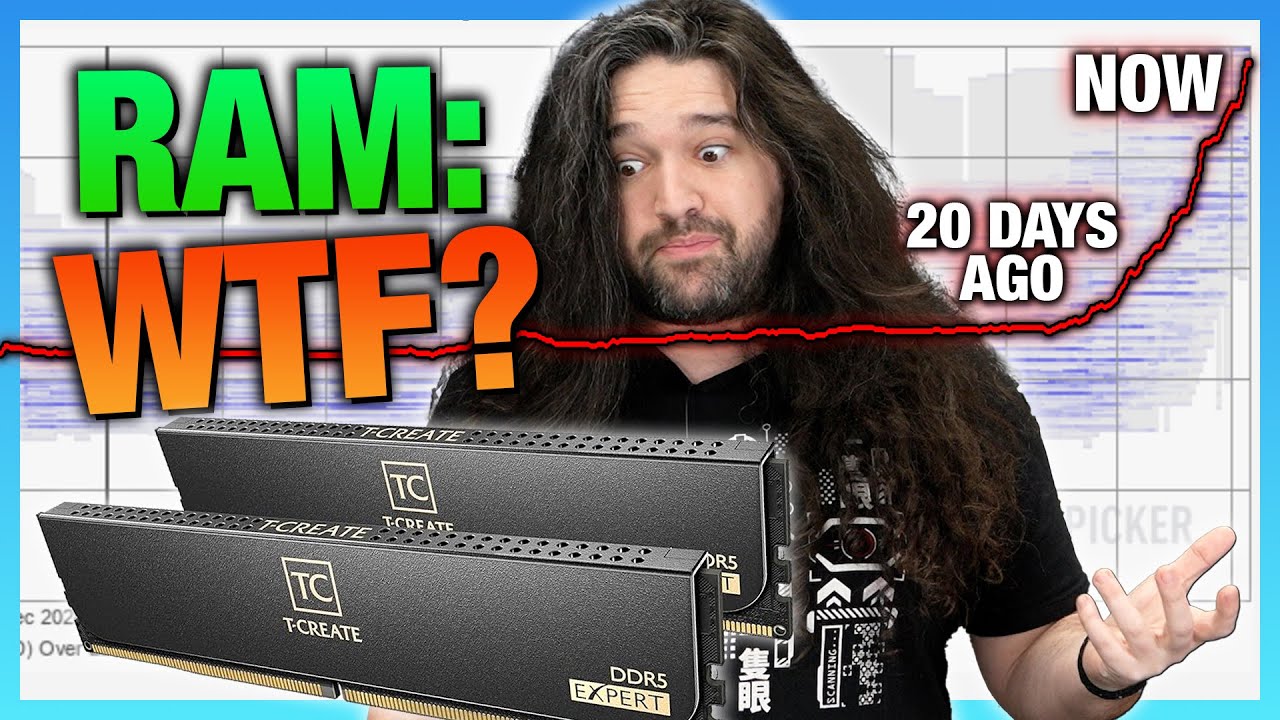
The video explains that RAM prices have surged dramatically due to unprecedented demand from AI and cloud providers, supply cuts by manufacturers, and a shift in focus towards higher-margin server memory, causing consumer RAM costs to nearly double. This trend is expected to persist through 2026, making memory expensive and scarce for consumers, who are advised to be cautious and consider buying used RAM to mitigate costs.
The video discusses the recent dramatic surge in RAM prices, with some memory kits increasing by over 100% within just one to two months. DDR4 and DDR5 prices have nearly doubled, with higher capacity kits seeing increases of $400 to $500. This price inflation is primarily driven by unprecedented demand from AI infrastructure and cloud service providers, which has disrupted the traditional four-year DRAM pricing cycle. Manufacturers have responded by cutting production after a previous overstock during the pandemic, leaving them unprepared for the sudden spike in demand. Consequently, supply is being diverted towards higher-margin server and enterprise memory products, further squeezing the consumer market.
DDR4 prices have been particularly affected due to its production winding down and continued demand from both consumers and servers. The video highlights specific price increases for popular kits, showing that DDR4 has experienced even higher percentage increases than DDR5. Spot prices for DDR4 are currently higher than DDR5, reflecting the scarcity and end-of-life status of DDR4. Meanwhile, DDR5 prices have risen proportionally across different speeds and capacities, indicating that no segment of the market is immune to the price hikes. This trend is expected to continue as manufacturers prioritize server and high-bandwidth memory (HBM) production.
The video also delves into the volatile and historically cartel-like nature of the DRAM market, which has seen price fixing and supply manipulation in the past. After the COVID-19 pandemic induced a short-lived surge in demand, manufacturers cut production drastically, leading to the current supply shortage. The market is now heavily influenced by large cloud service providers and AI companies, which command a significant portion of global DRAM output. This shift has resulted in preferential supply for server memory at the expense of consumer products, driving prices even higher.
Looking ahead, industry analysts project that DRAM prices will remain elevated or continue rising through 2026, fueled by ongoing AI infrastructure expansion and server memory demand. NAND flash memory for SSDs is also expected to follow a similar price trajectory due to increased enterprise demand and limited investment in new supply. The video notes that these trends will impact the entire PC industry, including GPUs, with rumors of product delays and price increases linked to memory shortages. Consumers face a challenging market with little control over pricing or supply.
In conclusion, the video advises consumers to be cautious when purchasing memory, as prices are unpredictable and likely to stay high for an extended period. Buying used RAM is suggested as a potential way to save money, as it is generally reliable compared to other used components. The video emphasizes that the current market dynamics are largely driven by corporate demand and profit prioritization, leaving consumers at a disadvantage. The overall outlook is bleak for affordable memory in the near future, with little indication that prices will drop significantly anytime soon.