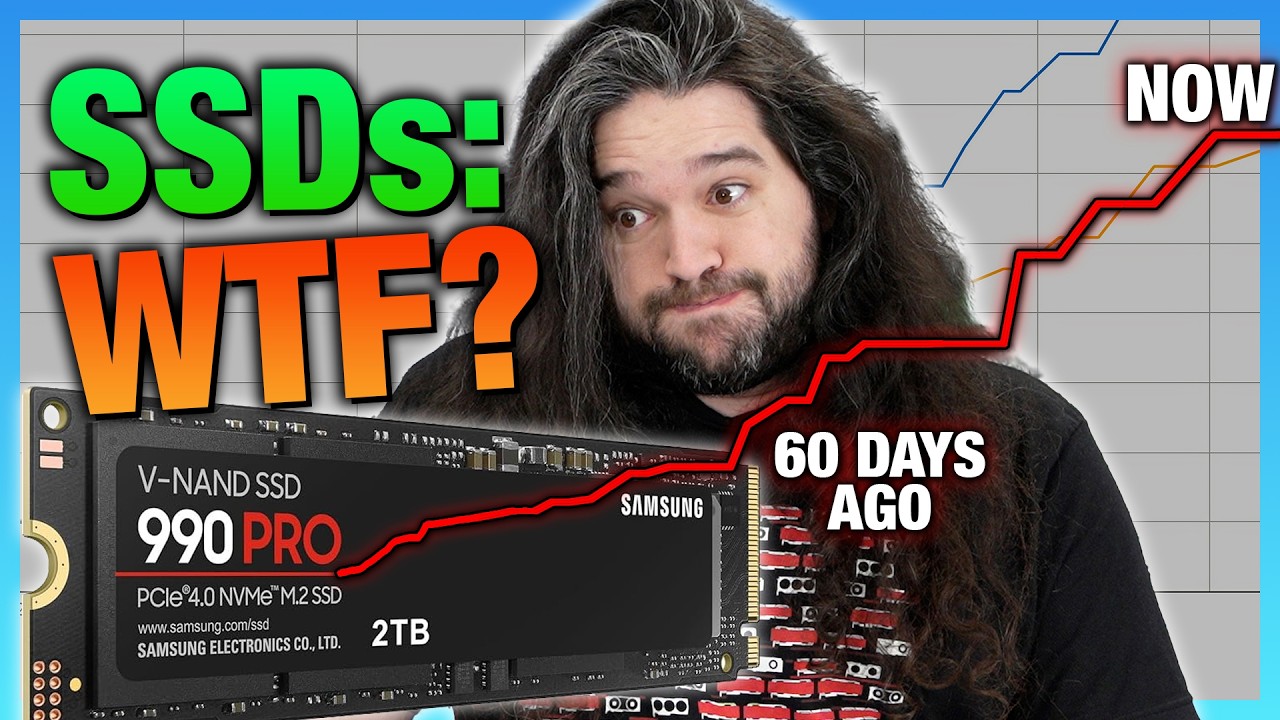
The video discusses the sharp increase in SSD prices driven by a combination of factors including supply shortages, increased demand from data centers, and manufacturers’ strategic production decisions. NAND flash memory spot prices, particularly for 512 Gbit TLC modules, have surged nearly ninefold in six months, outpacing even the recent spikes in DDR5 RAM prices. This price surge is starting to affect consumer SSD pricing, with popular 2TB SATA and NVMe SSDs nearly doubling or more in cost since late 2025. The shortage is compounded by a simultaneous hard drive scarcity, pushing data centers to shift towards SSDs, which further tightens supply.
A key driver behind the shortage is unprecedented demand from AI and cloud data centers, with companies like Nvidia, Microsoft Azure, and AWS purchasing massive quantities of enterprise-grade SSDs to support AI server deployments. For instance, Nvidia’s new Vera Rubin server solution requires enormous additional NAND storage, projected to represent a substantial share of global NAND demand by 2027. Manufacturers are prioritizing production of higher-margin enterprise SSDs over consumer products, deliberately cutting output to maintain profitability amid soaring demand. This echoes past behavior seen in the DRAM market, where suppliers manipulated supply to sustain high prices.
The NAND flash market is dominated by a few major manufacturers—Samsung, Micron, SK Hynix, Kioxia, and Chinese newcomer YMTC—who collectively control the vast majority of production. Despite YMTC’s growing presence potentially increasing competition, established players have reduced wafer output in 2026 compared to 2025, partly to counter low-priced Chinese NAND and protect profit margins. This reduction in supply during a period of growing demand exacerbates price increases, affecting both enterprise and consumer SSD markets. YMTC-based SSDs have also seen price hikes, though they remain somewhat more affordable compared to competitors.
Consumer SSD prices have lagged behind spot price surges but are beginning to catch up, with average price increases of over 100% in recent months for popular models. SATA SSDs have also risen substantially, though less dramatically than NVMe drives. Hard drives have seen a more modest price increase but remain affected by supply constraints and high demand from data centers. The overall market trend suggests that SSD prices will likely continue to climb before stabilizing, mirroring the trajectory seen previously in the RAM market.
In conclusion, the video highlights that the current SSD price surge is driven by a combination of increased enterprise demand, supply shortages, and manufacturers’ strategic production cuts aimed at maximizing profits. The situation is expected to worsen before improving, with consumer prices eventually reflecting the severe spot price increases already observed. The video also notes the limited options for consumers, advising awareness of the market trends and promising ongoing monitoring and updates. The underlying theme is a repeat of past industry patterns where a few dominant players influence supply to maintain profitability amid growing demand.