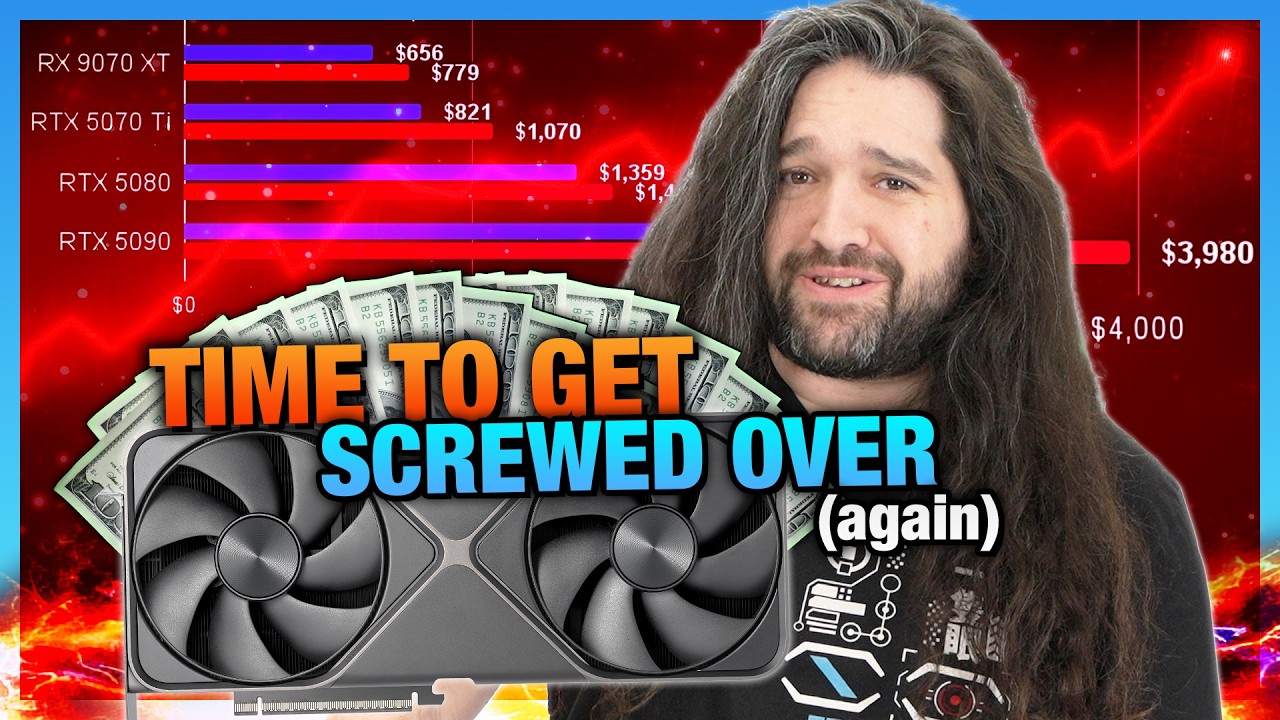
The video provides an in-depth update on the current state of GPU pricing and availability, highlighting the severe impact of the ongoing global DRAM shortage. Since October, the price of GDDR6 VRAM has surged dramatically, with 8 gigabits rising from $2.85 to $8.87, causing the cost of 8 gigabytes of VRAM to jump by nearly $48 in just over three months. This increase has inevitably been passed on to consumers, resulting in GPU prices climbing well above their Manufacturer’s Suggested Retail Prices (MSRP). Notably, GPUs with higher VRAM capacities, especially those with 16 GB or more, have experienced disproportionately higher price hikes, averaging 44.3% over MSRP compared to 23% for GPUs with 12 GB or less.
Availability of GPUs has also worsened significantly. The total number of in-stock listings on Newegg dropped from 180 to 105, with zero listings available at MSRP, a sharp decline from 62 listings at MSRP just a few months prior. The shortage impacts all major manufacturers, including Nvidia, AMD, and Intel, with Intel’s Battle Mage GPUs suffering from extremely limited market presence. Nvidia’s rumored allocation strategy for Q1 2026 prioritizes lower-memory models, likely reflecting supply constraints and a strategic focus on more affordable SKUs. Additionally, supply to the Chinese mainland market is expected to decrease by about 30%, indicating broader market challenges.
A striking example of the price inflation is the Nvidia RTX 5090, whose in-stock average price has nearly doubled its MSRP, reaching close to $4,000. This card’s high VRAM capacity (32 GB of GDDR7) and demand from professional and AI workloads contribute to its steep price increase. The video also discusses how Nvidia has artificially segmented its GPU lineup by memory capacity, limiting most gaming GPUs to 16 GB or less, reserving higher VRAM for workstation and data center cards. This segmentation exacerbates the shortage and price increases for high-end consumer GPUs, forcing many professional users to pay premium prices for necessary VRAM capacity.
The broader economic implications are also addressed, with the video emphasizing how the GPU price surge disproportionately hurts consumers who can least afford it. While large corporations and AI companies can purchase millions of GPUs for data centers, individual consumers face rising costs and dwindling availability, especially for affordable, mid-range GPUs. The video criticizes the AI industry’s massive demand for GPUs, which strains supply chains and drives prices up across the board, affecting not just gamers but also professionals and everyday electronics users. This situation reflects wider economic inequalities where those with the least resources bear the heaviest burdens.
In conclusion, the video suggests that GPU prices and availability are unlikely to improve soon. Relief depends on either a significant collapse in AI-related GPU demand or the long-term increase in memory production capacity, which is years away due to the complexity of building new fabs. Until then, consumers can expect continued price inflation and limited supply, with the worst effects hitting lower-end and mid-range GPU buyers. The video encourages viewers to stay informed and acknowledges the challenges faced by the industry, while expressing frustration at the systemic issues driving these market dynamics.