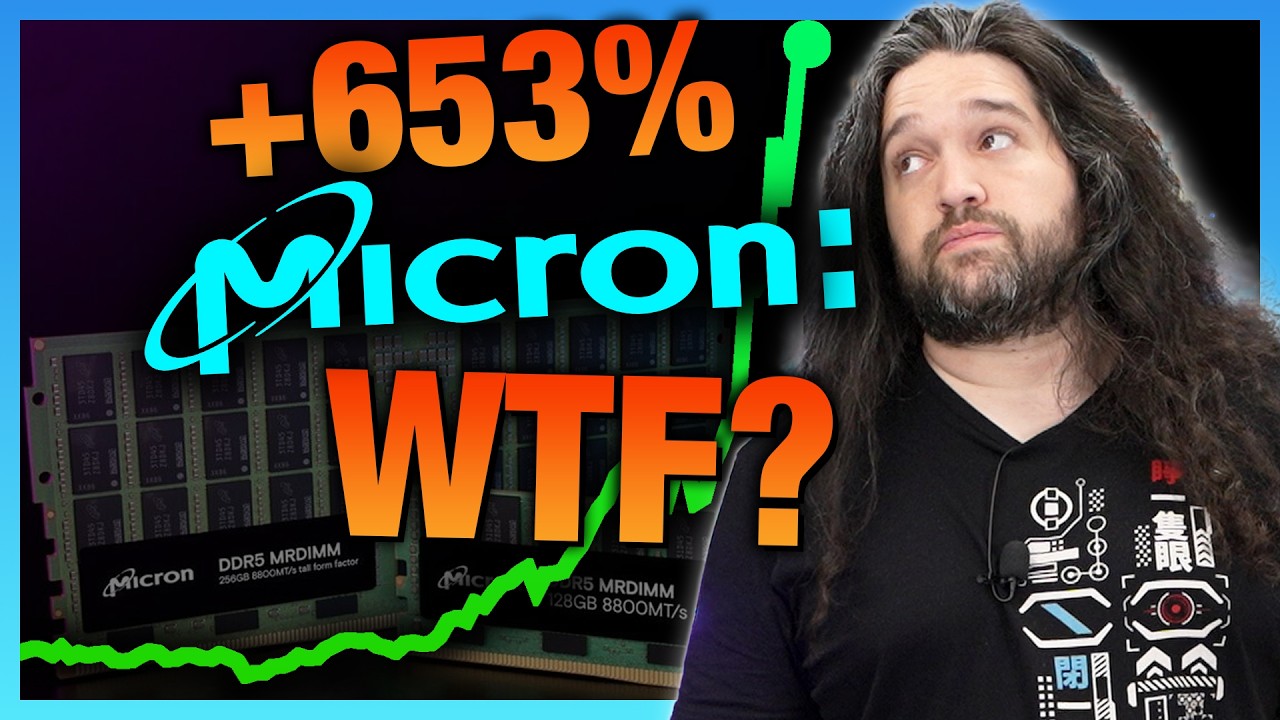
Micron, a leading memory supplier and key partner to Nvidia, has reported staggering financial growth, with overall revenue increasing by 346% year-over-year and 74% quarter-over-quarter. Particularly notable is the 653% growth in data center revenue, driven largely by AI demand, which continues to outstrip memory supply. Despite this success, Micron is heavily reliant on taxpayer subsidies to fund expensive new fabs in high-tax states like Idaho and New York. The company has also significantly increased consumer product margins to 86%, reflecting higher prices for RAM and SSDs, which directly impacts consumers facing rising costs amid a global memory shortage.
The memory shortage, exacerbated by AI-driven demand, is predicted by Micron and other major manufacturers like Samsung and SK Hynix to persist beyond 2027. This scarcity has led to cartel-like pricing behavior, with companies locking in long-term contracts with major clients such as Nvidia, Apple, and others, often under “take or pay” terms that guarantee revenue and high margins for Micron. Smaller buyers and memory module makers struggle to secure supply, leading to increased prices for computers, gaming consoles, and other consumer electronics. Micron’s strategy increasingly targets high-end devices, further pushing affordability out of reach for average consumers.
Micron has also deepened its ties with the AI ecosystem, investing strategically in companies like Anthropic and collaborating closely with Nvidia to align roadmaps and supply chains. The company has locked in strategic agreements with 16 large customers, ensuring steady revenue streams and reducing the cyclical volatility historically associated with the memory industry. These agreements, some lasting up to five years, cover a significant portion of Micron’s DRAM and NAND supply, underscoring the company’s focus on long-term stability and profitability in the AI-driven market.
Despite its success, Micron faces criticism for its political lobbying efforts and the social impacts of its business practices. The company has hired lobbying firms with ties to the Trump administration to advance its interests and benefits from substantial government subsidies. Meanwhile, the memory shortage and rising prices contribute to inflationary pressures that disproportionately affect everyday consumers. The video highlights the limited options for consumers, suggesting engagement in local politics and minimizing AI usage as potential, albeit small, ways to influence the industry’s direction.
Looking ahead, Micron plans to expand production capacity with new fabs in the US, India, Singapore, Taiwan, and Japan, though these facilities will take years to come online. The company anticipates continued strong demand from AI data centers, which will keep memory prices high and supply tight. While Micron’s financial outlook remains robust, the broader consumer electronics market faces challenges from these supply constraints. The video concludes by encouraging viewers to stay informed and involved in local decision-making processes related to data centers and technology infrastructure to help mitigate some of the impacts on consumers.