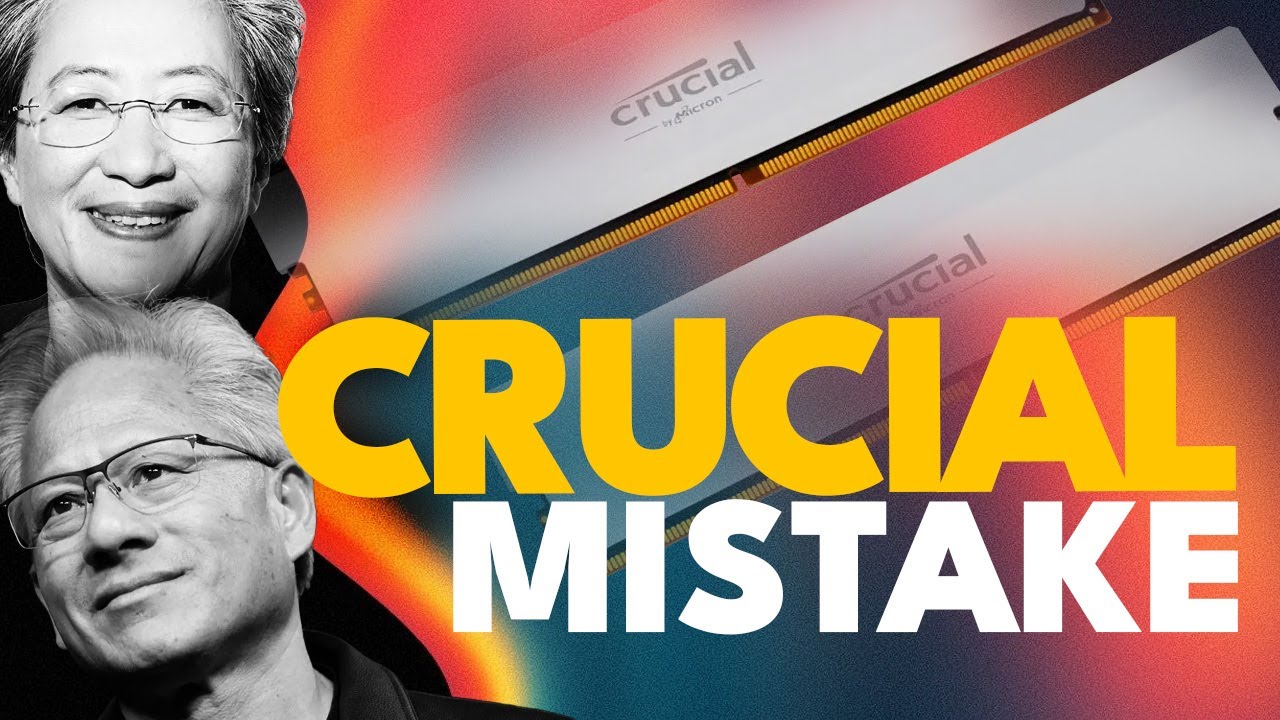
The video explains that Micron’s decision to retire its consumer memory brand Crucial is a strategic move driven by the booming AI and data center markets, rather than a sign of abandoning consumers, as the consumer PC and smartphone markets are currently stagnant. It debunks conspiracy theories about memory shortages, highlights the ongoing importance of consumer markets for AI’s success, and advises viewers to stay informed and consider timely upgrades amid high memory prices.
The video addresses the recent news of Micron Technology retiring its consumer-focused brand, Crucial, which has caused concern among hardware enthusiasts. The host explains that Micron’s decision is driven by the booming demand for memory in AI and data centers, which offer far higher profit margins than the stagnant consumer market. Micron has been focusing on high-bandwidth memory (HBM) for data centers and AI applications, and exiting the consumer segment allows them to allocate resources more efficiently. This move is not unique to Micron but reflects broader industry trends influenced by geopolitical factors and shifting market priorities.
The video emphasizes that the consumer PC and smartphone markets are currently stagnant or even contracting, with minimal growth in GPU and CPU shipments and flat PC sales despite the Windows 10 end-of-support deadline. This lack of growth means that the consumer memory market is not a major driver of revenue for companies like Micron. The host argues that the hysteria around Micron’s exit from the consumer memory market is misplaced, as the company is pivoting to more lucrative opportunities rather than abandoning consumers outright.
A key point made is that AI’s future profitability depends heavily on consumer adoption of PCs and mobile devices, meaning that starving the consumer market of memory would be counterproductive. The video also debunks conspiracy theories suggesting that memory companies are colluding to force consumers into cloud-only computing models. Instead, the memory shortages and price increases are attributed to genuine supply and demand imbalances caused by unprecedented AI infrastructure spending, geopolitical tensions, and limited production capacity.
The host also explores how AI can create new revenue streams by enabling advanced product recognition and affiliate marketing within video content, highlighting the potential for platforms like YouTube to monetize consumer interest in a frictionless way. This underscores that consumer markets remain essential for AI’s commercial success, reinforcing why semiconductor companies cannot fully abandon consumers. The video predicts that memory prices will remain high for at least the next two years, advising consumers to upgrade now if needed but also to consider that current hardware is likely sufficient for many workloads.
In conclusion, the video reassures viewers that Micron’s exit from the consumer memory market is a strategic business decision aligned with broader industry trends rather than a sinister plot. Other major players like Samsung and SK Hynix are unlikely to follow suit completely, given their strong ties to consumer electronics. While consumers face higher prices and tighter supplies, the market is not collapsing, and the future of PC ownership remains intact. The host encourages viewers to stay informed, consider timely upgrades, and focus on realistic expectations rather than succumbing to hysteria.