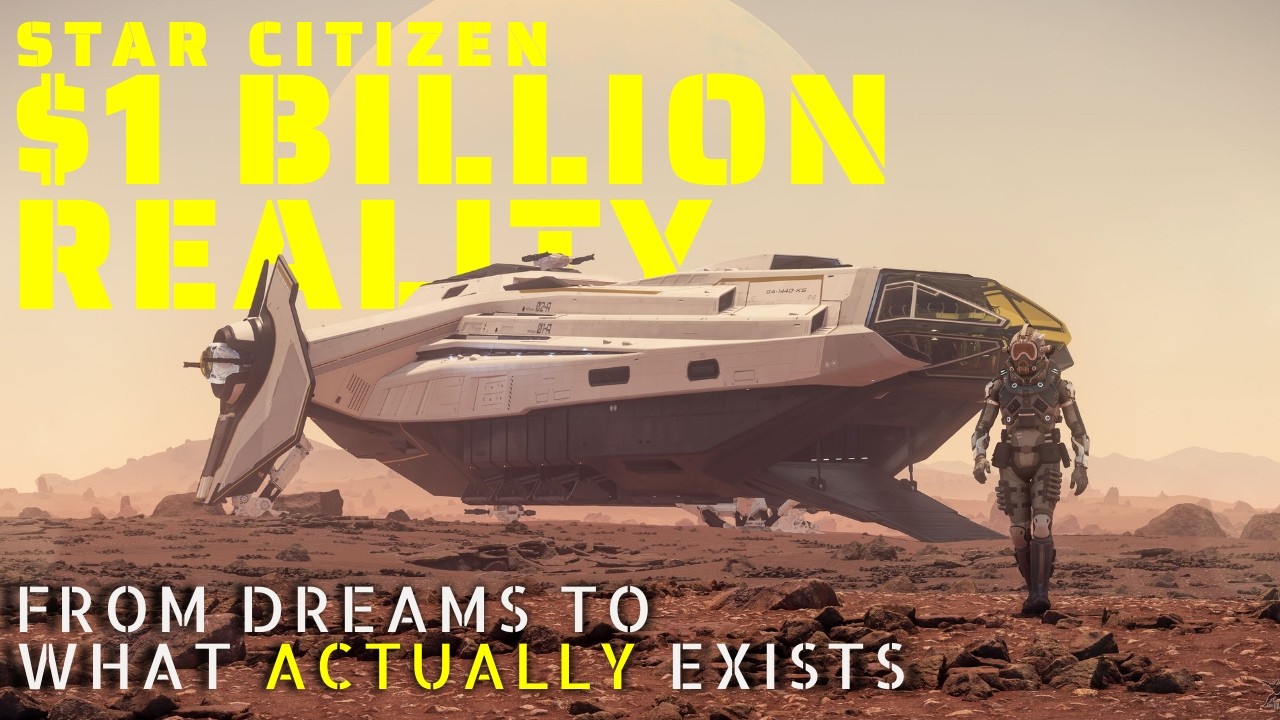
Star Citizen, despite raising over a billion dollars and facing significant delays, has evolved far beyond its original 2012 Kickstarter vision. The game available today is not just graphically superior but incorporates groundbreaking technology that was nonexistent when the project began. Unlike the initial pitch of a straightforward space combat game with multiplayer features, Star Citizen has grown into a complex, seamless universe with real-time planetary landings, dynamic weather, and expansive playable surfaces far exceeding early promises. The community actively chose to expand the scope through referendums, understanding that this would delay the release but ultimately result in a more ambitious and innovative game.
The development journey has been fraught with challenges, including missed deadlines and technical hurdles, but these are outweighed by the technological milestones achieved. Features like server meshing, once deemed impossible, now allow players to traverse multiple star systems seamlessly without loading screens or disconnections. This technology significantly increases player capacity per instance, enabling emergent gameplay and a truly persistent universe. The game’s alpha already offers rich interactive experiences where player choices and interactions create unique stories, showcasing that Star Citizen functions as a game despite criticism.
Star Citizen’s gameplay depth has expanded well beyond the original arcade-style space combat concept. Activities such as mining, salvage, and cargo hauling involve nuanced mechanics requiring skill and strategic decision-making. The simulation aspect extends to player-built infrastructure like modular space stations, which serve as organizational hubs and can be contested by rival groups, fostering dynamic player-driven content. Additionally, NPC-run guilds provide structured career paths and progression, integrating lore and social simulation that add layers of immersion and long-term engagement.
The game’s narrative and progression systems are also evolving, with plans for a guided PvE storyline to help new players acclimate and provide meaningful goals. This contrasts with the current open-world alpha, which can feel overwhelming to newcomers. Death and crime mechanics introduce realistic consequences, enhancing the stakes and player investment. The development focus has shifted toward polishing these interconnected systems to deliver a cohesive and immersive MMO experience that balances freedom with direction, catering to a wide range of player preferences.
Ultimately, Star Citizen stands as a unique project attempting to merge multiple game genres into one seamless universe, which explains its lengthy development time and complexity. While it faces ongoing criticism and bugs typical of an alpha state, the progress made is substantial and measurable. The game already offers experiences unavailable elsewhere, and the roadmap toward version 1.0 reflects a mature vision grounded in achievable technology. Players and critics alike are encouraged to judge Star Citizen by its current realities and future potential rather than outdated expectations from its initial pitch.