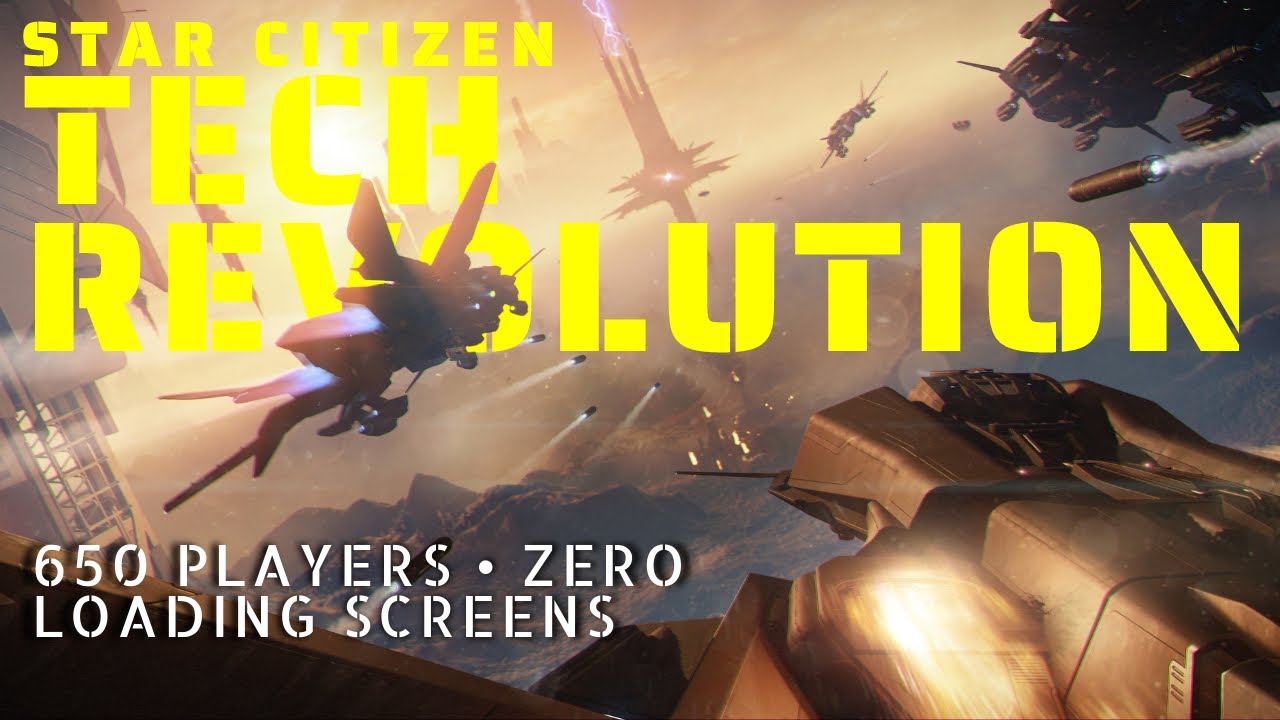
In 2025, Star Citizen achieved a groundbreaking technological milestone that experts once deemed theoretically possible but practically impossible: large-scale dynamic server meshing combined with persistent entity streaming. This innovation allows hundreds of servers to work together seamlessly, enabling up to 650 players to coexist in the same universe without crashes, loading screens, or instance transitions. Unlike traditional multiplayer games that rely on isolated instances with limited player counts and frequent loading, Star Citizen now operates as a single continuous universe where players can move freely across planets and star systems without interruption. This shift represents a fundamental architectural overhaul of multiplayer game design rather than mere optimization.
At the core of this achievement is the reconstruction of the Star Engine, which has evolved far beyond its CryEngine origins through over a decade of custom development. The engine now employs a 64-bit large world coordinate system, solving long-standing floating-point precision errors that plagued large-scale simulations. This enables millimeter-precise physics on objects inside ships traveling at significant fractions of light speed across vast solar systems. Additionally, Star Citizen features advanced rendering systems such as volumetric cloud physics that dynamically affect ship handling based on altitude and atmospheric conditions, all simulated in real time alongside hundreds of other players engaging in diverse activities.
The current implementation, known as static server meshing, assigns specific geographic areas like planets or stations to dedicated servers, vastly improving stability and player capacity. However, the ultimate goal is dynamic server meshing, which will automatically scale server resources in real time based on player density and computational demand. This elastic infrastructure means that when large player gatherings occur—such as a 200-player event at a jump town—the system will spin up additional servers to handle the load and scale back down afterwards, all without disrupting gameplay. This technology ensures persistence: ships, cargo, and environmental changes remain exactly as players left them, even across logouts and server transitions.
The replication layer synchronizes all entities, physics states, and player interactions across multiple servers and data centers with remarkable precision and speed. This means that actions like damaging another player’s ship are accurately reflected across the universe in milliseconds. While some players debate whether the game is fully finished or optimized, the critical point is that the foundational technology is now live and functional. Star Citizen is no longer trying to catch up to the industry; it is setting a new standard that other games will strive to replicate for years to come. The era of true large-scale, persistent multiplayer universes has arrived.
For players, this technological leap changes how the game should be approached strategically. Persistence is now real—cargo won’t disappear, ships remain where left, and player-driven events have lasting consequences. As player populations increase, especially in contested systems like Pyro, understanding server meshing and replication mechanics offers tactical advantages. Establishing presence, building trade routes, and controlling choke points early will be crucial. Ultimately, Star Citizen’s 2025 breakthroughs mark a turning point in gaming history, delivering a living, breathing universe where player actions truly matter, and the future of gaming is already unfolding before our eyes.