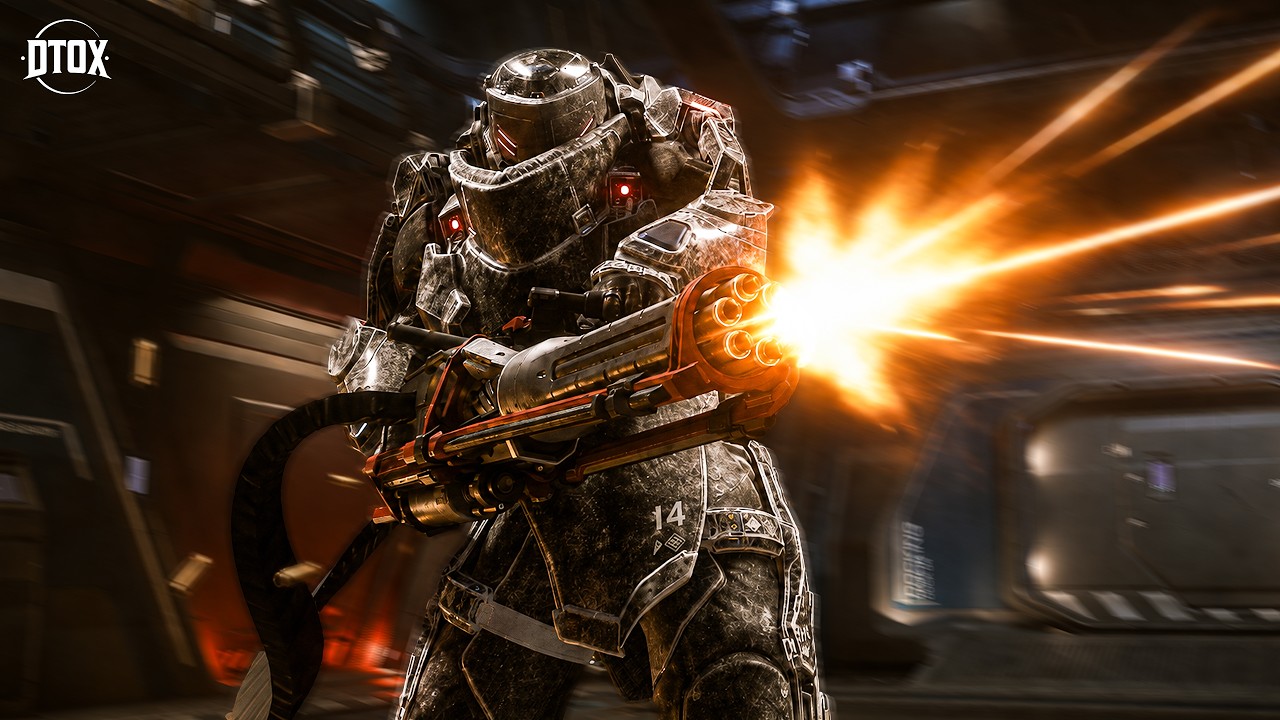
Star Citizen recently introduced actual power armor to its 4.9 test servers, featuring a heavy suit equipped with a beltfed heavy machine gun and an ammo backpack, embodying the fantasy of a space marine. However, the armor was pulled from the upcoming 4.9 patch, prompting questions about its readiness and role in the game. The suit is used by Ninetailes NPC guards defending bunkers, requiring players to complete contracts and locate NPCs wearing the armor to acquire it. Despite some initial difficulties and typical Star Citizen bugs during the process of obtaining and equipping the suit, the armor impressed with its aesthetic and the feeling of being a “walking tank.”
In practical use, the power armor excels in tight corridors and controlled environments, such as bunkers, where its heavy firepower and durability shine against AI enemies. However, its advantages quickly diminish in open environments or PvP scenarios. The suit is slow, large, and an easy target, lacking EVA capabilities which limits its mobility and offensive potential during boarding missions. Additionally, it cannot equip healing devices, making the wearer heavily reliant on team support. While dominant against predictable AI, the armor struggles against human players who use cover and tactics to avoid direct confrontation.
Damage testing revealed that the armor, while visually tanky, does not significantly reduce incoming damage, with players able to take it down relatively quickly. It lacks the resilience expected from “super heavy” armor and does not behave like ship armor that requires specific damage thresholds to penetrate. The suit also cannot survive high drops, unlike some other armor types in the game. These limitations contribute to the armor feeling more like a novelty item than a practical choice for most missions or combat situations at this stage.
The most promising potential for the power armor lies in ship defense and boarding scenarios, where its heavy firepower and tankiness could help control choke points and support infantry pushes. The armor could become a valuable asset in coordinated team play, especially if future updates introduce supportive roles, medics, or specialized equipment. The upcoming Legionnaire concept ship and re-release of the Siege of Orison mission with instancing might provide a better environment to showcase the suit’s capabilities and justify its existence within Star Citizen’s evolving gameplay.
Overall, while the power armor impresses with its design, sound, and initial fun factor, it currently lacks practical application and balance for widespread use. It needs stronger defensive properties, better mobility options, and a clearer role to move beyond being a cool but niche feature. The developers appear to be aiming for future variants and uses, including anti-vehicle weaponry and AI boss encounters, which could enhance its relevance. Until then, the suit remains an intriguing but underdeveloped addition to Star Citizen’s arsenal, with its true potential yet to be realized.