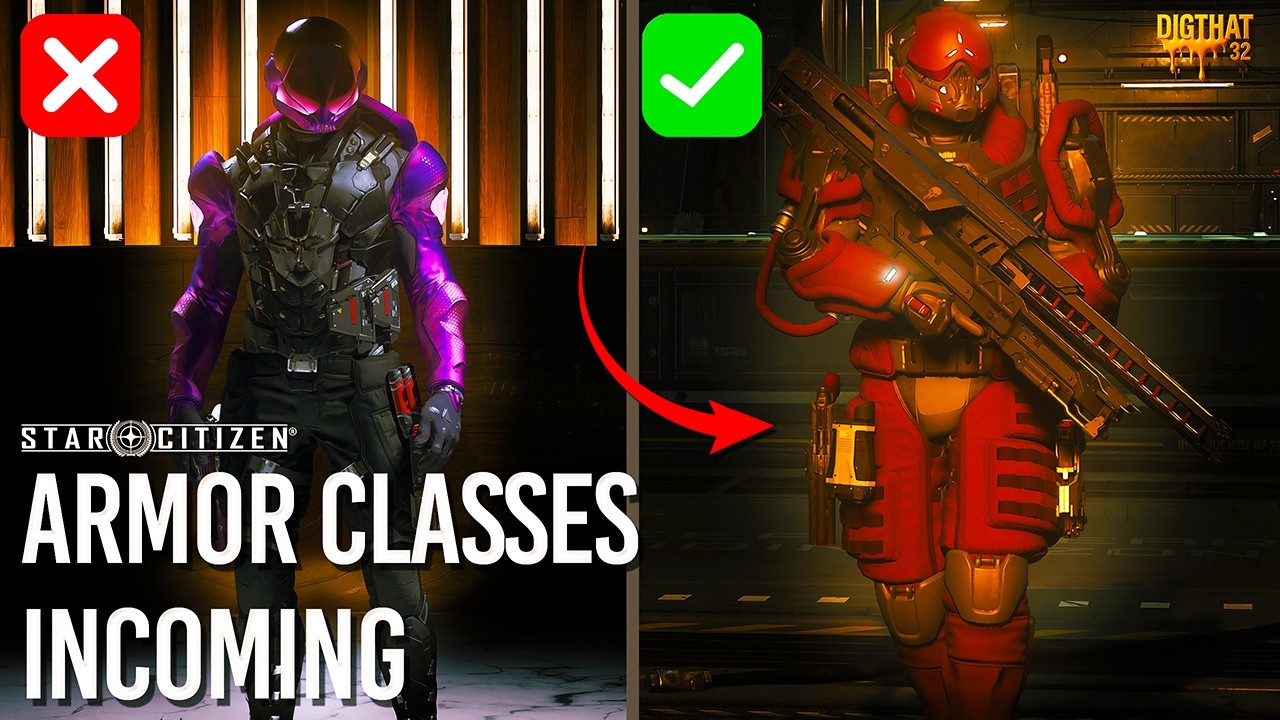
The upcoming FPS combat overhaul in Star Citizen introduces significant changes to armor, combat mechanics, and player movement. Armor will now have more meaningful stats, with individual pieces contributing unique benefits, such as stealth suits lowering emissions piece by piece and full suits granting specialized perks. Medium and heavy armor will see increased damage mitigation but will also impact ship handling by reducing input responsiveness and lowering G-force tolerance, making pilots more susceptible to blackouts. Conversely, flight suits will improve G-force resistance. The weight system is being refined so that heavy legs paired with heavy torso armor reduce overall mass penalties, discouraging the previous meta of mixing heavy torsos with light legs for speed.
Armor classes are being diversified to fit different playstyles and roles. Racing flight suits offer high environmental and G-force resistance but little protection and no EVA capability, while combat flight suits provide EVA and moderate damage mitigation. FPS combat armor focuses on damage absorption but increases radar visibility, with stealth armor reducing emissions and sound. Specialized armors include hunter armor with EVA, medical armor that can ping player health, engineer armor that reveals component status, and resource specialist armor that scans minables from afar. This variety encourages players to craft and carry multiple suits, facilitated by upcoming suit lockers that allow quick swapping between armor sets depending on the situation.
Several gameplay mechanics are also evolving. EVA thrusters are being removed from undersuits and integrated into flight suits or torso armor, with EVA backpacks providing additional fuel and oxygen. Combat clothing will gain damage mitigation benefits, useful in areas where armor is prohibited. Audio improvements will make player movement and armor weight more immersive, with heavy armor sounding weighty and stealth suits being quiet. The crossbow weapon is expected to release this year, alongside new weapons including real-world inspired firearms and improved med gun functionality that lets players switch back to weapons after healing.
The FPS combat experience will be smoother with new animations for sprinting, firing, and melee combat, as well as better weapon slot consistency. Players will be able to aim and shoot over railings properly. The downed state has been revamped to a “down but not out” mode, allowing crawling and self-revival with the med pen, which will also be used for reviving others. AI combat behavior has been overhauled to support these changes. Weapon jamming and overheating mechanics currently in Squadron 42 are planned for future inclusion in the Persistent Universe, along with swimming and improved climbable environments.
A major highlight is the introduction of super heavy armor, which offers superior protection beyond heavy armor but comes with significant drawbacks. Med pens cannot penetrate it, and small arms are less effective, resulting in longer time-to-kill. Players in super heavy armor will likely wield large two-handed weapons, sacrificing self-healing and mobility. This suit may represent the long-anticipated “Titan” class, capable of dominating infantry and posing threats to small ships, but balanced by vulnerabilities such as weak spots and limited interior movement. Overall, these changes aim to deepen FPS combat strategy and role specialization, with more details expected soon in the weekly newsletter.