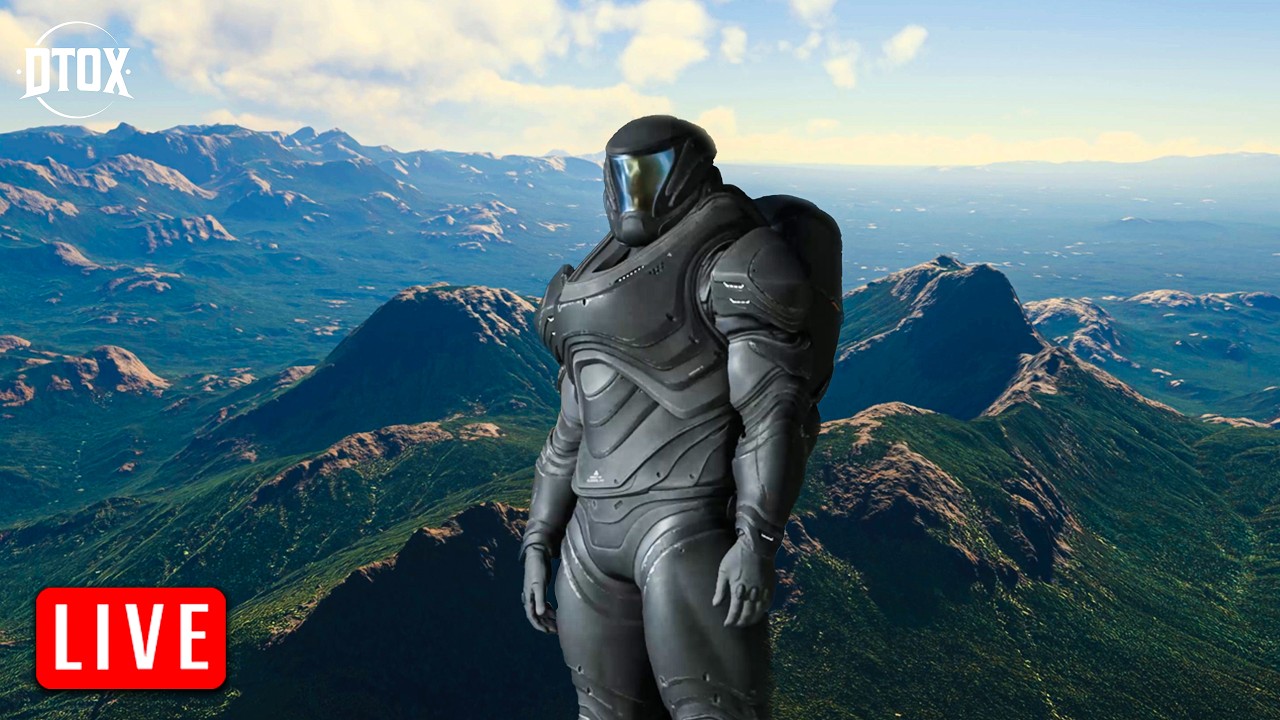
The livestream began with technical difficulties causing frequent stream stuttering and buffering issues on YouTube, frustrating both the streamer and viewers. Despite these interruptions, the discussion focused on Star Citizen’s upcoming roadmap update, particularly the new Genesis Planet Tech V5 and the Nyx planetary system. The streamer highlighted the procedural generation improvements in Genesis, where biomes and planetary features are created based on physical datasets such as height maps, humidity, and soil types, allowing for more realistic and diverse environments. This new tech promises better performance by leveraging GPU spawning and improved asset placement, such as rocks and grass, oriented naturally with gravity, enhancing immersion.
Nyx One was described as the “hero planet” of the system, featuring varied biomes including rocky mountains, forests, wetlands, and swamps, though some features like rivers and dynamic weather might not be fully implemented initially. The streamer expressed cautious optimism about the new tech’s performance, expecting it to run similarly to existing planets but acknowledging potential issues at launch. There was also discussion about the possibility of a base-building tech preview arriving by the end of the year, tied to the Staritect system, which aims to populate planets with procedurally generated settlements, outposts, and mission hubs to enrich planetary gameplay.
Staritect was presented as a major upcoming feature, designed to scale planetary locations intelligently and logically, clustering related sites such as mining outposts near resources and unlawful bases isolated in lawless areas. This system will enable a more dynamic and populated universe, with mission packs generating localized objectives to keep players engaged planet-side. However, the streamer remained skeptical about how much content and polish would arrive with the 4.11 patch, noting the ambitious scope and historical delays. The mission system integration with Staritect is expected to initially focus on simple maintenance and combat missions, with hopes for more meaningful gameplay emerging over time.
The latter part of the stream shifted to a patch tier list review, analyzing past Star Citizen patches from 3.13 through 3.20. The streamer evaluated patches based on content delivered, functionality, and performance, highlighting notable events such as Jumptown 2.0 and the introduction of looting mechanics. While some patches were praised for their innovations and stability (e.g., 3.17 received an S-tier for desync fixes), others like 3.18 were criticized heavily for widespread login and performance issues, earning an F-tier. The streamer emphasized the cyclical nature of Star Citizen’s development, with periods of low community sentiment followed by hype around major upcoming features.
Throughout the stream, there was a candid and often cynical tone about the state of Star Citizen’s development, balancing excitement for new technology like Genesis and Staritect with frustration over persistent bugs, performance problems, and feature delays. The streamer acknowledged the progress made over the years but warned viewers to manage expectations, especially given the ambitious roadmap and history of setbacks. The session concluded with gratitude toward the community for their patience and support, a reminder of the challenges of live streaming, and encouragement to check out other content creators before signing off.