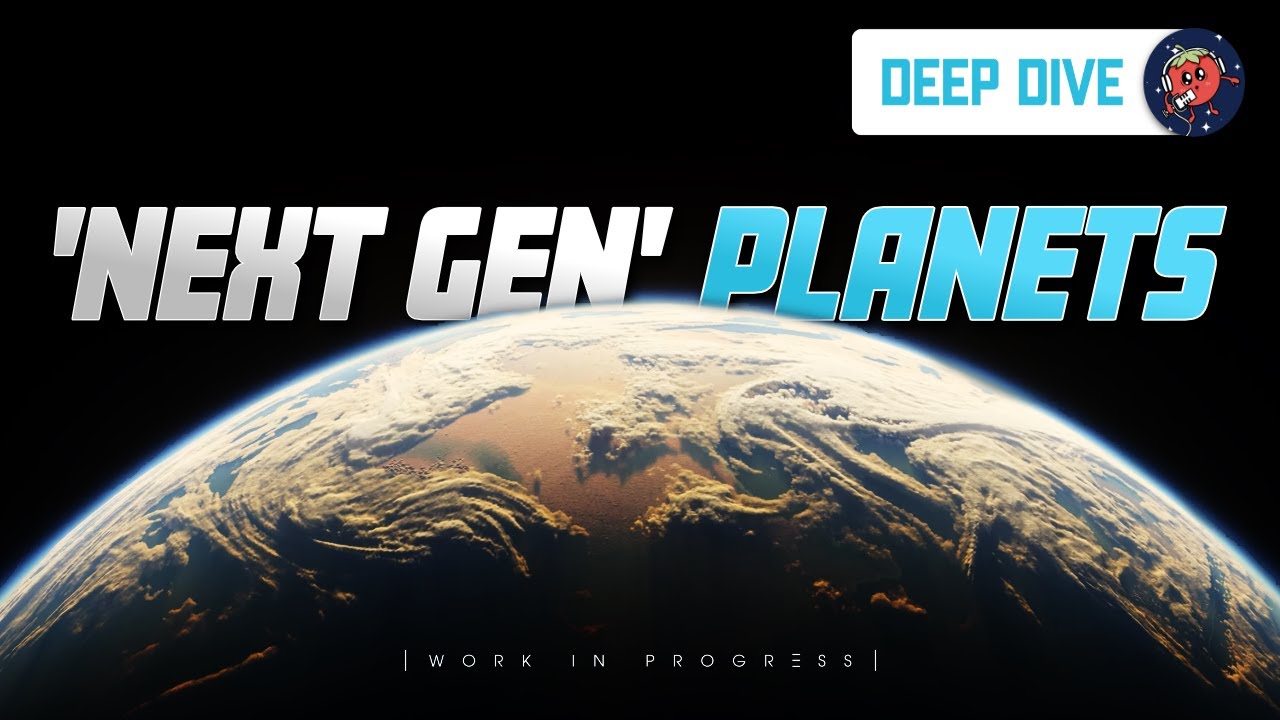
The video provides an in-depth look at Star Citizen’s upcoming planetary technology update, known as Planet Tech V5, which is part of a broader initiative called Genesis. Although this update is expected to arrive next year, the focus is on the improvements being made to planets, starting with Nyx 1. The developers at Cloud Imperium Games emphasize a paradigm shift in how biomes are created, moving away from artist-crafted zones to procedurally generated environments based on physical data sets such as height maps, humidity, temperature, soil type, and erosion. This approach aims to make planets feel more natural and believable, enhancing the sense of exploration and discovery for players.
One of the key advancements discussed is the introduction of medium tiles that add a new layer of terrain detail, improving feature complexity at the ground level. These tiles intelligently apply height and erosion data to create more realistic landscapes, including cliffs and steep slopes that were previously difficult to render convincingly. Additionally, rock scattering has been overhauled with a new algorithm that places rocks logically based on geology rather than randomly, contributing to more immersive and believable environments. This also ties into improved mining prospects, suggesting future gameplay enhancements related to resource gathering.
Vegetation has seen significant improvements as well, with the ability to spawn vast quantities of grass and ground cover using GPU spawning techniques. Grass blades are now gravity-aligned and shaded more realistically, resembling fur or hair rather than flat surfaces, which enhances both close-up and distant views. The new system also supports complex terrain shapes, allowing grass and other flora to conform naturally to the environment. The video highlights the introduction of diverse biomes on Nyx 1, including forests, grasslands, wetlands, and notably, swamps, which add variety and atmospheric depth to the planet.
The update also improves how planets appear from orbit by unifying the data used for surface and orbital visuals, ensuring that the colors and features seen from space accurately reflect what players will find on the ground. This is supported by a virtual terrain system that caches and represents terrain at varying scales, enabling complex biome spawning logic to be evaluated efficiently even from great distances. This system is crucial for maintaining visual fidelity and consistency across the massive planetary surfaces in Star Citizen’s persistent universe.
Finally, the video touches on the broader scope of Genesis, indicating that Planet Tech V5 is just the first phase of many improvements to come. Future updates will include enhancements to AI, points of interest, global illumination, ray tracing, audio effects, and dynamic weather systems. While Nyx 1 is now considered habitable and features a social hub at Delmare Levki, the developers hint at further content and outposts to be added. Overall, the video conveys excitement about the technological strides being made to create more immersive, detailed, and lifelike planets in Star Citizen.