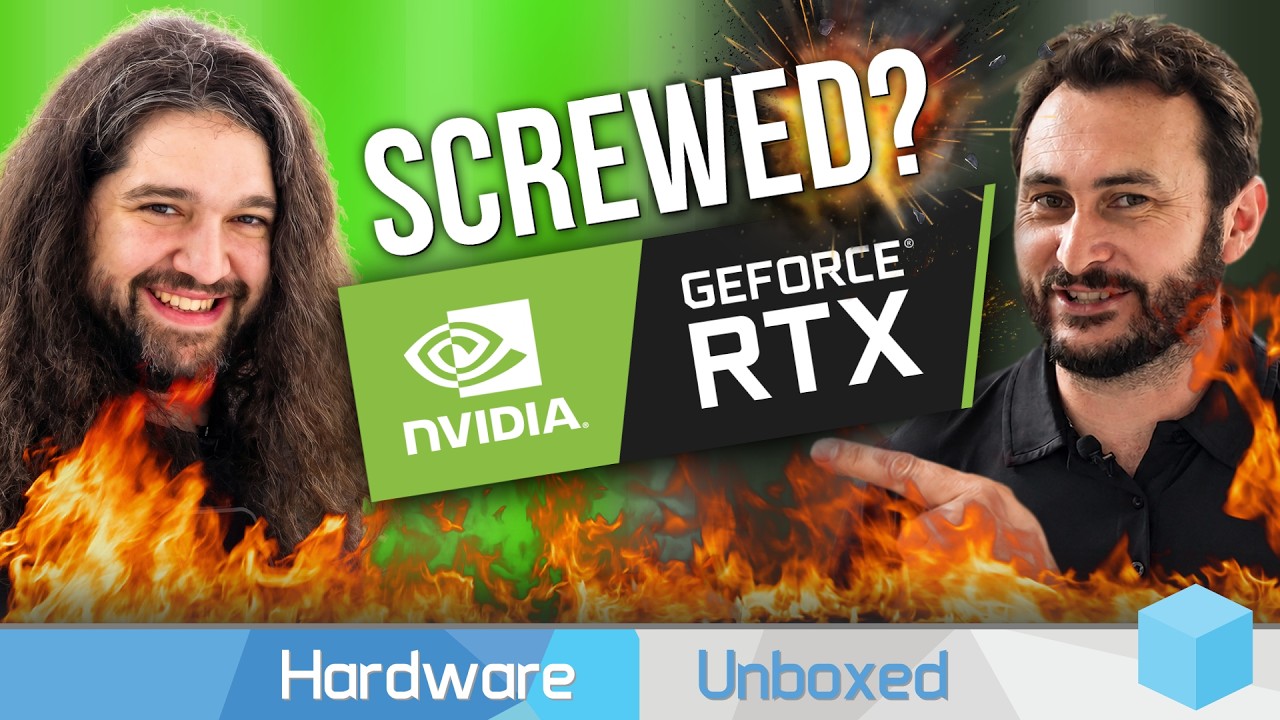
The video discusses the challenges facing Nvidia’s GeForce brand and the broader PC gaming hardware market, highlighting the shift toward AI and data center applications, high GPU prices, and the current limitations of cloud gaming. While Nvidia’s focus and product strategies raise concerns for gamers, there is cautious optimism about future technologies like DLSS 5, though uncertainty remains about the industry’s direction.
The video features a candid discussion between Hardware Unboxed and Gamers Nexus about the current state of the PC gaming and hardware industry, particularly focusing on Nvidia’s GeForce brand. They open by acknowledging the tough situation in the PC DIY and gaming market, noting that while there are still plenty of fun games available, the industry is not catering well to gamers. The conversation touches on the challenges faced by the low-end GPU market, which has been largely abandoned, and the high prices of flagship GPUs like the RTX 5090, which are often purchased for AI and data center workloads rather than gaming.
They explore the shift in Nvidia’s focus from consumer gaming GPUs toward business-to-business (B2B) and AI applications. The speakers highlight how companies like Corsair are trying to capitalize on AI hype despite unclear practical benefits, reflecting a broader industry trend where AI is seen as a lucrative but somewhat nebulous market. This shift raises concerns about the future of gaming-focused hardware, as manufacturers prioritize data center and AI workloads, which are more profitable and less demanding in terms of consumer expectations.
The discussion also examines the viability of cloud gaming services like GeForce Now. One of the hosts shares personal experience testing the service in Australia, finding the latency and gameplay experience poor, especially for fast-paced games like Fortnite. While cloud gaming could theoretically replace high-end local hardware for general computing or slower-paced applications, the current technology does not meet the demands of serious gamers. This leads to skepticism about whether cloud gaming can become a mainstream alternative to owning powerful gaming PCs anytime soon.
The conversation touches on Nvidia’s upcoming DLSS 5 technology, which promises improvements in AI-driven frame generation and gaming performance. However, the release has been delayed, with Nvidia citing the need for a dedicated event to properly unveil it. The hosts express mixed feelings about DLSS 5, with some intrigue but also a sense of weariness given Nvidia’s history of shifting expectations and raising prices. The discussion reflects broader frustrations with how Nvidia and the industry manage product launches and market communication.
In conclusion, the hosts agree that while Nvidia’s GeForce brand itself is not “screwed,” the gamers who rely on it are facing significant challenges. The industry’s pivot toward AI and data center markets, combined with the high cost of GPUs and the limitations of cloud gaming, paint a difficult picture for PC gamers. Despite these issues, there remains cautious optimism about future technologies like DLSS 5 and the potential for change, though the overall sentiment is one of uncertainty and concern about the direction of PC gaming hardware.