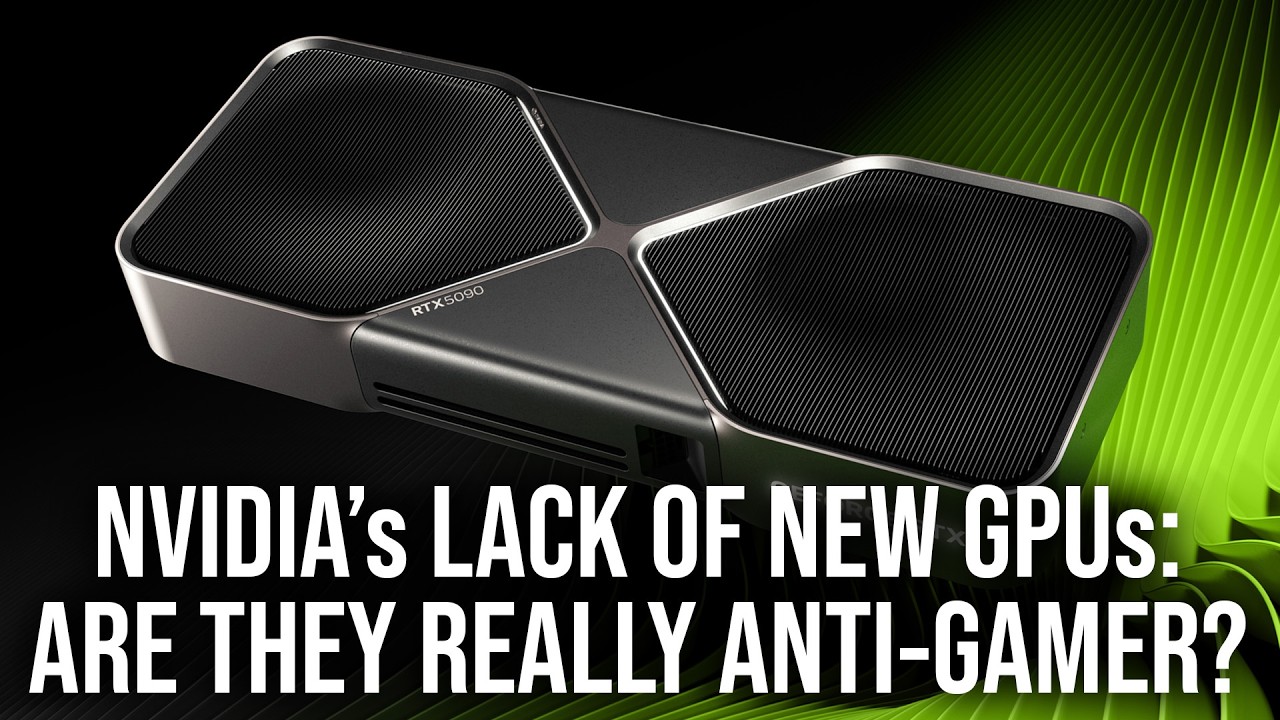
The discussion opens with concerns around Nvidia’s apparent shift away from releasing new consumer GPUs this year, particularly the absence of an RTX 60 series and the cancellation of the RTX 50 series Super. This situation is largely attributed to the ongoing memory crisis, which limits the possibility of increasing memory capacity on new GPUs. Despite these challenges, Nvidia is still launching new products, such as the NX1 system-on-chip for gaming laptops featuring the Blackwell GPU, signaling their interest in expanding into efficient, compact gaming hardware. This move also opens opportunities for innovative devices like ultra-small gaming boxes or a new Nvidia Shield.
The panelists emphasize that Nvidia’s reduced consumer GPU output is not unique but reflects a broader industry-wide issue. Companies like Intel and AMD are facing similar constraints, delaying their own next-generation GPU releases. The memory shortage and market conditions have impacted all manufacturers, making it a challenging time for GPU buyers. Nvidia, due to its large sales volume and existing inventory, may be somewhat better positioned than others, but the situation remains difficult across the board.
Historically, Nvidia’s relationship with gamers is also examined, referencing early struggles like the Sega Saturn NV2 and MV2 Quad disasters. While these early products had their issues, Nvidia eventually gained traction by delivering competitive GPUs like the TNT2, which helped them rival dominant players such as 3dfx. The conversation suggests that Nvidia’s rise was as much about making solid products as it was about gamer support, challenging the narrative that gamers alone propelled the company’s success.
Regarding the current gaming landscape, the panel agrees that contemporary GPUs are already very powerful, often exceeding the requirements of current consoles, and GPU bottlenecks are less common in games today. Given this, the lack of new GPUs this year might not be as detrimental as it seems, especially since the market is stabilizing somewhat. The high-end GPU market is experiencing price premiums, but mainstream cards like the RTX 5070 remain relatively affordable and perform well compared to consoles like the PS5 Pro.
In conclusion, while Nvidia’s pause on consumer GPU launches may feel like turning its back on gamers, the panelists believe it is more a consequence of external market factors than a deliberate abandonment. Nvidia continues to innovate with technologies like DLSS 4.5 and dynamic multi-frame generation, indicating ongoing support for gamers in other ways. The key to watch will be how the memory crisis evolves and whether Nvidia resumes regular consumer GPU releases in the near future. For now, gamers still have access to capable hardware, and the situation is more about market realities than a shift in corporate priorities.