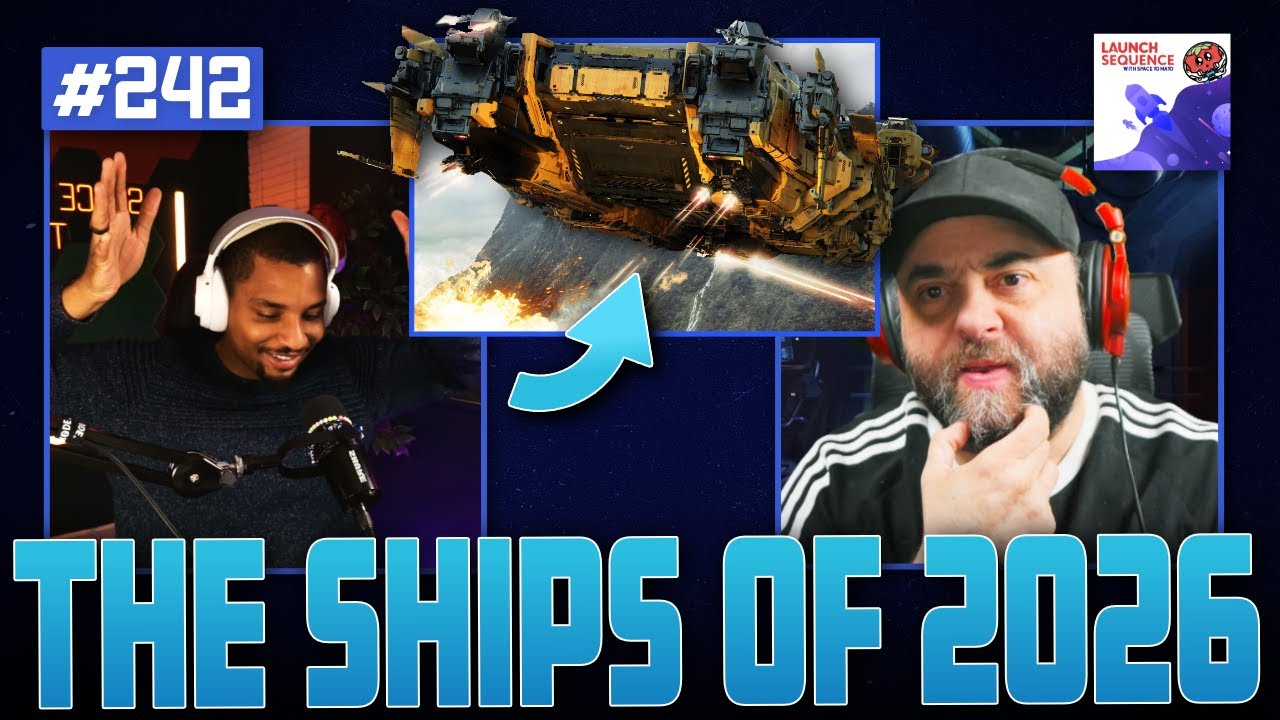
The video is a detailed discussion from the Launch Sequence podcast focusing on Star Citizen’s ship releases, gameplay developments, and expectations for 2026. The hosts begin by reflecting on the best and worst ships introduced in 2025, highlighting ships like the Asgard and Golem as good examples of functional and form-fitting designs that cater to different playstyles, especially for solo players and those wanting to “test the waters” of professions like mining and salvage. They also discuss the trend of releasing numerous ship variants, expressing some concern that this approach may prioritize sales over uniqueness and gameplay depth.
A significant portion of the conversation revolves around the evolution of gameplay in Star Citizen. Historically, the game had limited viable gameplay loops, primarily mining, ship combat, and FPS combat, but recent years have seen the introduction of new mechanics like salvage, cargo hauling, and engineering. The hosts emphasize the importance of upcoming features such as crafting, refining, and medical gameplay, which are expected to deepen the gameplay experience and create more complex economic loops. However, they acknowledge that foundational systems like dynamic server meshing and a fully functional inventory are still works in progress, contributing to delays in delivering a complete gameplay experience.
Capital ships, particularly the Aegis Idris and Polaris, are discussed in terms of their impact on gameplay balance and the timing of their release. The Idris was released earlier than originally planned, primarily for marketing and funding reasons, which led to some balance issues, especially for solo players who could dominate with such powerful ships. The hosts debate whether capital ships were introduced too early and consider the challenges of balancing multi-crew ships versus solo play. They also discuss the community’s mixed feelings about ship sales, variants, and the potential for buyer’s remorse given the complexity and cost of many large ships.
Looking ahead to 2026, the hosts outline several anticipated ship releases, including the Hermes, Ironclad, Galaxy, and the Mk2 Aurora, as well as ground vehicles linked to crafting and industrial gameplay. They note that crafting and refining are critical upcoming features necessary to complete the gameplay loops, though these have faced delays and may not fully arrive until after Squadron 42’s release. The conversation also touches on the shifting priorities within Cloud Imperium Games, with Squadron 42 taking precedence, which has impacted Star Citizen’s development pace. The hosts speculate on how the release of Squadron 42 might affect the player base and the future development focus on Star Citizen.
The discussion concludes with reflections on the challenges and opportunities facing Star Citizen as it moves into 2026. While acknowledging ongoing issues such as limited gameplay variety and the need for foundational improvements, the hosts remain cautiously optimistic about the potential for a breakout year fueled by Squadron 42’s release and the introduction of new gameplay features. They stress the importance of balancing solo and group play experiences and hope for more gameplay-focused ship releases rather than an overabundance of variants. The episode ends with a call to the community to stay engaged and a hopeful outlook for the coming year.