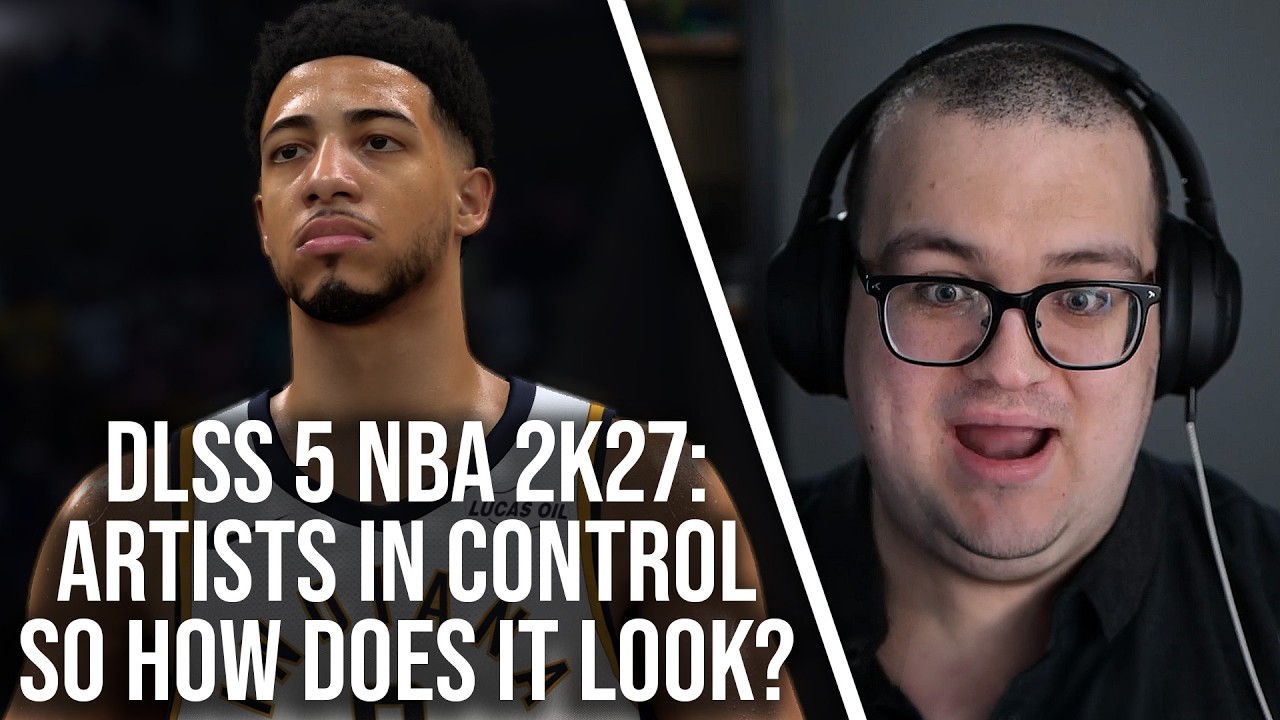
DLSS 5 in NBA 2K27 enhances image quality through subtle, realistic lighting and shadow improvements that enrich visual depth without altering the game’s art style, offering a performance-friendly alternative to full path tracing. However, these advancements also highlight shortcomings in animation quality, especially in crowd and player movements, underscoring the ongoing challenge of matching photorealistic visuals with equally polished animations in sports games.
The discussion focuses on the implementation of DLSS 5 technology in NBA 2K27, highlighting its subtle yet effective enhancements to image quality. John emphasizes that NBA 2K27 is an ideal candidate for this technology because it aims to simulate real people and real-life sports, where lighting and shadow details are crucial. DLSS 5 adds nuanced lighting effects such as improved shadows on clothing, hair, and facial features, which are otherwise difficult to render. These enhancements do not alter the game’s art style but rather enrich the visual depth, making elements like jersey shading and subsurface scattering more realistic without overwhelming the base graphics.
Oliver adds that compared to earlier, more dramatic lighting transformations seen in previous demos, the DLSS 5 implementation in NBA 2K27 is more refined and artistically controlled. The technology improves self-shadowing with better gradation and more natural light dispersion, especially noticeable in hair textures like African kinked hair. This results in a more volumetric and lifelike appearance. Both agree that this approach offers a performance-friendly way to achieve high-quality lighting effects without the complexity and cost of full path tracing, which the game only uses minimally for reflections.
A notable observation is that while DLSS 5 significantly enhances visual realism, it also exposes weaknesses in the game’s animation quality. Oliver points out that the animations, especially in crowd characters and player collisions, feel less polished and sometimes unnatural, which becomes more apparent when paired with the improved photorealistic lighting. This mismatch can pull players out of the immersive experience, highlighting a broader industry challenge where advancements in rendering technology raise expectations for equally high-quality animation, which remains difficult to achieve.
John concurs that this animation challenge is not unique to DLSS 5 but is a common issue in games striving for photorealism. The more realistic the visuals, the more noticeable any flaws in movement and animation become. Sports games face additional complexity due to the dynamic and interactive nature of player movements, where balancing realism with gameplay responsiveness is critical. Improving animation quality without sacrificing performance remains a significant hurdle for developers, making it a key area for future progress alongside graphical enhancements.
In conclusion, the application of DLSS 5 in NBA 2K27 represents a tasteful and effective step forward in game image quality, providing subtle but meaningful improvements to lighting and shadow detail. However, this leap in visual fidelity also underscores the existing gap between advanced rendering techniques and animation quality. The conversation suggests that while DLSS 5 offers promising benefits, developers must also focus on elevating animation standards to fully realize the potential of photorealistic gaming experiences.