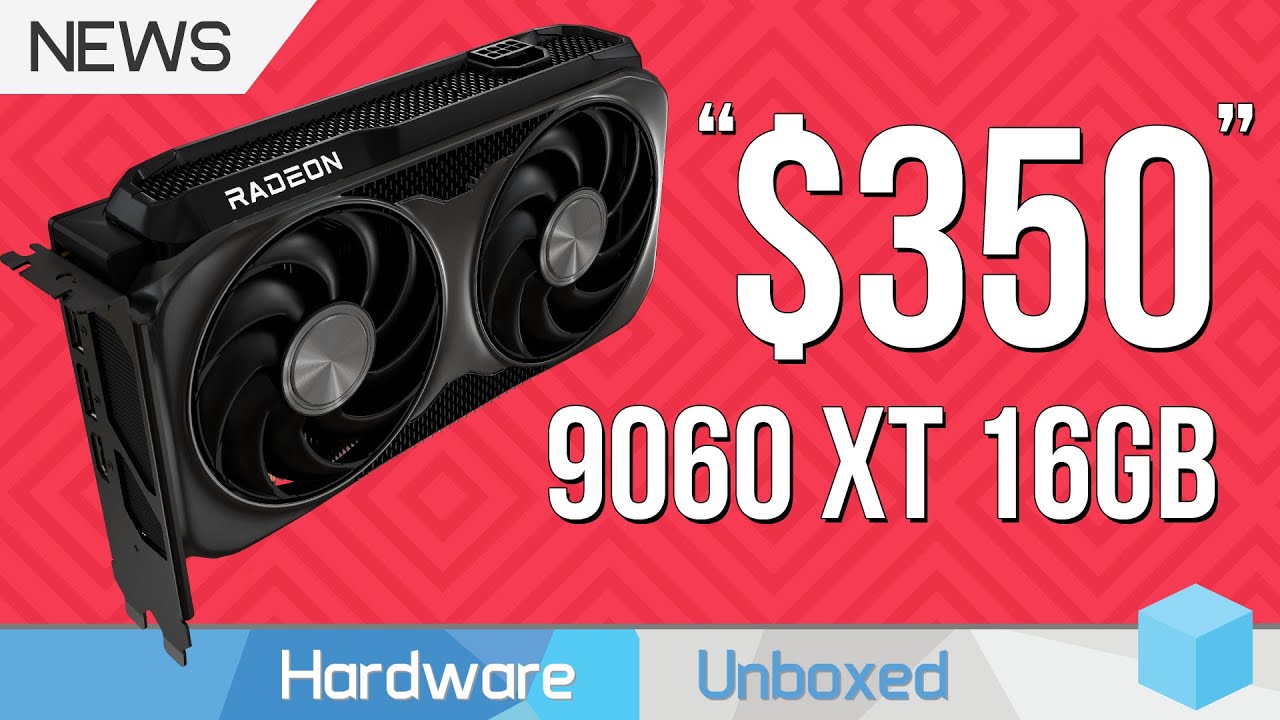
The video discusses AMD’s recent unveiling of the Radeon RX 960 XT, which comes in two variants: an 8 GB model and a potentially more significant 16 GB model. The 8 GB version is priced at $300, while the 16 GB version is set at $350, with the latter being AMD’s main focus due to its expected widespread appeal in Western markets. AMD has adopted a naming strategy similar to Nvidia’s RTX 560 Ti, which could cause confusion among consumers, especially since both models share the same name despite differences in VRAM and performance. The 16 GB model is positioned as the most affordable 16 GB graphics card currently available, offering a competitive price point for its VRAM capacity.
The RX 960 XT is based on a new Na’vi 44 die, which is a scaled-down version of the Na’vi 48 die found in higher-end models. It features roughly half the shader units, memory bus, and overall die size, resulting in a significant reduction in performance compared to flagship models like the RX 970 XT. The card uses a 20 Gbps GDDR6 memory interface with a 128-bit bus, delivering around 320 GB/s of memory bandwidth. Despite these cutbacks, it retains modern features such as PCIe 5.0, DisplayPort 2.1, and HDMI 2.1, with a boost clock of approximately 3.13 GHz, indicating solid performance for its tier.
AMD claims that the RX 960 XT 16 GB will outperform Nvidia’s RTX 5060 Ti 8 GB by about 6% on average across multiple games at 1440p ultra settings, though they compare their 16 GB model to Nvidia’s 8 GB variant due to pricing similarities. The performance gap is estimated to be around 35-40% slower than the RX 970 XT, positioning the RX 960 XT as roughly comparable to a previous-generation Radeon RX 7700 XT. AMD emphasizes the value proposition of the 16 GB version, suggesting it offers over 20% better value than the RTX 5060 Ti 16 GB, mainly due to its larger VRAM and competitive pricing.
The launch is set for June 5th, with AMD promising transparency and no restrictions on review samples, unlike Nvidia’s recent practices. The company also announced new developments in their FSR (FidelityFX Super Resolution) technology, specifically the upcoming FSR Redstone, which will incorporate AI features like neural radiance caching and ray regeneration, aiming to close the feature gap with Nvidia’s DLSS. Additionally, FSR4 support will expand to 60 titles, enhancing game compatibility and performance, although AMD still faces challenges competing with Nvidia’s more mature DLSS ecosystem.
Overall, AMD’s RX 960 XT appears poised to be a strong contender in the mid-range GPU market, especially with the 16 GB model offering excellent value and features at a competitive price. However, the naming similarity between the 8 GB and 16 GB models could lead to consumer confusion and potential misbuying. AMD’s open approach to review access and their focus on improving FSR technology demonstrate their commitment to competing effectively in the graphics card space. The reviewer expresses interest in testing the card’s real-world performance and value once it becomes available, highlighting the importance of how these new models will perform against Nvidia’s offerings.