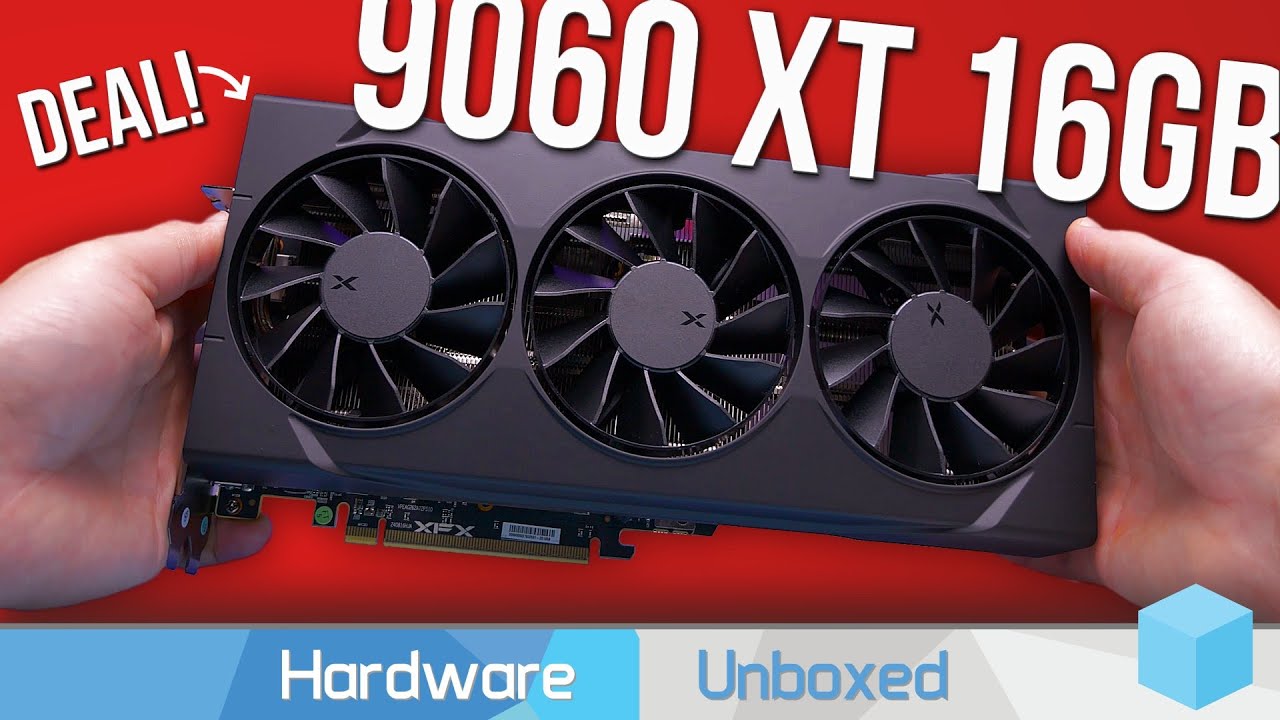
The video provides a comprehensive review of AMD’s new Radeon RX 960 XT 16GB graphics card, focusing on its specifications, performance benchmarks, and value proposition. The reviewer highlights that the 16GB version is the recommended model, with the 8GB variant to be discussed in a follow-up video. Priced at an MSRP of $350, the RX 960 XT offers a competitive alternative to Nvidia’s RTX 5060 Ti, with AMD claiming performance parity. The card is based on the RDNA4 architecture, features higher clock speeds, and utilizes GDDR6X memory, which boosts bandwidth and overall gaming performance.
Throughout the testing, the RX 960 XT demonstrated performance close to the RTX 5060 Ti across a range of games at 1440p resolution. In many titles, it performed similarly or slightly better, such as in Call of Duty and Hogwarts Legacy, but lagged behind in others like Counter-Strike 2 and Star Wars Jedi Survivor. The card was capable of delivering playable frame rates in demanding titles like Cyberpunk 2077 and Starfield, though RT (ray tracing) performance remained modest, often not providing a truly transformative experience. Overall, the card’s gaming performance was described as solid, especially considering its competitive price point.
The review also examined the power consumption and thermal performance of the RX 960 XT, noting that it consumed slightly more power than previous AMD models but remained within reasonable limits. Partner cards from various manufacturers showed similar thermal characteristics, with temperatures staying within safe ranges and noise levels remaining low, especially in models with efficient cooling solutions. This indicates that the RX 960 XT can operate quietly under load, making it suitable for gaming setups that prioritize acoustic comfort alongside performance.
An important aspect discussed was the value and pricing potential of the RX 960 XT. At MSRP, the card offers excellent value, being the cheapest current-generation GPU with 16GB of VRAM, and providing a performance advantage over similarly priced options like the RTX 3060 Ti. The reviewer emphasizes that if the card can be found at or near its MSRP, it would be an ideal budget choice, especially given its performance, VRAM capacity, and features like FSR4 and improved ray tracing. However, current market conditions make actual retail prices uncertain, and the reviewer explores different pricing scenarios to illustrate how value might fluctuate.
In conclusion, the reviewer believes the RX 960 XT 16GB is a strong contender in the budget GPU market, offering a compelling mix of performance, features, and price if priced correctly. They caution consumers to be wary of 8GB versions, which are less desirable and likely to depreciate faster. The review also criticizes AMD’s branding practices, which can be confusing, and urges buyers to ensure they purchase the 16GB model. Overall, the card is seen as a promising option for gamers seeking solid performance without breaking the bank, provided AMD can meet demand and maintain competitive pricing.