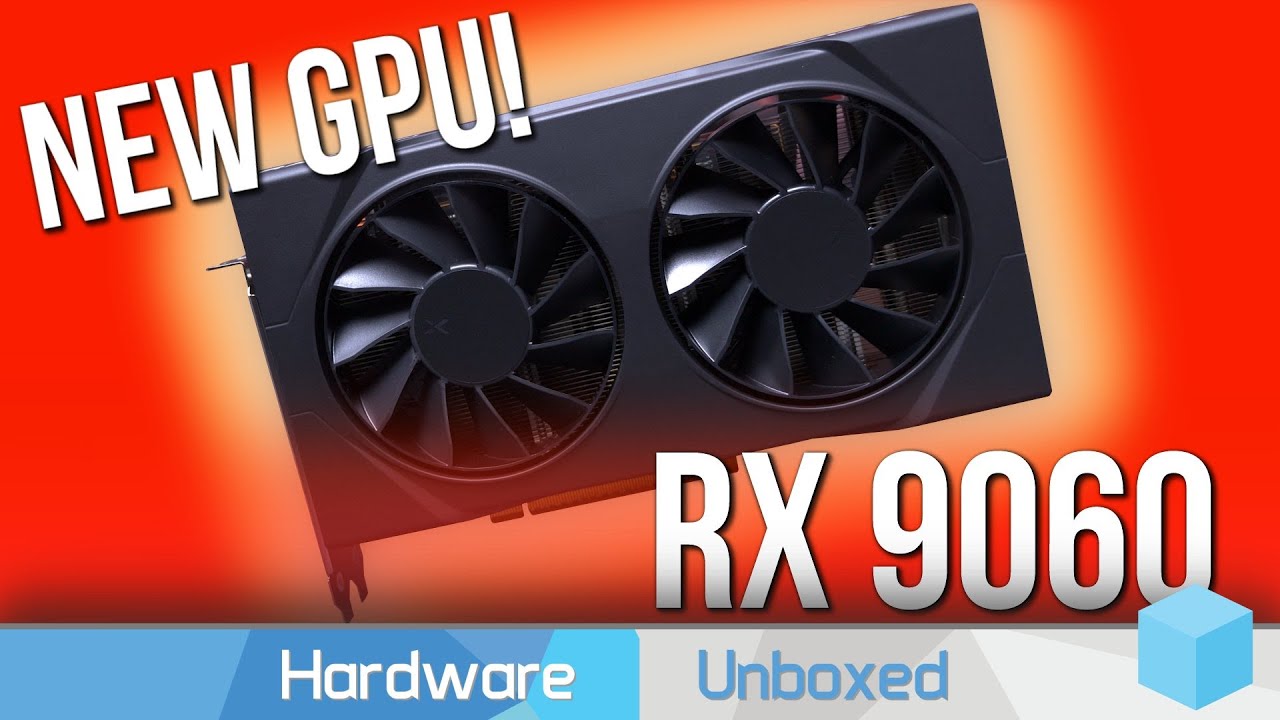
The AMD Radeon RX 9060 presents a mixed bag for consumers, primarily due to AMD’s confusing product segmentation. There are two versions of the RX 960 XT with the same name but different VRAM capacities: one with 16 GB and a more capable performance, and another with 8 GB, which is less powerful and likely to age poorly. The RX 960 XT 16 GB version is priced around $350, offering excellent value compared to the Nvidia RTX 5060 Ti, while the 8 GB version is cheaper at about $280 but is generally not recommended. AMD’s decision to release two different products under the same name has led to consumer confusion, with the 8 GB variant mostly sold through OEM systems rather than retail.
The RX 9060, based on the Na’vi 44 die, is a cut-down version of the 960 XT with 13% fewer cores, slightly lower clock speeds, and reduced memory bandwidth due to slower GDDR6 memory. It only comes with 8 GB of VRAM and has a lower power consumption of 132 watts. Unlike the 960 XT, the 9060 is only available via OEM pre-built systems, making it harder for consumers to purchase as a standalone GPU. The pricing is unclear but estimated to be around $260, which is about 15% cheaper than the 960 XT 8 GB model.
Performance benchmarks reveal that the RX 9060 is consistently about 13-17% slower than the 960 XT across various games and settings at 1080p and 1440p resolutions. It generally performs close to or slightly below the Nvidia RTX 5060, but significantly outpaces the RX 7600 by around 23-35%. In some demanding scenarios, such as games requiring more than 8 GB of VRAM, the RX 9060 benefits from its full 16 PCIe lanes, outperforming the RTX 5060 which is limited to eight lanes, though the RTX 5060 struggles or becomes unusable in these cases.
Thermally, the RX 9060 performs well, with the tested XFX Swift Gaming Edition running quietly and maintaining reasonable temperatures under load. The GPU’s compact design and efficient cooling make it suitable for small form factor builds without excessive noise or heat concerns. However, the overall performance uplift compared to previous generation GPUs like the RX 7600 is moderate, and the RX 9060 doesn’t offer a significant leap in power, especially considering its OEM-only availability and potential pricing issues.
In conclusion, the RX 9060 is a decent budget GPU option but is overshadowed by AMD’s confusing naming and marketing strategy. The existence of multiple similar products with overlapping names and differing specs creates confusion and risks consumers inadvertently buying a less capable card. AMD could have been more transparent by clearly differentiating the 8 GB and 16 GB models with distinct names, which would have helped buyers make informed decisions. For now, the RX 9060 is best considered only if it is significantly cheaper than the 960 XT 8 GB, and buyers should be cautious when purchasing pre-built systems to avoid overpaying for a lower-tier GPU.