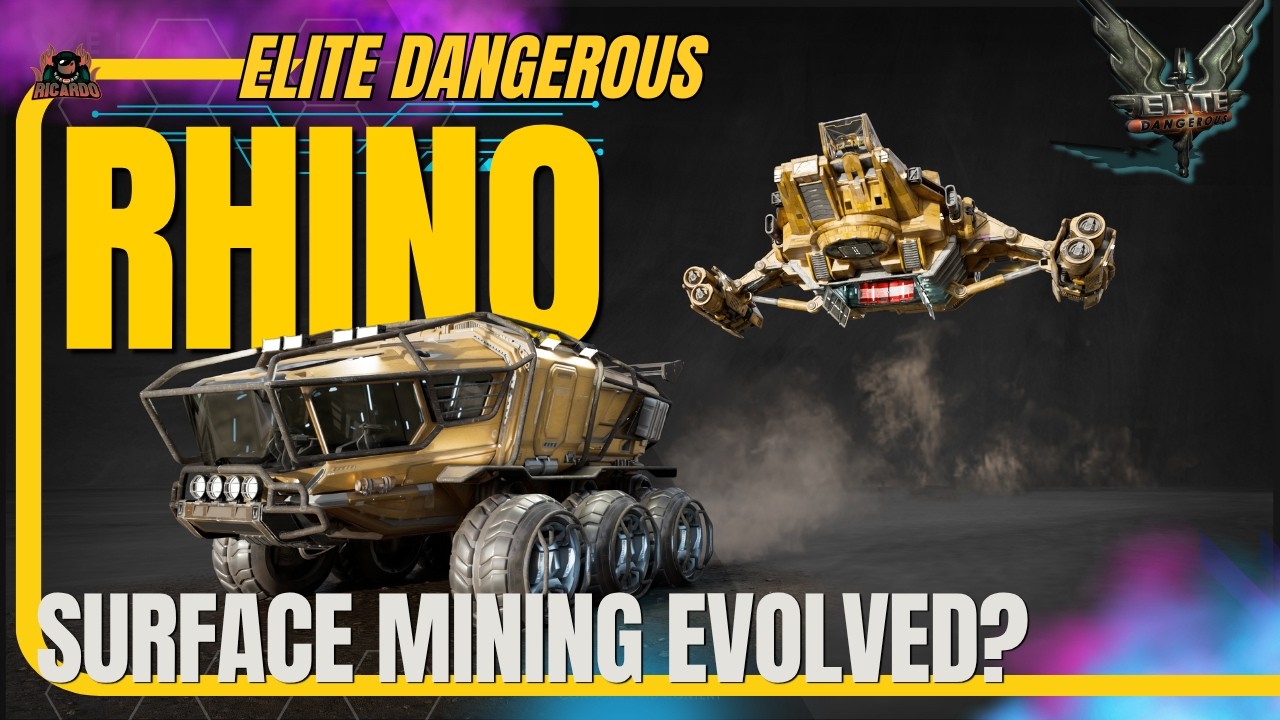
Elite Dangerous is introducing a new Surface Recon Vehicle (SRV) called the Rhino, which marks a significant shift from previous SRVs like the Scarab and Scorpion. Unlike these smaller, multi-purpose or combat-oriented vehicles, the Rhino is a massive, six-wheeled industrial machine specifically designed for proper surface mining—a gameplay element that Elite Dangerous has not truly offered before. This new vehicle is built to extract raw materials from geological sites on planetary surfaces, introducing a dedicated mining activity distinct from the simple collection methods previously available.
While the Rhino’s concept art and design details highlight its size, armor, and utility-focused build, Frontier has only revealed limited information about the actual mining mechanics. Key questions remain unanswered, such as how players will locate resources, whether the Rhino drills or detects underground deposits, and how interactive or complex the mining process will be. Frontier promises more details on the surface mining gameplay loop will come later, but the introduction of a specialized mining vehicle hints at a potential new industrial gameplay loop on planetary surfaces.
This development could fundamentally change how planetary materials are gathered in Elite Dangerous, evolving it from a passive collection activity into an active, engaging profession akin to asteroid mining in space. The Rhino may enable a gameplay arc that starts with orbital scanning, followed by surface exploration, targeted mining, and resource extraction, creating a cohesive link between space and planetary gameplay. Such a loop could add depth to the game, providing players with meaningful reasons to engage with planets beyond simple exploration or material collection.
Another notable aspect of the Rhino is its heavy armor and multi-crew design, which suggests that surface mining might involve risks such as hostile NPCs or player attacks aiming to steal mined materials. The vehicle’s durability and defensive capabilities imply that mining could become a contested and strategic activity, requiring players to protect their resources while operating on potentially dangerous planetary surfaces. This risk element adds an additional layer of gameplay complexity and excitement.
Finally, the Rhino’s size necessitates a new deployment system and raises questions about ship compatibility, storage, and the impact on ship builds. Only larger ships like the Type 11 have been shown carrying the Rhino so far, and it remains unclear which other ships will be able to accommodate it or how it will affect jump range and cargo space. The introduction of the Rhino could lead to specialized ship builds focused on surface mining, further integrating this new gameplay element into the broader Elite Dangerous universe. Overall, the Rhino represents more than just a new vehicle—it signals a potential expansion of the game’s mining and planetary gameplay systems.