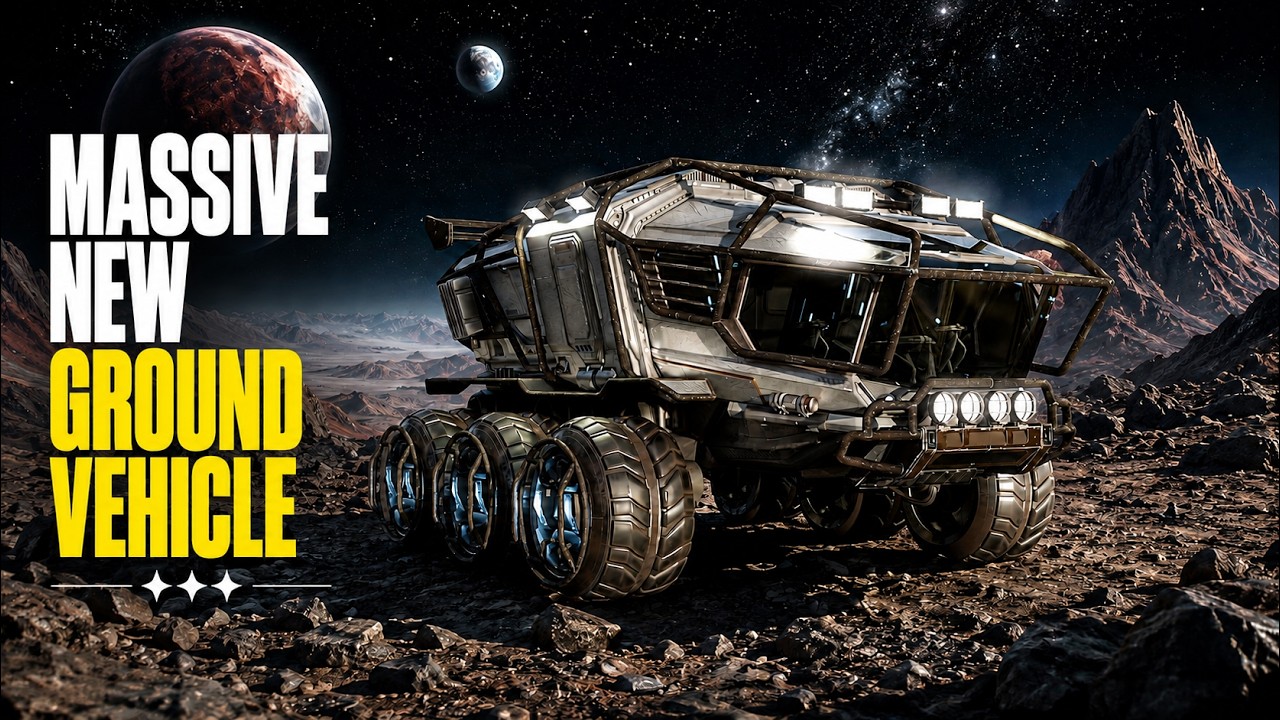
Elite Dangerous is introducing the Rhino, a large, heavily armored industrial SRV designed for surface mining and accommodating three players, marking a new focus on planetary exploration and surface-based gameplay. While the Rhino offers exciting new mechanics and nostalgia for long-time fans, its initial early access release via real-world currency has sparked community debate over monetization practices.
Elite Dangerous is set to receive significant updates with the introduction of a new, large industrial SRV called the Rhino, designed specifically for surface mining—a fresh gameplay element focusing on planetary surfaces. This new vehicle complements the previously introduced Nomad, a ship-launched vessel used for planetary surface scanning, indicating Frontier Developments’ renewed emphasis on planetary exploration and surface-based activities. The Rhino is characterized by its heavy armor and large size, designed to withstand attacks from pirates or NPCs while mining valuable resources on planetary surfaces.
The Rhino’s design suggests a dense, heavy vehicle, which raises questions about its driving mechanics, especially on low-gravity planets where lighter SRVs tend to bounce. Unlike the Nomad, the Rhino does not feature a walkable interior; instead, it accommodates three players in the cockpit simultaneously, marking a first for ground vehicles in Elite Dangerous. The vehicle also houses built-in mining equipment, though Frontier has not yet detailed whether mining will be conducted from inside the Rhino or require handheld tools used outside the vehicle.
Surface mining itself remains somewhat mysterious, with Frontier yet to clarify whether the Rhino will extract new types of resources or simply provide a new method for gathering existing materials, such as those used for engineering and ship upgrades. The introduction of surface mining could potentially open up new gameplay loops, but the specifics remain to be seen. The Rhino is notably larger than existing SRVs and requires a new type of vehicle bay for deployment, suggesting compatibility with medium-sized ships like the Type-8 rather than smaller vessels.
One controversial aspect of the Rhino’s release is its initial availability exclusively through real-world currency during an “early access” period, a move that has sparked concern within the community. While Frontier has monetized ships and vehicles before, selling access to new gameplay content marks a shift that some players view as problematic. The developer argues that this model supports ongoing updates and development, though opinions on this approach vary widely among the player base.
Finally, the Rhino’s design and concept reflect long-standing ideas from Elite Dangerous’s early development, hinting that Frontier has not abandoned its original vision despite the game’s evolution. The presence of two planetary surface vehicles—the Nomad and the Rhino—raises hopes among players for expanded planetary landing options and deeper surface gameplay in the future. Overall, the Rhino represents an exciting new chapter for Elite Dangerous, blending nostalgic concepts with fresh mechanics, and the community eagerly awaits its release later this month.