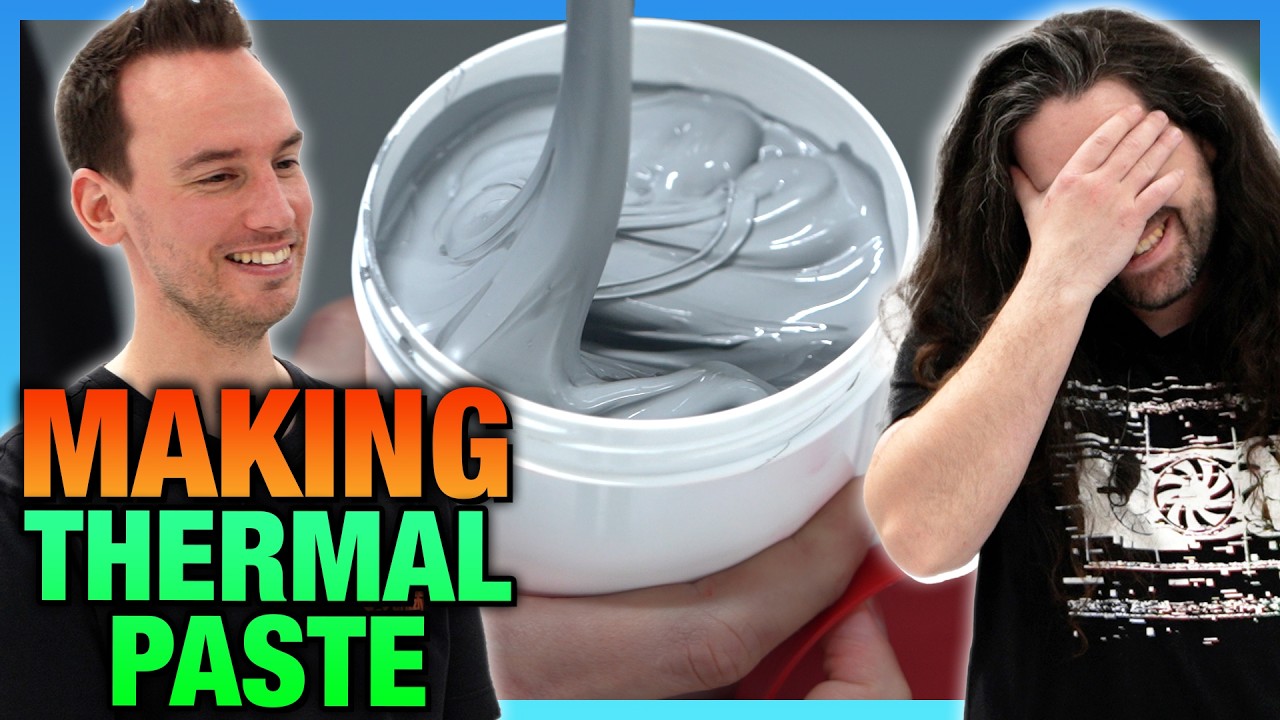
The video provides an in-depth look into the manufacturing process of high-quality thermal paste at Thermal Grizzly’s factory near Berlin, Germany. It highlights the precision and complexity involved in producing thermal interface materials used in modern electronics. The process begins with raw materials like zinc oxide, aluminum powder, and liquid metals such as gallium and indium, which are carefully measured and mixed under controlled conditions. The factory employs advanced equipment, including sigma mixers, triple roll mills, and vacuum chambers, to ensure the paste’s consistency, performance, and safety.
Making thermal paste is a meticulous process that involves multiple steps over roughly two days. Raw powders are handled with extreme caution due to their hazardous nature, requiring protective gear and inert atmospheres. The powders are first premixed in sigma mixers, then heated and vacuumed to remove moisture. After initial mixing, zinc oxide is added in stages, and the paste is further processed through grinding and milling to achieve a uniform particle distribution. This ensures optimal performance by filling all microscopic gaps when applied between a heat source and a heatsink.
The factory also conducts extensive quality control and analysis using sophisticated tools like scanning electron microscopes (SEM) and optical microscopes. These analyses verify particle sizes, shapes, and distributions, which are crucial for the paste’s thermal conductivity and ease of application. The SEM setup involves vacuum systems and detectors to examine the powders at nanometer scales, ensuring that only the best raw materials are used in production. This rigorous testing guarantees the final product meets high standards for performance and reliability.
Once the paste is prepared, it undergoes vacuum curing to remove residual air and moisture, followed by precise filling into syringes using specialized, expensive machinery. The filling process is highly automated, with plans to incorporate laser engraving for serial number tracking. The entire operation is managed by a small, skilled team focused on efficiency and quality, emphasizing the high costs associated with German manufacturing. The factory’s approach contrasts with most competitors, who often outsource production to Asia, highlighting their commitment to in-house quality and innovation.
Finally, the video showcases the factory’s testing labs, where custom-built equipment simulates real-world conditions to evaluate the paste’s thermal performance and aging characteristics. They replicate CPU-like conditions using dummy heatsinks and silicon chips to measure heat transfer and interface resistance. This comprehensive testing ensures the paste performs consistently under stress and over time, providing users with reliable, high-performance thermal solutions. Overall, the video emphasizes the precision, science, and craftsmanship involved in creating top-tier thermal interface materials in a small but highly advanced German factory.