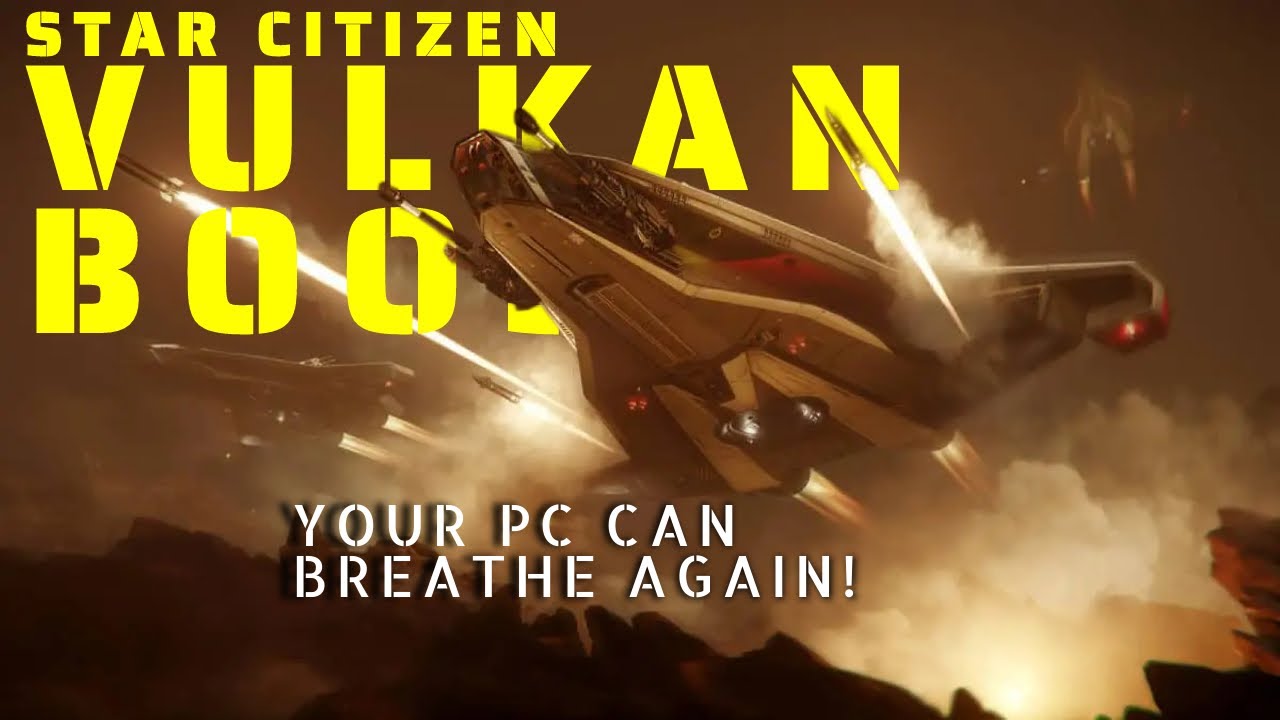
The video discusses the long-awaited Vulkan API implementation for Star Citizen, which promises to significantly improve game performance by addressing the limitations of the current DirectX 11 renderer. Players have long suffered from frustrating frame rate drops, especially in busy areas like landing zones, where CPU bottlenecks cause the GPU to be underutilized. Vulkan redistributes workload more efficiently across hardware, potentially doubling frame rates and improving session stability by fixing memory leaks that cause performance degradation over time. The upcoming dedicated tech preview channel for Vulkan testing signals that this major overhaul is finally nearing release, offering hope to players frustrated by inconsistent performance despite high-end hardware.
In addition to Vulkan, the video highlights major improvements to the game’s AI systems, particularly for FPS combat. The new AI behaviors introduce coordinated fire teams with tactical awareness, moving beyond the predictable, stationary enemies of the past. NPCs will now use cover effectively, communicate, flank players, and even exploit vulnerabilities such as when players are distracted using their Moby Glass devices. These enhancements rely on improved navigation meshes that allow AI to use vertical space like staircases and balconies, making combat encounters more dynamic and challenging, fundamentally changing how players approach missions and engagements.
The video also covers the upcoming engineering gameplay system, which is entering tech preview stages shortly after Vulkan and AI tests. This system revamps ship damage mechanics by moving away from abstract health bars to physicalized components that can malfunction in specific ways, such as blown fuses or overloaded circuits. Larger multi-crew ships will require active management of these systems, creating new roles and gameplay depth beyond piloting and combat. The system aims to balance complexity with accessibility by offering automation options and diagnostic tools to help players prioritize repairs, addressing community concerns about added micromanagement.
To effectively test these new features, the video advises players to document baseline performance metrics before installing the Vulkan tech preview and to carefully report any visual bugs with detailed descriptions. For engineering gameplay, it recommends starting with moderately complex ships to learn system interactions and developing clear communication protocols for multi-crew operations. Testing edge cases by pushing systems beyond normal limits will help identify critical bugs and improve stability before these features go live. Coordinated testing with diverse hardware setups will accelerate development and refinement.
Ultimately, the video presents these three systems—Vulkan rendering, advanced AI, and engineering gameplay—as a transformative evolution for Star Citizen, potentially delivering the most significant gameplay improvements since planetary tech was introduced. Each addresses core frustrations: performance bottlenecks, stale combat encounters, and shallow ship mechanics. The community is encouraged to engage with the upcoming tech previews to help mature these features, which together promise a more immersive, challenging, and optimized experience. The video closes with optimism about the future of Star Citizen and hopes for smoother, more engaging gameplay.