#sc-news

Art (Ships)

In the UK, the Ships team completed the art phases for the Aegis Hammerhead gold standard, which moved to downstream teams for close-out. Work then shifted to a related ship approaching whitebox.

The Gatac Railen passed its whitebox gate review and entered greybox ahead of its planned Alien Week release, with additional artists joining to build assets for future Gatac ships.

The Greycat UTV received newly captured enter and exit animations and is now with downstream teams for completion.

The MISC Hull-B continued toward its LOD0 gate review, with Tech Art finalizing the complex spindle deploy and retract animations.

The Drake Ironclad, Ironclad Assault, and Command Module passed greybox gate reviews and moved into LOD0, progressing quickly thanks to whitebox work on the modular kit.

Three unannounced vehicles also progressed: one is nearing greybox, another passed greybox after minor director feedback, and the third passed whitebox but is receiving layout tweaks before greybox.

In North America, another unannounced ship passed whitebox, with feedback focused on rear-section interactions.

Finally, the Drake Kraken’s whitebox review was moved to early March after additional concept work. The team refined ship traversal and removed or downsized rooms that added little gameplay value while preserving major interior spaces like Engineering. The ship remains on track for release next year.

Core Gameplay

As seen by Evocati players during recent Tech Previews, the Core Gameplay team made solid progress on the Inventory Rework. Final polish and bug fixes are underway as the team prepares it for release.

Capital Ship Services progressed well, too, and will be delivered to downstream teams soon. The team’s focus was also on the social features demonstrated during CitizenCon 2954.

Economy

The Economy team spent part of February tracking exploits, particularly those causing item duplication or generating large amounts of aUEC. Many loopholes were closed, with further fixes planned for Alpha 4.7, followed by new guardrails and monitoring systems to reduce the impact of illicit aUEC on the economy.

They also continued balancing commodity prices and trade routes while laying groundwork for future systems such as Item Recovery and Crafting.

The team noted the positive community response to the Clear The Air live event and is currently working on mission balancing and rewards, while revisiting past content, including an additional pass on Wikelo-related missions.

Mission Design

In February, the devs continued to work on the Alpha 4.7 mission pack, which adds more content to Nyx and revives the courier missions that have been waiting for a refactor since Alpha 4.0. These missions also have small design changes. For example, ‘courier’ missions now range from one-handed items to two-handed boxes, ‘delivery’ missions range from 1 SCU box to 6x 1 SCU boxes, and ‘hauling’ begins from 6 SCU upwards.

Defend Ship missions also received an update allowing the team to accurately track the health of the ship. This will prevent the ship from appearing at almost full health before dying.

Ship Wave missions have been expanded to other contractors outside of Gilly, including a variation that ends with a large ship ‘boss.’

PU Monthly ReportFebruary 2026

AI Content

The Social AI team started the month fixing bugs in support of Alpha 4.6, then shifted focus toward future releases.

AI Content collaborated with Mission Design to set up characters players will encounter in new game loops. They also added initial setups and placeholder dialogue so designers and directors could test game flow, allowing writers to later refine the lines and ensure they work properly in context.

The team also continued defining their goals for the coming year and identifying the support needed from other teams to implement them.

AI (Features & Tech)

Last month, AI Features & Tech improved valakkar underground traversal, prototyping future movement speeds and updating its combat behavior with linear acceleration and deceleration.

They fixed an issue where toy guns triggered weapon-fire and bullet-hit sounds, causing NPCs to cower, and adjusted accuracy calculations to give Design better control.

Safe zones were also improved within the global perception system, creating areas where players can rest or regroup without NPC detection.

The team continued integrating the voxel grid (currently in extensive QATR testing) and began supporting AI features for refueling missions.

Animation

Animation spent February improving assets for the kopion, while Facial Animation focused on the first performance-capture shoot of the year. This was held at the end of February and captured numerous new characters.

Art (Characters)

February saw Character Art polishing assets for Alpha 4.7 alongside working through art debt in preparation for StarWear. The team also continued to work on new gang outfits and Subscriber Flair items.

The Concept Art team explored new combat armors and prepared handoff sheets for upcoming mandates.

Narrative

In February, the Narrative team focused on Alpha 4.7, expanding content in Nyx. This included work on new locations such as QV Breaker stations (home of the Rock Cracker mission) and People’s Service Stations, refueling hubs run by the People’s Alliance. The team created signage, environmental storytelling, PA audio, and missions, while also collaborating with Design to add dozens of new contracts across the system.

They also wrote scripts and recorded dialogue for new NPCs tied to a gameplay loop arriving later this year, including a new faction representative, along with additional content for the Tactical Strike Group mission shown at last year’s CitizenCon.

The team further wrote a new story mission to help establish the pipeline for 1.0 main story delivery, and began developing a future storyline involving a new faction players will confront.

Online Technology

In February, the Network team focused on Hybrid/DGS stability and reliability, fixing several high-impact crashes, watchdog timeouts, and replication errors. They advanced integration of the scp-network stack into patch branches, resolved build conflicts, and continued QDSM V1/V2 development and testing to improve dynamic server scaling.

They also implemented authority and replication improvements, refactored streaming bind/unbind logic, added new engine metrics for observability, and supported item-imprint development, mission markers, and bootstrap/developer workflow issues.

After last year’s internal Item Recovery T1 demo, the Online Services team prepared a feature-complete internal demo and finalized remaining work for its upcoming release. They also improved the long-term database to increase speed. Together with Core Gameplay, they continued planning social features, while instancing entered its final technical stage before handoff to downstream teams.

The Live Tools team, following the Bootstrap user survey, conducted user interviews to identify pain points and prioritize stability and performance improvements. The Panic Switch error-reporting tool received updates including deployment improvements, better access management, and a more consistent UI.

Finally, Live Tools continued modernizing the Hex game dashboard, with the new architecture now actively being implemented.

R&D

In February, work on the improved ground fog continued; a dissipation model was implemented to simulate fog behavior during a full day/night cycle.

Elsewhere, a memory corruption in the engine’s internal name table code was identified. This led to a rewrite of the name table code and related functionality, which now provides a thread-safe and significantly more efficient implementation.

VFX

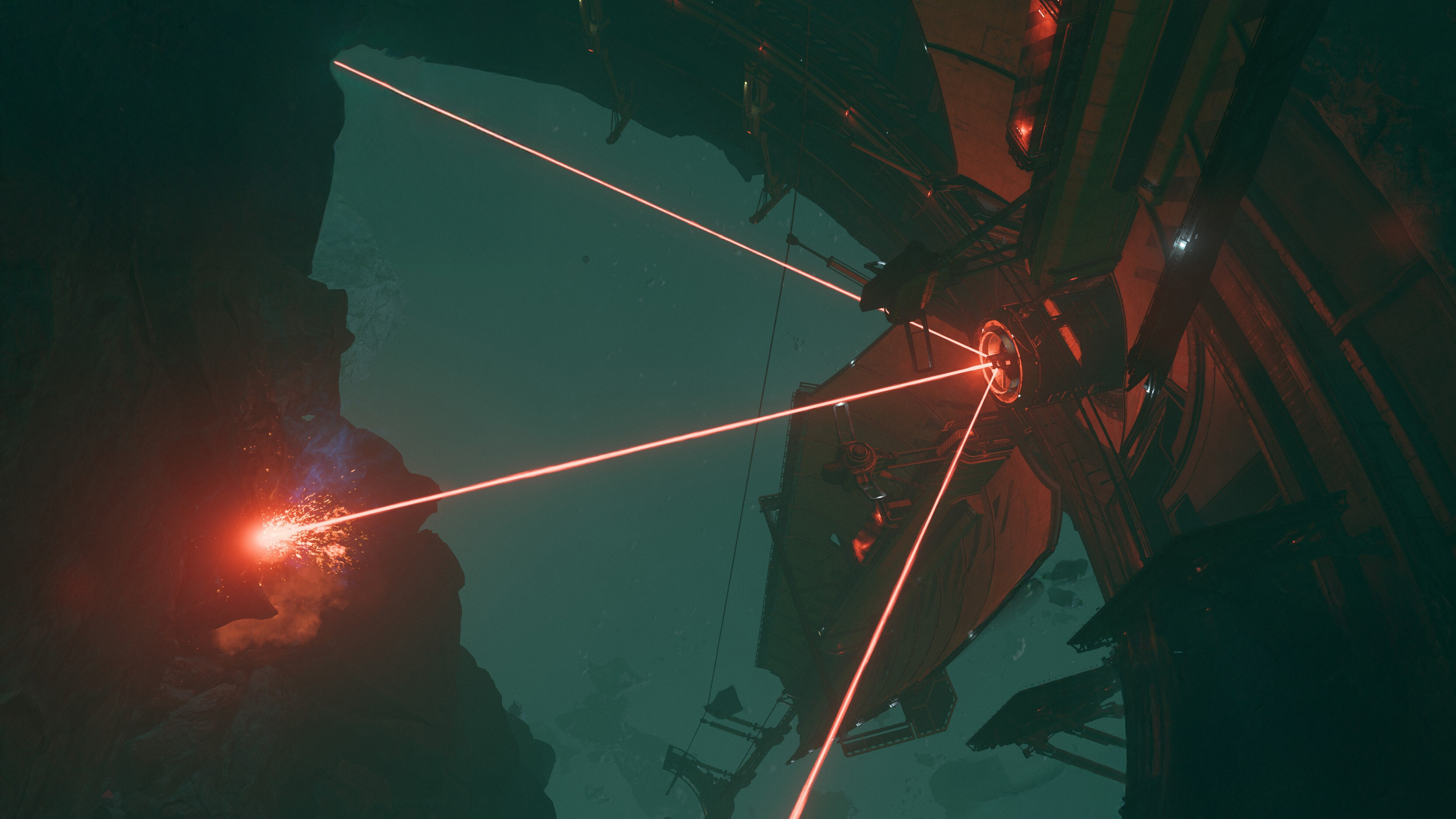
In February, the VFX team focused heavily on supporting Alpha 4.7, contributing to the development of new locations, creatures, props, and vehicles as additional deliverables for Nyx came online. For example, one of the major Points of Interest for 4.7.0 received extensive fine-tuning, resulting in a significantly improved final look.

Creatures for Nyx also received a dedicated VFX pass to ensure their visuals are up to date and properly integrated into their new environments. In addition, the team helped bring several upcoming vehicles to life.
Nvidia Driver Hotfix for Star Citizen

This hotfix addresses the following:

[Star Citizen] Game client crashes when launched [5935027]

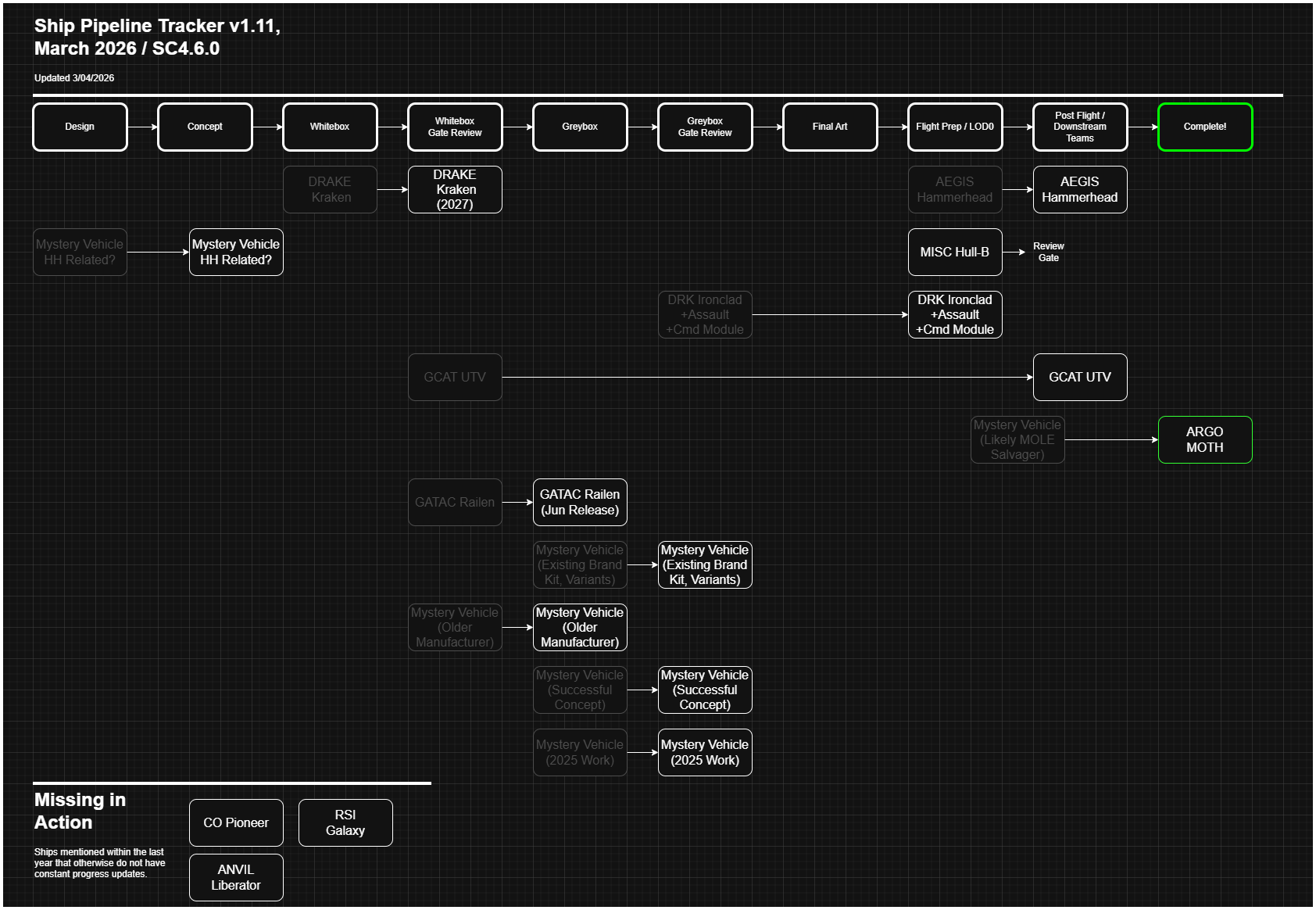
Ship Pipeline Tracker - March 2026

-# Our four mystery ships are in close-but-unclear states to each other. It makes it hard to tell which is which! But we can at least make educated guesses for now, and see what the progress of each is next month. The Liberator and Galaxy have been moved to MIA since they have not been mentioned in a while. I hope we hear something next month!

-# This chart provides a visual representation of ships and vehicles mentioned in monthly reports, Inside Star Citizen episodes, and official CIG communications. It is updated as needed to reflect new information and serves as a rough guide to each ship’s progress through the development pipeline. While some ships may be missing or shift positions over time, we strive to keep the chart as accurate as possible based on the official information available.

StarWear Progress

StarWear continues to make strong progress, with several teams actively working on it.

This system will allow clothing and armor to adapt dynamically to characters and gear combinations. Many players may remember the bug where undersuits became invisible, which temporarily allowed mixing and matching different armor pieces. Systems like StarWear will make that kind of flexibility possible (intentionally!).

StarWear will also help with NPC loadouts. Right now NPC loadouts rely on manually created lists of gear that match certain archetypes or factions. StarWear will allow those systems to become much more dynamic and automated. Sean mentioned the team hopes to see it arrive within about a year, possibly even sooner.

Creature Technology

Creature technology uses many of the same foundations as character tech. The team is working on ways to create more variants efficiently, as well as supporting both complex creatures and simpler ones. While Sean could not share specific release timing or more details as he’s not involved with the schedule, yes there are new creatures currently in development.

Maelstrom and Destruction

A question came up about destructible foliage, like chopping down trees. While that is not currently planned, the team is heavily focused on Maelstrom, the system powering destructible ships and environmental elements such as walls and structures.

Maelstrom is designed as a general system for destructible objects, ships, and even certain armor pieces for characters in specific situations like when you need to break an armor part of a target to continue the combat and bring the NPC down.

Planet tech and physics would also need to work together before things like destructible trees become practical. It’s not in the design currently, but it’s doable, and it raises a lot of questions too.

Chris Roberts is also closely involved in the development of Maelstrom, and the system is progressing well internally.

VR Exploration

VR is something the team has only started exploring “recently”, but it is still very early.

Full VR interactions, such as physically grabbing or throwing objects, are technically possible, but they come with gameplay challenges. VR systems allow for a lot of unusual player behavior, and those interactions would still need to work within a shared multiplayer environment. For now, full physics VR remains a long-term exploration, but we’re committed to have a great VR experience for Star Citizen.

Blood, Sweat, and Tears Tech

The team is actively working on the blood, sweat, and tears system intended for players and NPCs.

Sean shared that internal tests have already been done. In one example he tested melee combat by slashing NPCs and players with a knife. The results looked extremely realistic, maybe too much for some people, so they are working to find the right visual balance.

StarCloth Improvements

StarCloth continues to improve as well.

The system allows cloth to react much more realistically. We’ve also been able to add rigid elements to flexible clothes like buttons on a shirt for example.

The results significantly improve the physics and visual quality of clothing, and the team plans to show more once the system is further polished.

[Tech Talk with Sean Tracy](<

https://www.youtube.com/watch?v=mmxmkx87qcE>)

Sean Tracy, Managing Director of Technical Operations, joined us to talk about several areas of Star Citizen’s technology, including character tech, engine and editor development, internal tools and pipelines, and early exploration into VR.

His role covers a wide range of technical areas across the project, from character systems and animation tech to engine development, internal tools, and some experimental work like VR.

Character Customization and DNA Tech

One of the questions was whether players will eventually be able to customize body type, height, weight, scars, or even import faces through scanning. The short answer is yes, that is something the team would like to support. The longer answer is that the priority right now is bringing the core underlying tech online.

Currently the game uses DNA tech for faces, and the team is actively working on DNA for bodies. This would allow body customization, scars, using the same flexible system already used for faces.

There are also interesting possibilities tied to this system, such as cybernetic limbs. Some characters in the universe already use cybernetics, like Battaglia, and systems like StarWear will help clothing and armor adapt to different body parts such as alternate arms or legs.

Face scanning is technically possible, but the expectation would be something that approximates your appearance rather than producing a perfect digital copy.

Male and Female Character Differences

A common question is why male and female characters sometimes behave differently or introduce bugs.

Both character types use the same underlying human rig, but the geometry itself is different. Even though the differences are small, they are still separate assets that require their own testing.

Some issues can also come from older legacy content. Early in development the game only had a male character asset, so some older interactions, like beds or height-related interactions, can still cause issues that the team continues to fix.

Internal Tools and Pipeline

The goal is to multiply the productivity of developers by creating processes and systems that make work faster and easier.

Star Citizen has a wide range of internal tools used across the studio. A few examples include:

  • Maia → Jira tools to move development data between systems
  • CopyBuild, which helps manage builds
  • DataForge, which manages essentially all in-game entities
  • Starchitect, which helps lay out locations much faster than older manual methods
  • TinyMachine, which allows smart assets to adapt to their environment
  • and way more tools to support the different teams

Sometimes the best tool is not software at all, but improving a developer’s workflow or process.

https://vxtwitter.com/RobertsSpaceInd/status/2029709497514520868

Sneak peek of the week:

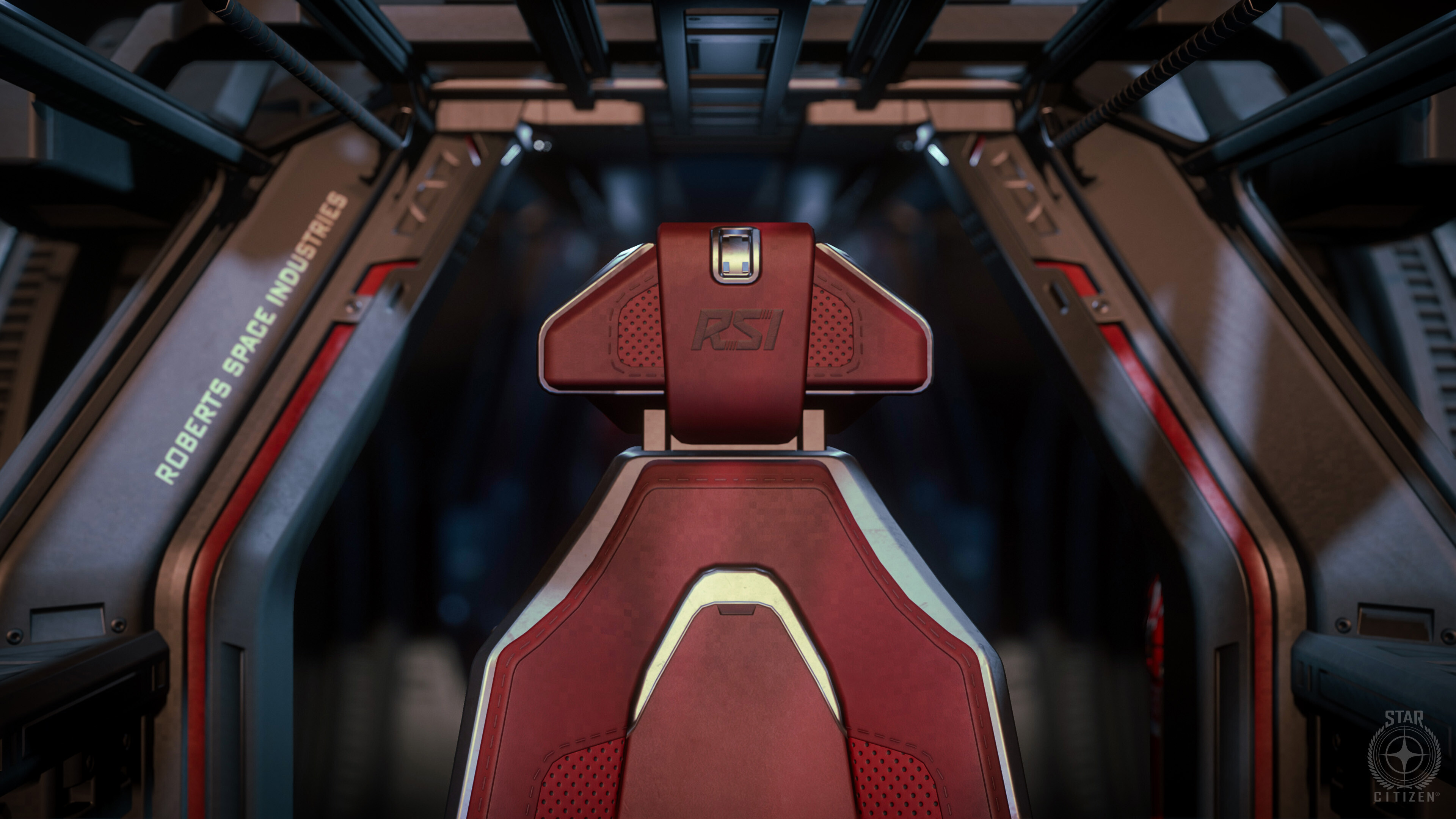
New unannounced RSI ship

-# Aurora SE

Quote: It’s almost time to celebrate a legacy.

This Week in Star Citizen:

TUESDAY, MARCH 10, 2026

  • March Monthly Bundle

WEDNESDAY, MARCH 11, 2026

  • Roadmap Update
  • Roadmap Roundup

THURSDAY, MARCH 12, 2026

  • Stella Fortuna 2956 commences!
  • Patch Watch Post: Alpha 4.7
  • Star Citizen Live: FPS Gameplay and Combat Q&A (Twitch)

FRIDAY, MARCH 13, 2026

  • RSI Weekly Newsletter

Gideon Bundle

Fit in among the rust and ruin of Nyx with this ‘Gideon’ armor, weapon, and ship paint bundle, featuring a heavily worn teal finish with yellow accents. Includes the RRS Morozov-SH-I armor with backpack, Behring P6-LR sniper rifle, and paint for the Grey’s Market Shiv.

Featuring fortified armor plating and ample storage, the Morozov-SH-I is ready to overcome all kinds of adversity, while the Behring P6-LR ballistic sniper rifle makes up for its slow rate of fire with a high-powered round that’s effective from long range.


Roadmap Roundup - March 11, 2026

Release View

4.7

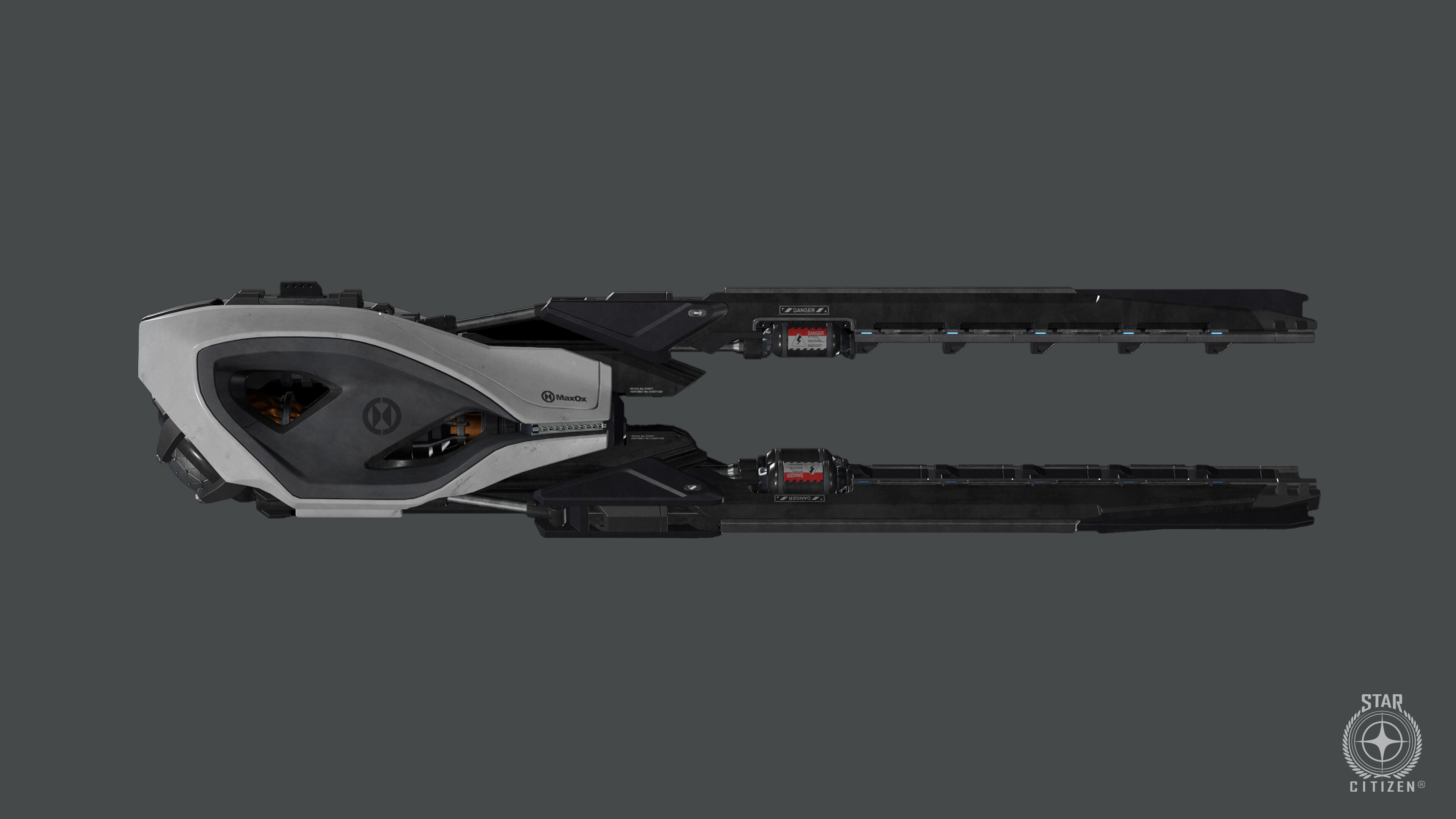
MaxOx Neutron Cannon Size 3

Implementing a new Size 3 neutron weapon in the Persistent Universe: the MaxOx NN-15 Cannon.

This card has been brought to 4.7 PU, from 4.6 Arena Commander.
This card has been set to Committed.

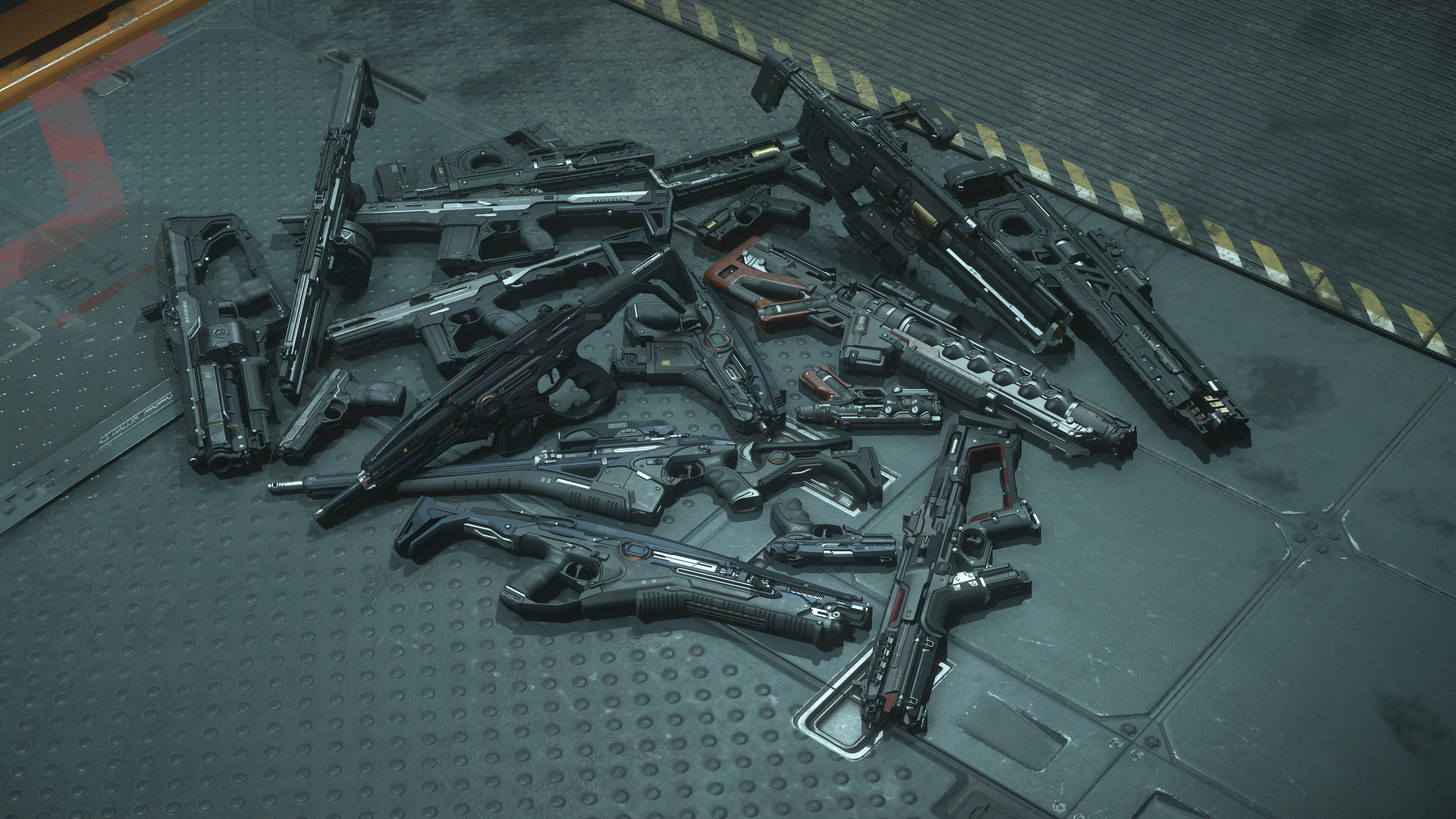
FPS Weapons Art Refactor

Updating visual material and texture for the following weapons and equipment: Behring: BR-2, GP-33, P8-AR, P8-SC, S-38 / Gemini: A03, C54, LH86, R97, S71 / Klaus and Werner: Arclight, Arrowhead, Demeco, Gallant, Lumin / Lightning Bolt Co.: Yubarev, Atzkav / Kastak Arms: Karna / APX Fire Extinguisher

This card has been set to Committed.

QV Breaker Stations

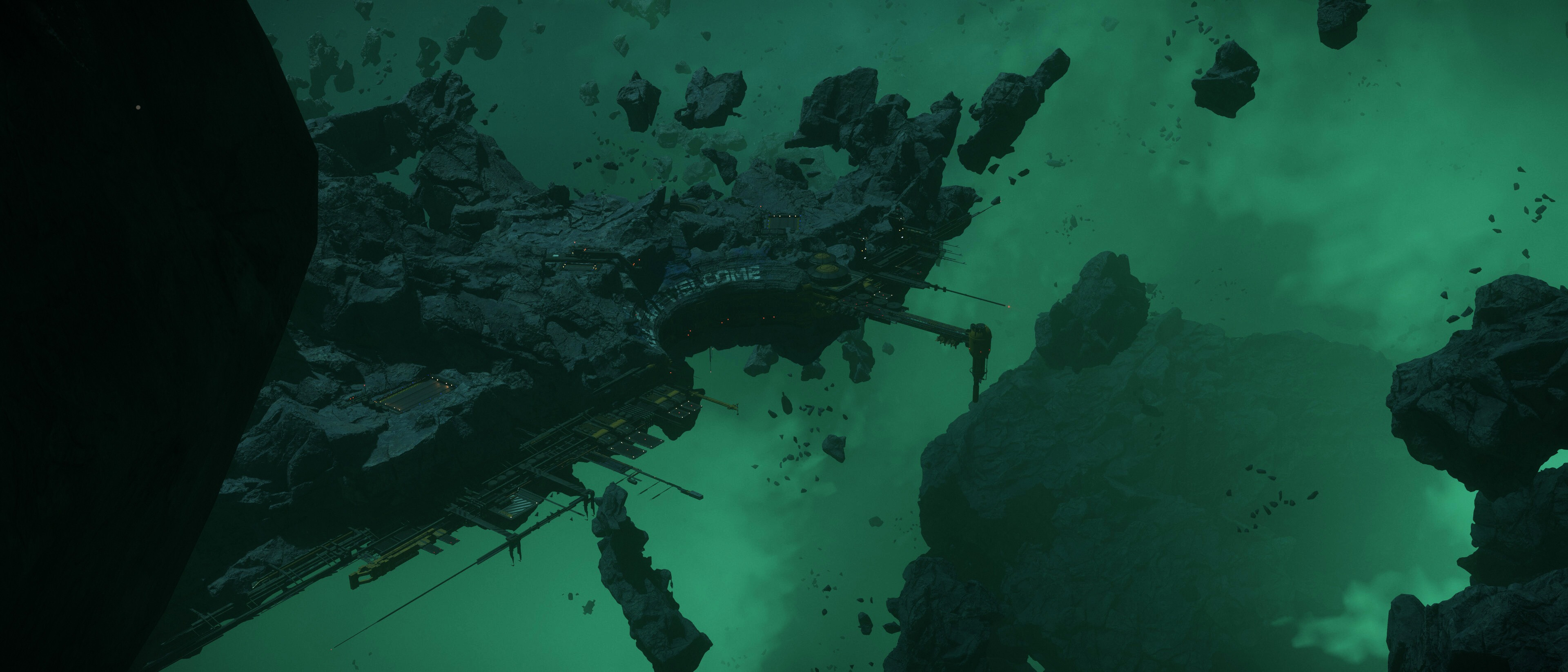
Located in the Keeger Belt, QV Breaker Stations provide key infrastructure and operations, accessible through contracts: “QV Breaker Station Mining Rights”, either “Exclusive” or “Shared”.

The description has been updated to highlight Operation-type content.
The image has been updated.
This card has been set to Committed.

New Wikelo Ships Offerings (4.7.0)

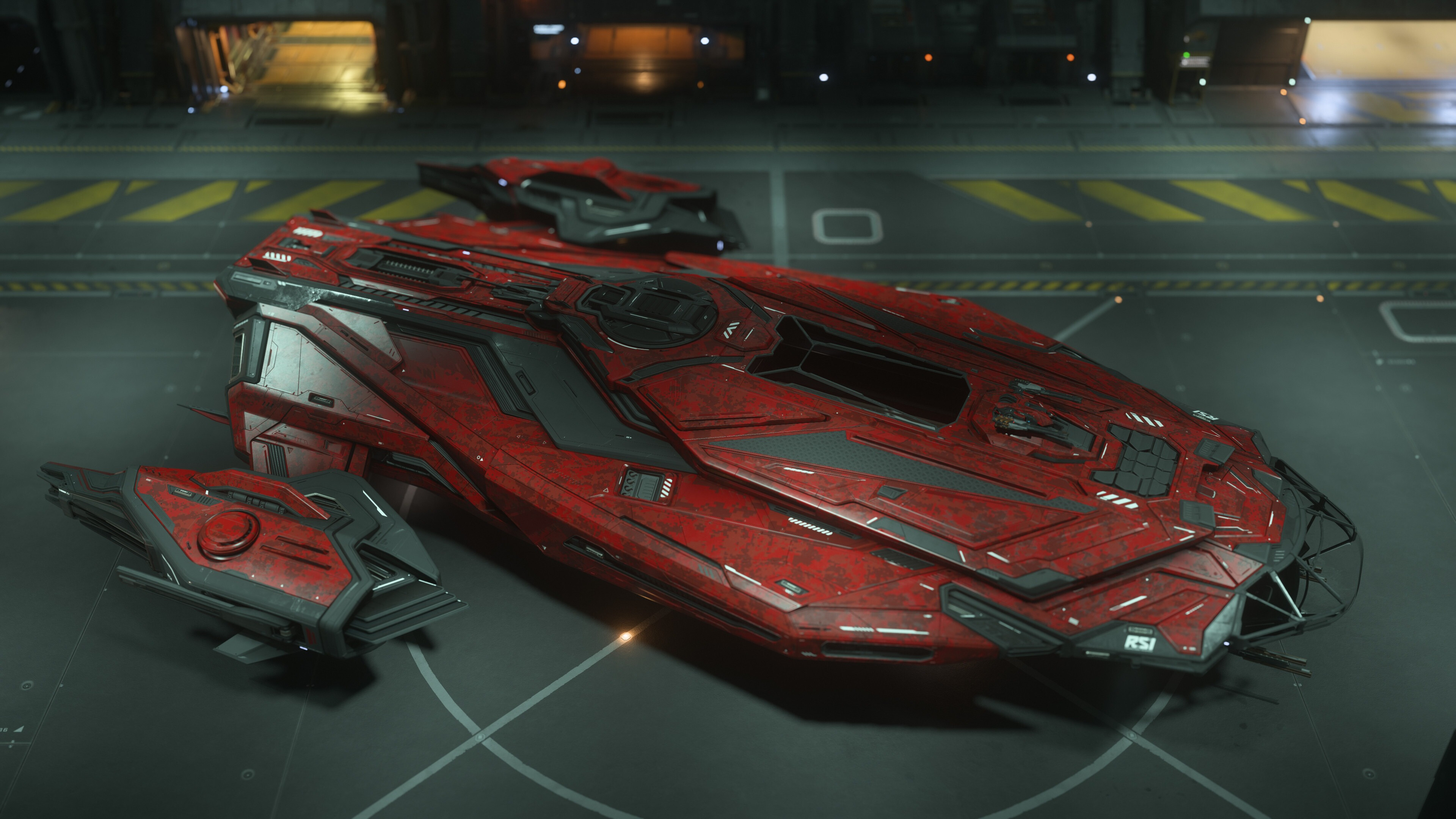
Adding a new vehicle and new equipment to the ever-expanding Wikelo’s Emporium: RSI Apollo Triage, with upgraded components and a unique base livery. This reward can be unlocked by completing Wikelo’s contracts.

The image has been updated.
This card has been set to Committed.

People’s Service Stations

Implementing social stations in Nyx. Managed by members of the People’s Alliance, these service stations offer a safe haven with basic restock, rearm, and refueling operations for pilots traveling through Nyx.

The image has been updated.
This card has been set to Committed.

Phoenix Stella Fortuna is also no longer limited and can be ccu’d to - not clear if this is intentional

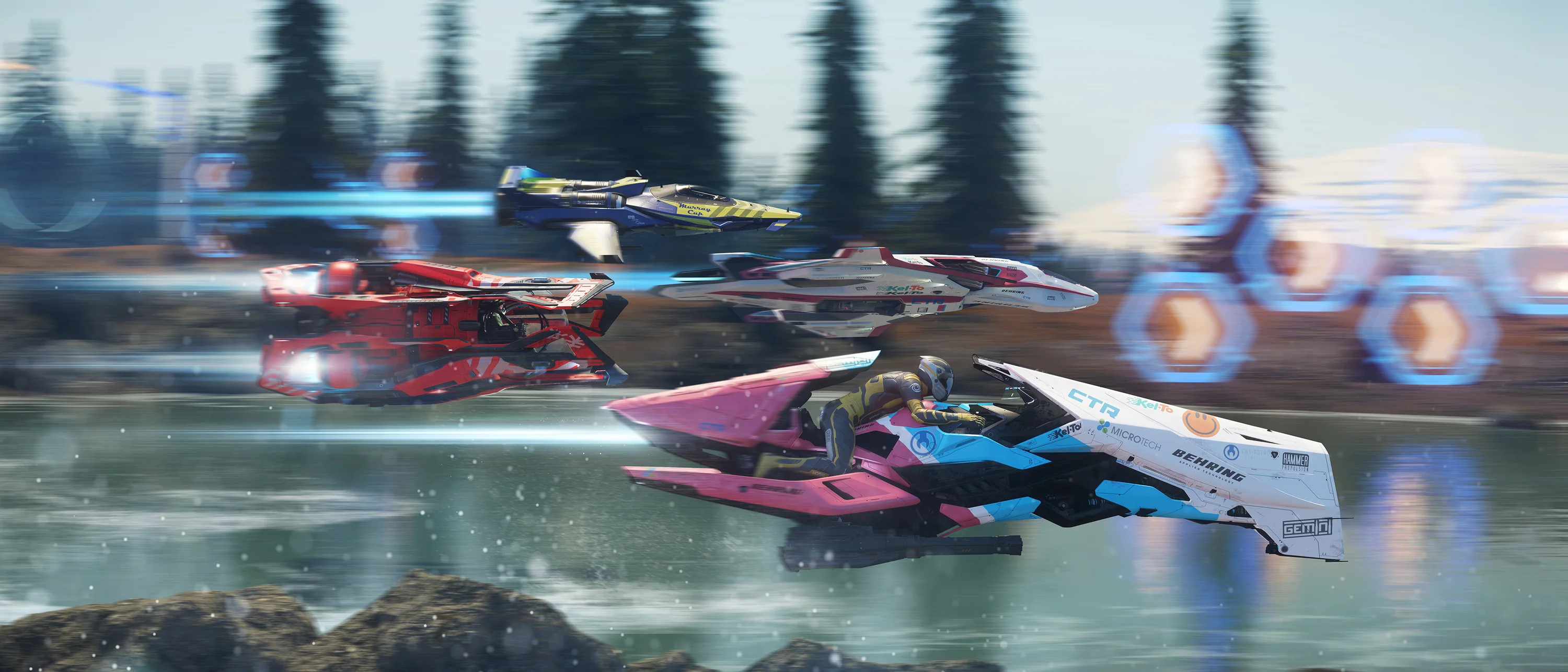
Stella Fortuna 2026 Sale :four_leaf_clover:

Pledge store:

  • Each limited-time set includes a race-ready ship, themed ship paint and racing suit, with select sets also featuring a matching weapon. Available as Warbond only, these racing sets cannot be obtained with store credit.
  • Racing Gear and Racing Paints
  • Limited Fortuna Gear Pack

Alpha 4.7 - Patch Watch | System… Check!

Hello everyone,

Welcome to another Patch Watch! These posts shine a light on upcoming features, improvements, and fixes that may not appear on the Public Roadmap but are updates we believe you will find valuable. You can also read the recent PTU Patch Notes for Alpha 4.7.

This time, we are focusing on several gameplay and balance updates coming to Alpha 4.7. From engineering tweaks to radar behavior, armor & shield balance, salvage variety, and missile balance, these changes aim to improve combat readability, ship survivability, and overall gameplay consistency.

Let’s dive in!

Engineering Gameplay Updates

Alpha 4.7 brings a new round of balancing to shields and armor, aimed at improving combat pacing and ship durability.

Shield Balance Update

These changes should make shield combat feel more consistent while reinforcing the intended strengths of energy-based loadouts when targeting shielded opponents.

  • Increased overall shield health across ships
  • Reduced the gap between shield variants to make their performance differences less extreme
  • Energy weapons will now deal increased damage to shields

Armor Balance Update

This creates a clearer combat progression where heavier weapons or sustained damage are required to break through strong armor before lighter weapons can become effective.

  • We are introducing minimum damage requirements for armor
  • When armor is at full health, certain smaller projectiles will no longer damage the armor, ship hull, or internal components
  • Once armor has been weakened and reaches a lower health state, smaller caliber weapons will begin to penetrate and deal damage
  • On top of these, armor will get a general balance pass to take these new changes into account.
    For example, a Perseus has heavy armor, so a small ship weapon won’t be able to penetrate it or deal damage. However, once the armor has been weakened, a small ship weapon could then be able to affect the ship. You’ll need bigger guns to crack that tough shell first.

Life Support Adjustments

Life Support systems are receiving tuning to better reflect the effort required to maintain ship atmospheres.

  • Increased Life Support cost to maintain the atmosphere
  • Reduced the exchange rate between Life Support systems and rooms
  • Reduced exchange rates between connected rooms
  • Life Support generators will now also take longer to refill rooms and perform heat exchange
    In practice, this means atmosphere management becomes slightly more deliberate, especially on larger ships where room-to-room air exchange plays a bigger role.

Radar and Detection Changes

The type of installed radar and the amount of assigned power now have a direct effect on the range at which aim assists and ESP come into effect. This is reflected by the lack of PIPs outside the effective range and by appropriate UI elements during precision targeting.

Power and Aim Assist

Assigned power now directly affects aim assist range; this applies to both weapon aim assist and ESP. For example, assigning 2 points to your S1 Radar would set aim assist at 910 meters, while assigning 5 points would increase it to 1,105 meters.

This range is reflected on your HUD by the distance at which target pips appear, and it changes based on both the radar installed on your ship and the amount of power assigned to it.

  • Radars now require more sustained power to operate
  • Activation power requirements remain similar or slightly lower
    Weapon aim assist and ESP are available when a target is within your effective assist range. Increasing power to your radar extends that range, while reducing power shortens it. This adds another layer to power management decisions during combat.

Precision Targeting

Precision targeting is also affected by radar power and assist range.

  • Subtargets are now visible during precision targeting when you are within a meaningful assist range
  • Stronger radar power helps maintain that range, making precision targeting more reliable during combat

Cross-Section Detection

  • Cross-section signatures are no longer passively detected
  • They are now only detected through active pinging with your scanner

This change opens the door for fully stealth-focused builds.

New Radar Items

  • New radar components have been created and are planned to become available through in-game shops, missions, and potentially crafting
  • The manufacturers Basilisk, CHCO, Garuda/Gorenberg, Navegante, and Wilon offer new ship radars