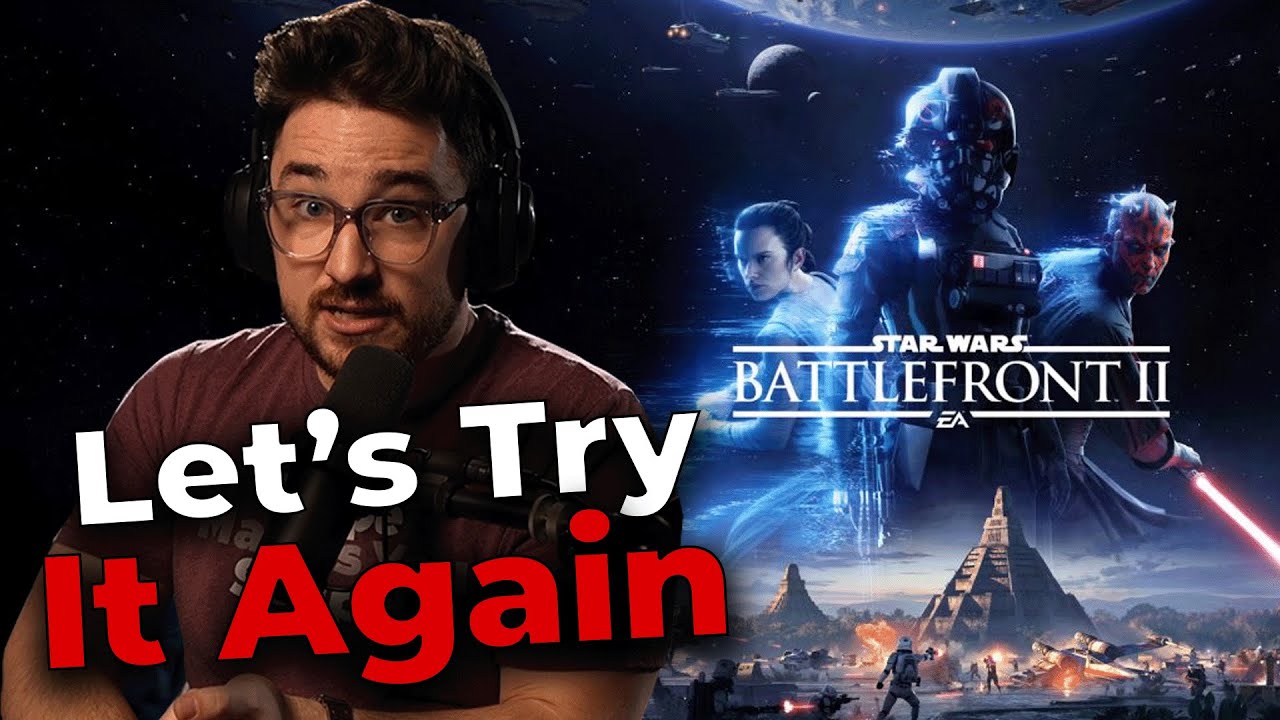
The video features a nostalgic revisit to Star Wars Battlefront 2, highlighting its recent resurgence in popularity, partly driven by the success of Andor. The creator notes that many players are returning to the game, which is available through Steam and Game Pass, and comments on the generally positive reception and reviews. Despite its age, the game still impresses visually and offers a solid gameplay experience, though it is marred by issues such as hackers, unbalanced heroes, and poor matchmaking, which have affected its reputation over the years.
The core problem with Battlefront 2’s initial launch was its monetization system centered around loot boxes and star cards, which heavily influenced gameplay balance and progression. Players needed to spend real money to acquire the best star cards, giving paying players a significant competitive advantage. This system was widely criticized for being exploitative and unfair, leading to a backlash that forced EA and DICE to overhaul the game’s monetization and remove loot boxes about a year after release. The game was fundamentally designed around these microtransactions, making the pivot to a more progression-based system a challenging and imperfect fix.
In the gameplay segment, the creator demonstrates how the game now functions post-update, with star cards being unlocked through gameplay rather than purchased. They show how players can customize heroes with star cards in arcade mode, and how progression now ties into leveling up archetypes and unlocking abilities naturally through play. While this is an improvement over the original loot box system, the game still feels somewhat hollow because the core design was built around monetization, and removing that aspect leaves a sense of something missing or disconnected.
The video also discusses the broader implications of designing games around monetization, emphasizing how difficult it is to undo such systems once embedded. The creator compares Battlefront 2’s situation to other games like Shadow of War, which also suffered from grind-heavy, monetization-driven endgames. They point out that players with highly leveled characters or star cards have a distinct advantage, which can be frustrating for newcomers, especially since the game’s skill and experience gap is amplified by the progression system.
Finally, the creator criticizes EA’s handling of the franchise, lamenting that despite the game’s potential and the popularity of the Star Wars IP, EA abandoned Battlefront 2 after initial issues, leaving it to stagnate. They highlight the community’s frustration, exemplified by a famously downvoted Reddit post complaining about locked heroes like Darth Vader, and EA’s dismissive responses about “pride and accomplishment.” Overall, the video portrays Battlefront 2 as a game with enduring appeal that was ultimately sabotaged by poor monetization practices and corporate mismanagement, leaving a legacy of what could have been a legendary Star Wars experience.