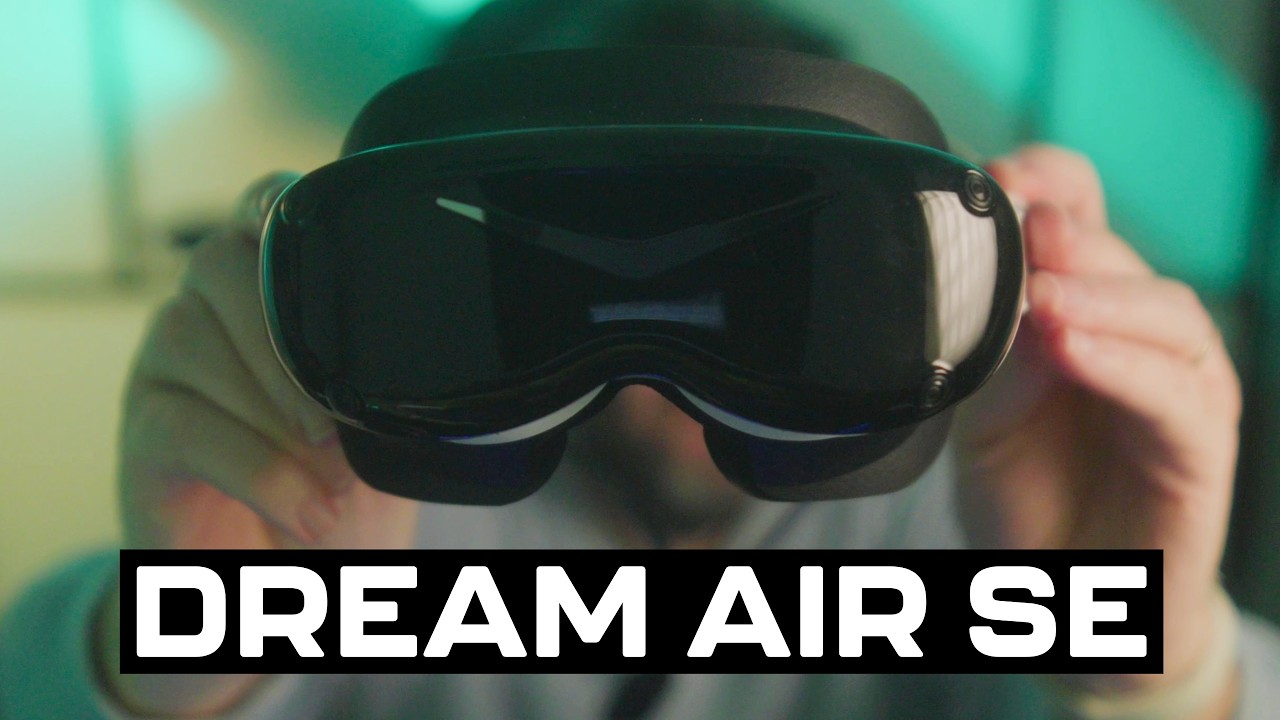
The video provides an in-depth comparison of four VR headsets relevant for playing Star Citizen: the Pimax Dream Air, Dream Air SE, Quest 3, and Steam Frame. The Dream Air stands out as the top-tier option with a significantly higher resolution (3840x3552 per eye) and superior visual quality, making it a league above the others. However, it comes at a steep price (£1,774 in the UK) and requires a powerful PC with high-end graphics cards like the RTX 5090 to run effectively. The Dream Air SE, while visually impressive with a resolution of 2560x2560 per eye and a lighter weight (140g), does not match the full Dream Air’s visual fidelity but competes well against the Quest 3 and Steam Frame.
The Quest 3 and Steam Frame headsets are closer in terms of resolution and visual experience, with the Quest 3 offering 2064x2208 pixels per eye and the Steam Frame 2160x2160. The Quest 3 is notably more affordable at around £550 and provides a good VR experience, especially compared to the older Quest 2. However, it has some comfort issues, particularly with its stock strap during active gameplay. The Steam Frame, although heavier (440g), has better weight distribution and comfort, but its visual quality is roughly on par with the Quest 3. Its wireless streaming technology theoretically offers an advantage over the Quest 3’s virtual desktop streaming, but in practice, it did not provide a significant visual improvement.
Comfort is a critical factor discussed, with the Dream Air SE praised for its new facial interface that improves wearability compared to the original Dream Air, which tended to leave marks on the face. The Steam Frame’s balanced weight also makes it comfortable for longer sessions, while the Quest 3’s stock strap can cause discomfort during intense movements. However, both Pimax models are tethered to a PC, which can be cumbersome due to cable management, whereas the Quest 3 and Steam Frame offer wireless or more flexible setups. The video notes that Pimax is likely to improve their wireless options in the future.
Performance-wise, all these headsets are demanding to run, with the Dream Air requiring the most powerful hardware. The Dream Air SE, Quest 3, and Steam Frame still demand significant GPU power due to their high resolutions. The Dream Air SE can maintain about 36fps with upscaling and frame generation to smooth gameplay, but this is not ideal. AMD GPUs currently have limitations with Pimax’s frame generation technology, which affects performance negatively. Upcoming improvements in rendering techniques, such as foveated rendering and better upscaling support like FSR, are expected to enhance performance for VR in Star Citizen, but these are not yet implemented.
In conclusion, the Dream Air is the best VR headset for Star Citizen if you have the budget and a high-end PC to support it, offering unmatched visual quality and immersion. The Dream Air SE is a solid middle ground, providing better resolution and comfort than the Quest 3 and Steam Frame but without the Dream Air’s exceptional clarity. The Quest 3 is the most cost-effective and accessible option, suitable for users who prioritize price and wireless convenience over the highest visual fidelity. The Steam Frame, while comfortable and wireless, does not offer enough advantages to justify its higher price compared to the Quest 3. Ultimately, the choice depends on budget, hardware capacity, and personal preferences regarding comfort and visual quality.