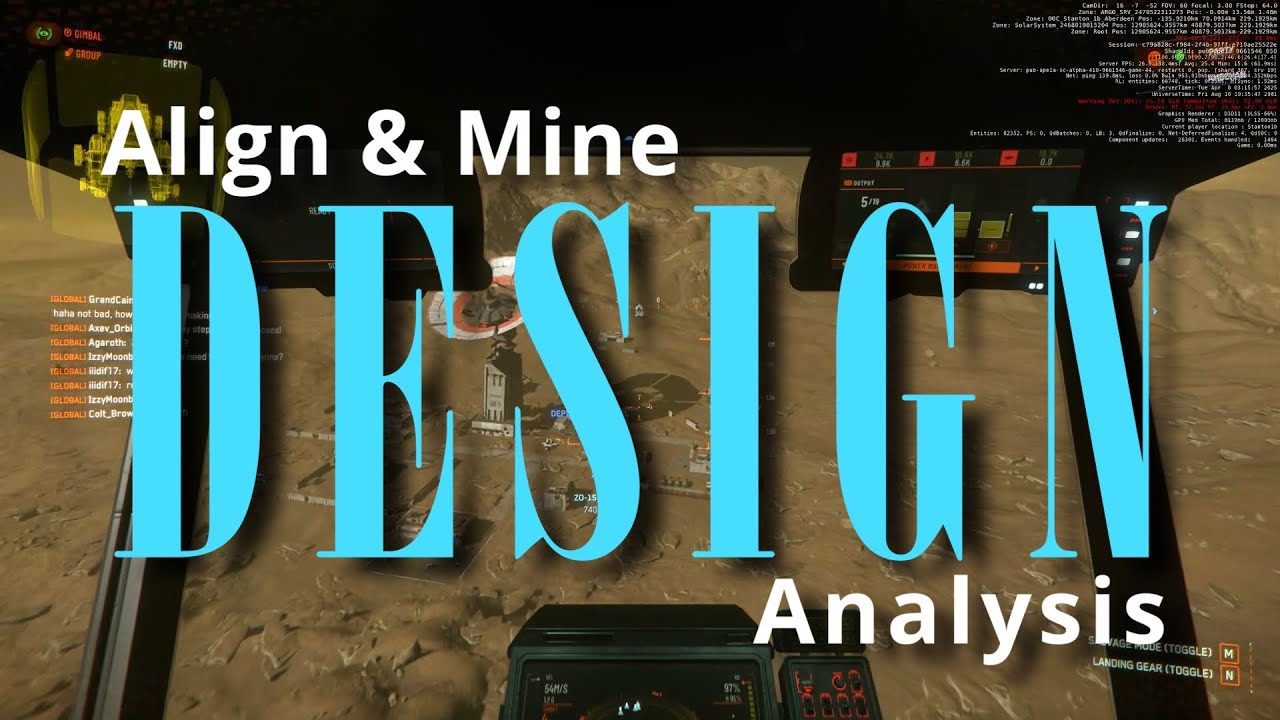
In the video, Daniel Raymond, the voice behind Ray’s Guide, discusses the game design of the “Align and Mine” event in Star Citizen 4.1, which is currently in Evocati testing. He emphasizes that evaluating a game’s design should be based on its original goals. Raymond argues that while “Align and Mine” was presented as a sandbox event, it is more structured than it claims to be, drawing parallels to other events like “Siege of Orison” rather than more open-ended experiences like “Jumptown.” He critiques the event for its heavy structure and lack of clear communication about progress.
Raymond explains that a true sandbox game allows players to engage creatively without a rigid path. However, “Align and Mine” features a complicated sequence of tasks that players must follow to achieve the event’s goals. He describes the structured progression involving blue cards, red cards, computer blades, and mining lasers, which ultimately leads to the mining of unique minerals. The event resets after an unspecified time, but the excitement largely hinges on combat and loot rather than exploration or creativity.
One of the key issues Raymond identifies is the absence of status updates during the event. Unlike other structured events that provide regular progress notifications, “Align and Mine” leaves players in the dark about their contributions and the overall status of the mission. This lack of information can lead to confusion and aimlessness, as players have no clear direction on what to do or how to participate effectively.
Despite its structural flaws, Raymond acknowledges the aesthetic appeal of the “Align and Mine” mission, praising its level design and visuals. However, he argues that the event’s strong focus on mining the sought-after ores creates a sense of obligation to follow the structured path rather than explore freely. He suggests that if the event had no defined goals, players could enjoy it as a sandbox experience, but the current design contradicts that premise.
To improve the event, Raymond proposes splitting “Align and Mine” into two distinct phases: the alignment phase and the mining phase. In this revised structure, players would first complete the alignment tasks with clear guidance and rewards, followed by an open-ended mining phase where they could choose to collaborate, compete, or engage in piracy. This approach would better balance the structured elements with sandbox gameplay, allowing for a more engaging experience that aligns with the original intent of a sandbox event.