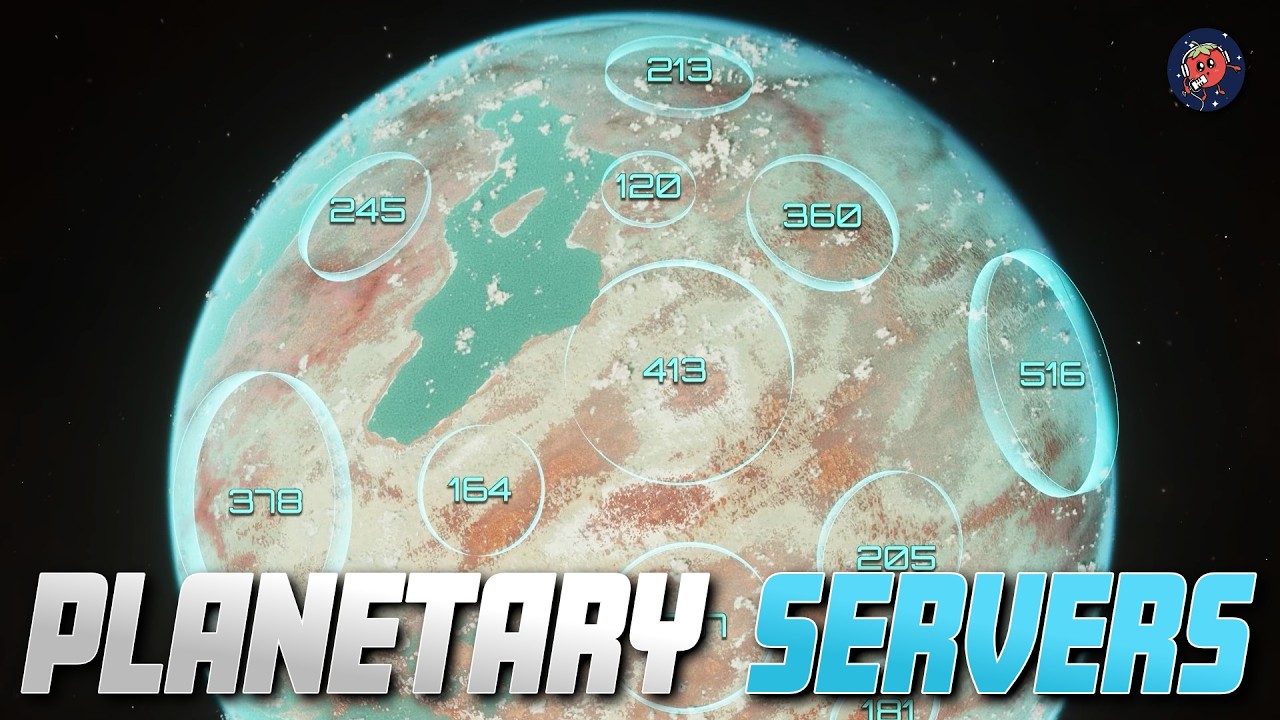
The recent roadmap update for Star Citizen highlights the upcoming Alpha 4.11 patch, which introduces significant advancements in server meshing technology, particularly through the implementation of Dynamic Game Server (DGS) planet subdivision. This tech enables planets and moons to be divided into smaller territories, each managed by separate servers, rather than having a single server responsible for an entire celestial body. This subdivision improves load distribution and lays the groundwork for finer-grain server meshing at a planetary scale, with Nyx 1 being the first planet to utilize this technology. This development is crucial for supporting higher player densities on planets without performance issues.
The subdivision system organizes planetary locations into clusters, each with specific characteristics and rules. For example, mining clusters are placed near resources on lawful planets and include mining outposts and caves, while unlawful clusters are isolated and host more dangerous locations like crashed ships and ruins. These clusters are further grouped into sectors, which can contain 10 to 15 locations each, and sectors themselves are distributed across the planet. This hierarchical structure allows for detailed control over in-game environments and faction presence, creating a more immersive and dynamic gameplay experience.
The scale of locations planned for planets in Star Citizen is staggering, with claims of over 3,000 locations on a single planet. This vast number of points of interest necessitates the use of dynamic server meshing, where servers can be activated or deactivated based on player presence. This approach helps manage the massive server infrastructure required to support multiple planets, star systems, and shards, making the game more efficient and scalable. The dynamic server meshing system is a critical step in realizing the ambitious vision of Star Citizen’s persistent universe.
Alongside these technical advancements, the Nyx system will introduce three distinct planets in Alpha 4.11: Nyx 1, a terraformed coreless world with a thriving ecosphere; Nyx 2, a harsh, high-temperature planet requiring protective gear, marking the debut of Starware and offering unique exploration opportunities; and Nyx 3, an ice giant with a hostile environment but potential for industrial resource extraction. These planets showcase the diversity and depth of environments players will encounter, each with unique challenges and gameplay possibilities.
Overall, Alpha 4.11 represents a significant milestone for Star Citizen, particularly in server technology and planetary design. The patch is expected to release around November, coinciding with the game’s holiday season hype cycle and the upcoming Intergalactic Aerospace Expo (IAE). The advancements in dynamic server meshing and planetary subdivision promise to enhance the scale, immersion, and performance of the game, setting the stage for more complex and populated worlds in the future.