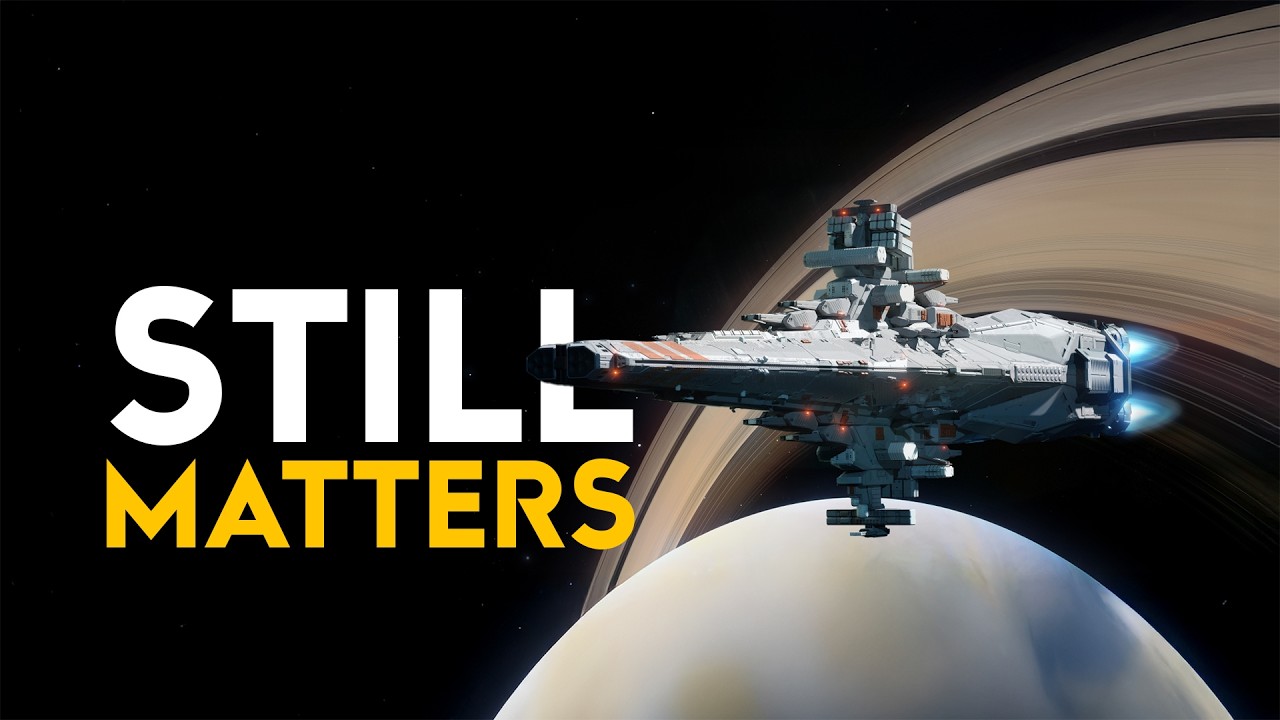
The video begins by addressing the misconception that Falling Frontier, a space strategy game, has seen little progress recently. The creator reveals that behind the scenes, there has been a steady stream of new content shared quietly on the game’s Discord, including clips, music, lore, and development details. Unlike the sparse Steam updates, this material shows significant advancements in the game’s environments, tools, combat mechanics, and overall tone, highlighting that the game is still very much in active development, with a realistic release window around 2026.
One of the key improvements discussed is the game’s sense of scale and pacing, demonstrated through new mission clips where ship movement is slow and deliberate, emphasizing strategic distance rather than fast-paced arcade action. The gas cloud visuals have been overhauled with a mesh-driven volumetric system, allowing for more natural and complex formations without compromising performance. Additionally, gameplay mechanics like the LIDAR-style scanning system reinforce the game’s focus on limited information and logistics, enhancing the strategic depth by integrating fog of war as a core element.
Combat in Falling Frontier has evolved into something resembling naval warfare rather than chaotic space battles. Missiles and torpedoes follow curved trajectories and can be intercepted by point defense systems, while line of sight plays a crucial tactical role, as ships can only target visible sections of enemy vessels. Destruction effects are highly detailed, showing internal decks exposed and hulls tearing realistically based on impact points. These physics-driven destruction sequences add a layer of immersion and realism, extending to environmental effects like glowing radiators and cooling wreckage.
World-building has also received significant attention, with planets now rendered as fully realized 3D objects acting as resource hubs and colonies. Character portraits have been refined to represent actual leaders who influence gameplay through unique skills and abilities, adding narrative depth without turning the game into a people simulator. These characters can be captured or killed, impacting strategic decisions and adding stakes to engagements. Sound design and music, often overlooked, are highlighted as standout features, contributing to the game’s immersive atmosphere.
In conclusion, the video provides a balanced assessment, acknowledging that while Falling Frontier is not yet ready for release and lacks a public demo, it is progressing steadily through an integration and refinement phase. The developer’s ongoing work on environments, combat, assets, lore, and audio demonstrates that the game is coalescing into a cohesive whole rather than a collection of isolated features. Although many gameplay aspects, including AI behavior and campaign flow, remain to be fully revealed, the project is very much alive and moving toward becoming a fully realized game, with a cautious but optimistic outlook for its future.