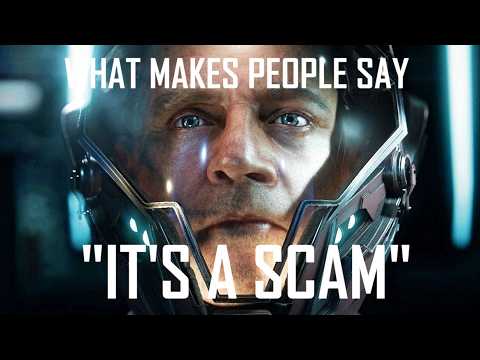
The term “scam” has increasingly appeared in discussions about Star Citizen, a game developed by Cloud Imperium Games (CIG). While calling it a scam implies deliberate deception, which is hard to prove without insider knowledge, the growing use of the term reflects a widespread perception problem. Star Citizen has been in development for over 14 years, with funding exceeding a billion dollars, yet it remains in alpha with many promised features and ships unfinished. This prolonged development and continuous selling of concept ships that lack the gameplay originally promised have led many backers to question whether the project is delivering on its promises or simply relying on ongoing funding.
Originally, Star Citizen was pitched as an ambitious space simulation funded by its community, where backers would eventually receive a finished game and in-game items. However, delays have stretched from months to over a decade, and many ships sold years ago still lack the gameplay reasons they were purchased. This situation creates a trust issue, as backers buy ships based on future experiences rather than current content. The ongoing sale of new ships while older promises remain unfulfilled raises concerns about whether CIG prioritizes funding over delivering completed features, fueling skepticism among the community.
Another major point of contention is the lack of transparency regarding how funds are allocated between Star Citizen’s persistent universe and its single-player campaign, Squadron 42. Both projects share technology and development resources, but backers are not clearly informed about how their contributions are divided. Squadron 42 was initially expected to release in 2016 but remains unfinished as of 2023, despite consuming significant resources. This blurring of financial and development lines further complicates backers’ understanding of what they are funding and contributes to doubts about the project’s management and priorities.
Communication and roadmap issues have also played a role in eroding trust. Early transparency about development plans gave way to cautious and less detailed updates as delays mounted, making it harder for the community to measure progress. While explanations about the complexity of development were initially accepted, over time backers shifted from asking why things are delayed to demanding clear timelines for completion. The prolonged wait, combined with ongoing sales and marketing that showcase a polished vision far from the current alpha state, has led many to feel misled or exploited.
Ultimately, the discussion about whether Star Citizen is a scam centers on perception rather than legal definitions. Many backers no longer trust that the promises will be fulfilled promptly, if at all, leading to widespread disappointment and cynicism. The only way for CIG to change this perception is by delivering the promised content rather than relying on trailers, concept ships, or explanations. If the game eventually fulfills its ambitious vision, the lengthy development could be seen as a remarkable achievement. Until then, the growing skepticism and use of terms like “scam” reflect deep frustration with a project that has raised vast sums but remains incomplete after more than a decade.