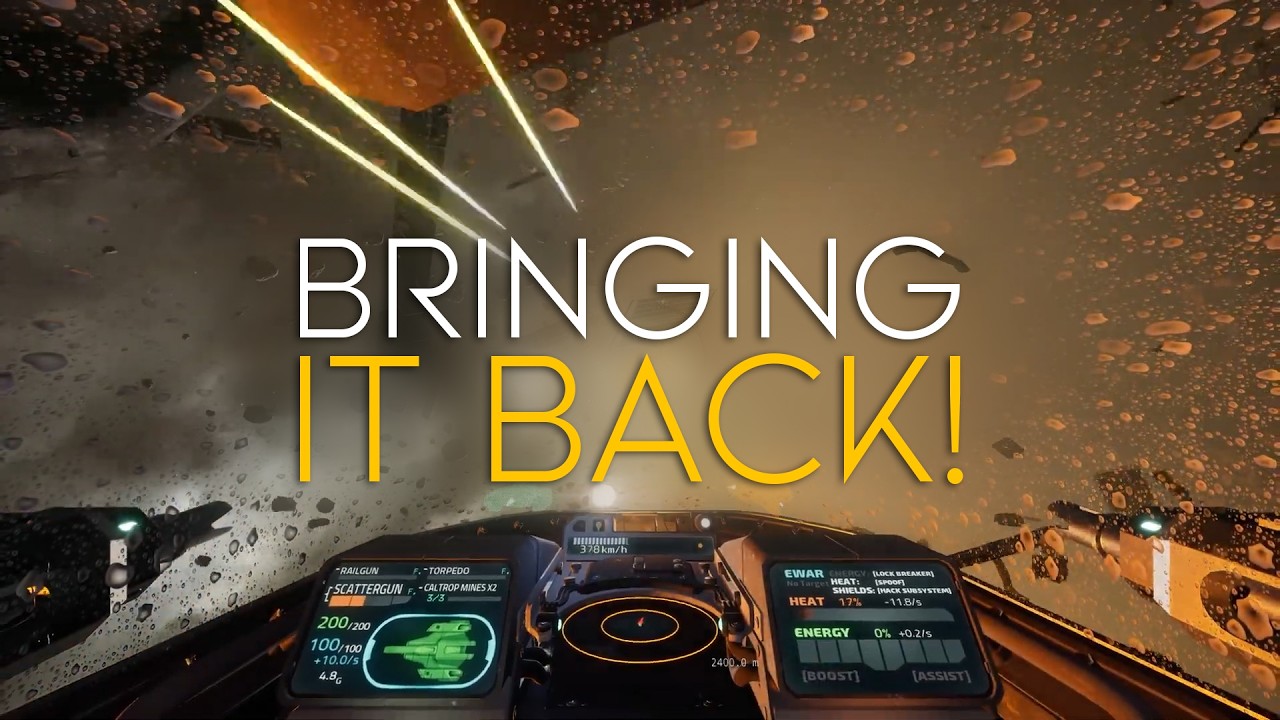
The video discusses a notable trend among upcoming space simulation games slated for release in 2026, highlighting a return to the classic “cockpit-first” design philosophy. This approach emphasizes the player’s experience as the pilot, immersing them directly within the spaceship’s cockpit rather than managing the ship through external views or menus. The video contrasts this with older space sims like X-Wing and Free Space 2, where all gameplay elements—shields, weapons, targeting—were integrated into the cockpit interface, creating a deeply immersive and intense experience centered on situational awareness and real-time decision-making.
Several new games exemplify this revival of cockpit-centric gameplay. “Remnant Protocol” blends spaceflight simulation with strategic elements, focusing on commanding a galactic rebellion from a hidden base while engaging in intense dogfights. Its design prioritizes the moment-to-moment spaceship experience, with sensors, shields, and targeting all integrated into the cockpit. Another title, “Blackar Ranger,” emphasizes visceral and chaotic first-person combat with full HOTAS support and six degrees of freedom, requiring players to learn and master their fighter’s systems, reinforcing the feeling of being a true pilot.
Other games like “Grebles” focus on speed and bounty hunting, delivering a fast-paced cockpit experience both in VR and traditional screen modes. “RXer” offers a more technical approach with six degrees of freedom Newtonian physics, complex ship subsystems, and energy and heat management, demanding skill and deep understanding of the ship’s mechanics. Meanwhile, “First Project” aims for a realistic space simulation with a one-to-one scale solar system and a seamless, loading-screen-free universe where players can mine, trade, and engage in large-scale multiplayer conflicts.
“Xerxes Shadow” stands out as a hybrid game combining space combat, exploration, FPS elements, and fleet command. Players pilot their fighter while issuing real-time orders to an armada, blending tactical decision-making with hands-on piloting within the cockpit. Although challenging to execute, this integration promises a unique and immersive experience that pushes the boundaries of traditional space sims. The video notes that all these games share a core focus on the ship as the central element of gameplay, a focus that has been somewhat lost in many modern space games.
The presenter concludes that this resurgence of cockpit-first design is not merely nostalgia but a response to the genre’s evolution. While recent space games have improved in scale, economy, and persistence, many have drifted away from the fundamental sensation of being a spaceship pilot. By returning to this core experience, these upcoming titles aim to enhance immersion and gameplay quality, rekindling the passion that originally drew players to space sims. The video invites viewers to share their thoughts on these games and reflect on the classic cockpit experiences that shaped their love for the genre.