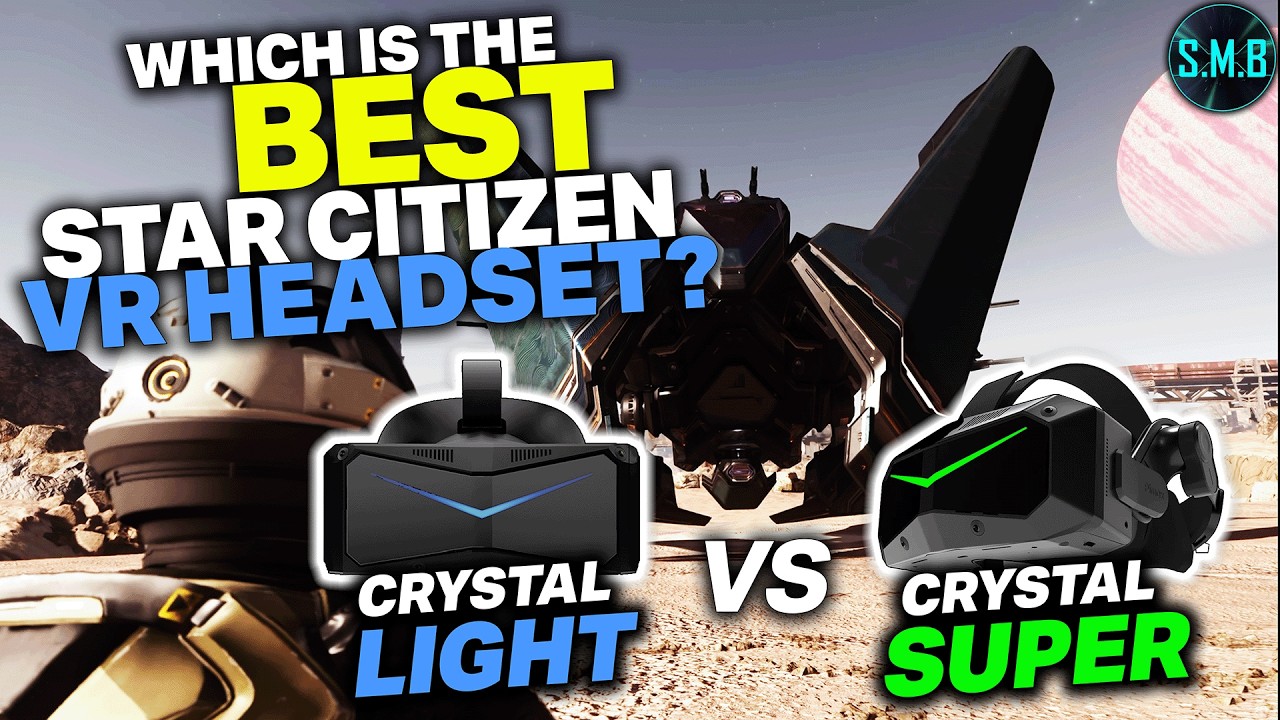
In this video, Ryan (aka Mac) reviews and compares two Pimax VR headsets—the Crystal Light and the Crystal Super—specifically for use with Star Citizen VR, which is still in an experimental phase. He begins by highlighting that while specs like resolution and refresh rate matter, the best headset choice depends heavily on individual factors such as budget, PC hardware, and personal preferences. He notes that Star Citizen VR is demanding on PCs, so having an expensive headset won’t guarantee a great experience if the system cannot handle it.
Ryan shares his experience using both headsets, expressing surprise that the Crystal Light performs very well and offers excellent clarity, sharp visuals, and good text readability. The Light is easier to run on mid to high-end PCs like his setup (Intel 10900K, RTX 5080, 64GB RAM), allowing higher per-eye resolution with decent performance. In contrast, the Crystal Super, while pricier and more demanding on hardware, provides superior visual quality with better displays, larger sweet spots, and a near-complete elimination of the screen door effect due to its higher pixels per degree (PPD).
He emphasizes that the Crystal Super is the ultimate enthusiast option, offering advanced features such as foveated rendering (which the Light lacks) that could significantly improve performance and clarity once implemented in Star Citizen. However, the Super’s higher cost—around $1,200 compared to the Light’s $700—and greater hardware demands mean it is best suited for users who have powerful PCs and are willing to invest more for a premium experience. The Light, meanwhile, strikes a strong balance between cost, clarity, and performance, making it a practical choice for most users.
Ryan also points out some practical considerations: the Light does not support controllers, which might be an issue for other VR games or future Star Citizen updates, while the Super does. Comfort-wise, the Super offers a better fit and less view distortion during quick movements. He advises that people should consider their current and future PC capabilities, budget, and how committed they are to VR gaming, especially since Star Citizen VR is evolving and not yet fully optimized.
In conclusion, Ryan recommends the Pimax Crystal Light for those seeking a high-quality, cost-effective VR headset that works well with Star Citizen’s current state, while the Crystal Super is ideal for enthusiasts who want the best experience and have the hardware to support it. He also mentions upcoming reviews of the Pimax Dream Air and encourages viewers to consider Pimax seriously over other brands. He reminds viewers that Star Citizen VR is still experimental, so buying a headset is a personal and evolving decision, and thanks his patrons and subscribers for their support.