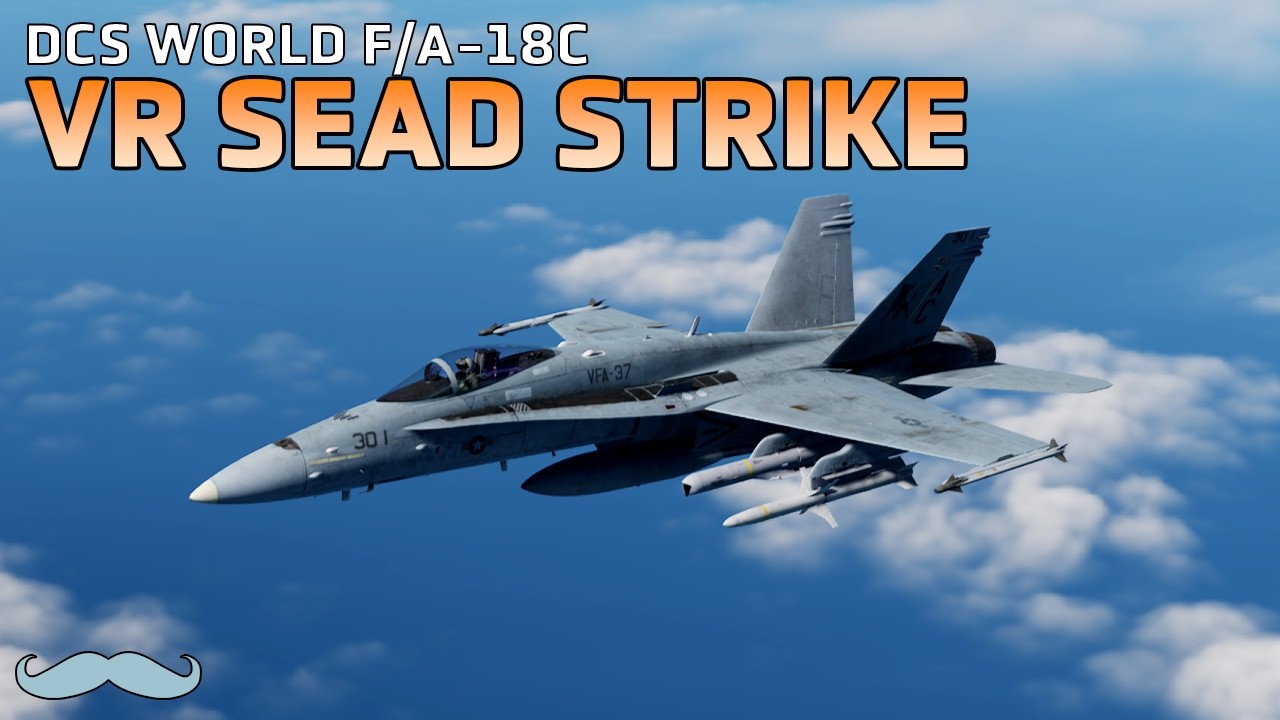
In this immersive DCS World F/A-18C gameplay video, Farister shares his first experience flying the Hornet in virtual reality (VR), using a Pimax VR headset kindly provided by the company. With hundreds of hours logged in DCS World on traditional 2D screens, Farister explains how VR transforms the flight experience by enhancing depth perception and cockpit interaction, making activities like formation flying, refueling, and carrier landings feel far more realistic. The video showcases a full mission starting from carrier deck launch, through a SEAD (Suppression of Enemy Air Defenses) and deep strike mission, with different camera views used to highlight various perspectives of the flight.
The mission begins with the detailed cockpit startup and catapult launch from the carrier, accompanied by a formation of F-14 Tomcats providing Combat Air Patrol (CAP). Farister discusses the technical aspects of the Pimax headset, including its foveated rendering technology that boosts performance by focusing high detail where the pilot is looking, and how it helped him avoid motion sickness—a common VR issue. After takeoff, the flight proceeds to a rendezvous with a tanker for aerial refueling, an experience that Farister finds notably different and more challenging in VR due to the enhanced 3D depth perception, which disrupts his muscle memory developed from 2D flying.
The core of the mission involves engaging enemy air defenses with AGM-88 HARM missiles before launching long-range SLAM-ER cruise missiles for a deep strike on a fictional target in Syria. Farister explains his tactical approach, preferring a clinical, by-the-numbers style of flying with standoff weapons rather than close-in dogfighting. He highlights the immersive nature of programming and launching these weapons in VR, aided by physical hardware controls that allow him to operate the jet’s systems without needing to see the instruments clearly through the headset.
After successfully completing the strike, the return flight to the carrier is detailed, with Farister commenting on the comfort of the Pimax headset during the nearly two-hour mission and his preference for landing the Hornet at a heavier weight for better control during carrier traps. He candidly shares the learning curve involved in adapting to VR depth perception during the carrier landing, including a wave-off on the first attempt and a successful trap on the second. The 3D experience of flying the approach and landing feels both immersive and challenging, requiring adjustments to familiar visual cues and techniques.
In conclusion, Farister expresses enthusiasm for VR as a game-changer in flight simulation, emphasizing how it adds a new layer of realism and immersion to DCS World. Despite some initial difficulties adapting to the VR environment, especially with depth perception and refueling, he is eager to continue flying in VR. He invites viewers to like and subscribe if they enjoyed the content and want to see more VR flight sim videos, thanking them for watching and sharing his honest, firsthand impressions of this exciting new way to experience combat flight simulation.