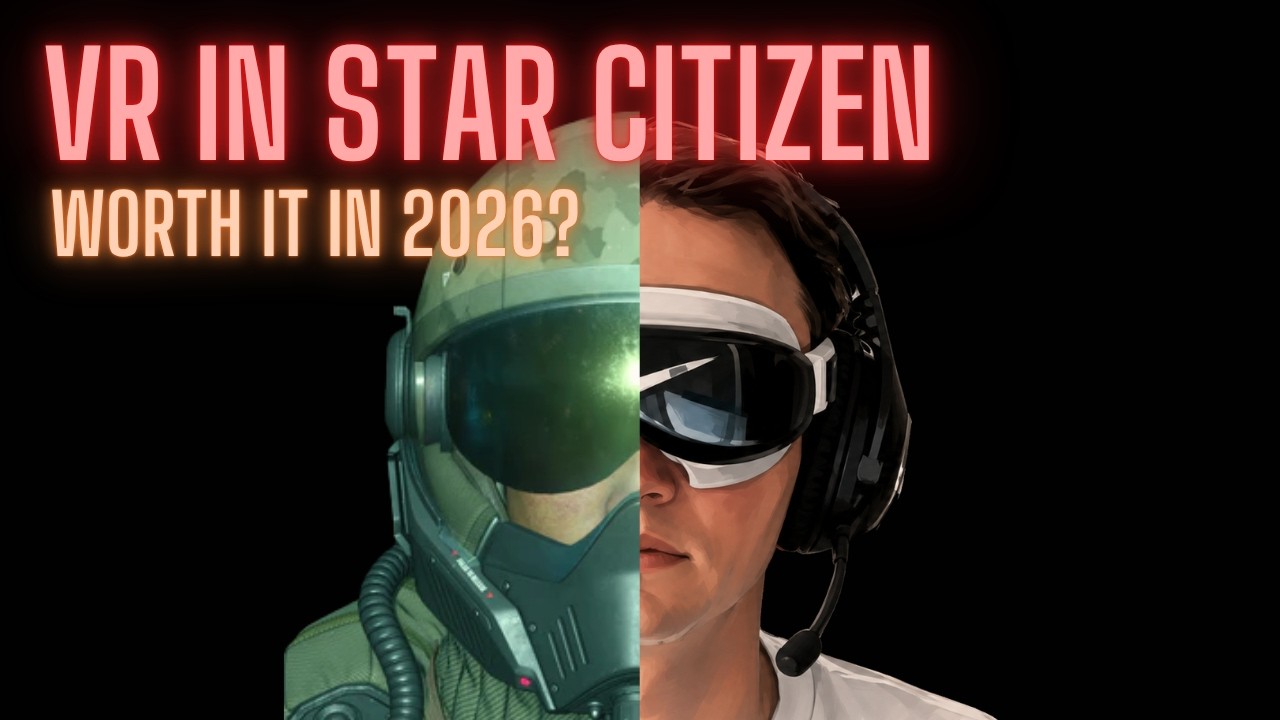
In this video, Loundkins reviews the Pimax Dream Air headset’s VR experience in Star Citizen 2026, highlighting improved immersion, scale, and UI enhancements compared to earlier VR attempts, while noting some bugs and the high cost of premium VR equipment. He recommends VR primarily for specific gameplay scenarios, advises trying VR before buying due to potential motion sickness, and remains optimistic about VR’s future in Star Citizen and other simulation games.
In this video, Loundkins explores the current state of virtual reality (VR) support in Star Citizen as of 2026, focusing on his experience using the Pimax Dream Air headset. Initially skeptical about VR in Star Citizen, especially after trying the Oculus Quest 2 with underwhelming results, he decided to revisit VR following improvements in the game’s VR optimization and a friend’s recommendation. Pimax kindly loaned him their Dream Air headset, which he found easy to set up and appreciated its compact, ski-goggle-like design and convenient connector box for managing cables in small spaces.
Loundkins highlights the impressive sense of scale VR brings to Star Citizen, making environments and ships feel much larger and more immersive than on a traditional monitor. Although he faced some limitations due to his joysticks being out of commission and had to use keyboard and mouse controls, the freedom to look around with head tracking significantly enhanced the experience. He also notes improvements in the game’s VR user interface and display clarity compared to his previous Quest experience, though some bugs like scrolling issues in the MobiGlass persisted, causing occasional frustration.
The video discusses the mixed feelings about VR in Star Citizen, emphasizing that while the Pimax headset delivered a much better experience than more affordable options like the Quest 2, the high cost of premium VR gear—often running into four figures—makes it a significant investment. Loundkins suggests that VR is best suited for specific gameplay scenarios such as space combat or large mining operations, where immersion is most beneficial, while more routine tasks like FPS missions or cargo hauling might be better enjoyed on a traditional monitor due to comfort and practicality concerns.
He also advises potential buyers to try VR before committing financially, either by borrowing a headset or visiting VR arcades, especially since motion sickness can be an issue for some players. Loundkins mentions his personal tolerance for VR sessions lasting about two hours before experiencing eye strain or fatigue. Importantly, he sees the value of VR not just in Star Citizen but across other simulation games like iRacing, where VR significantly enhances immersion and enjoyment, making the investment more justifiable for sim enthusiasts who can use the headset across multiple titles.
In conclusion, Loundkins is optimistic about the future of VR in Star Citizen, praising the ongoing development efforts and the progress made so far. He thanks Pimax for providing the Dream Air headset and encourages viewers interested in VR to do their research and consider their own comfort and usage patterns before purchasing. He invites the community to share their experiences with VR in Star Citizen and promises to continue covering updates and gameplay content related to the game.