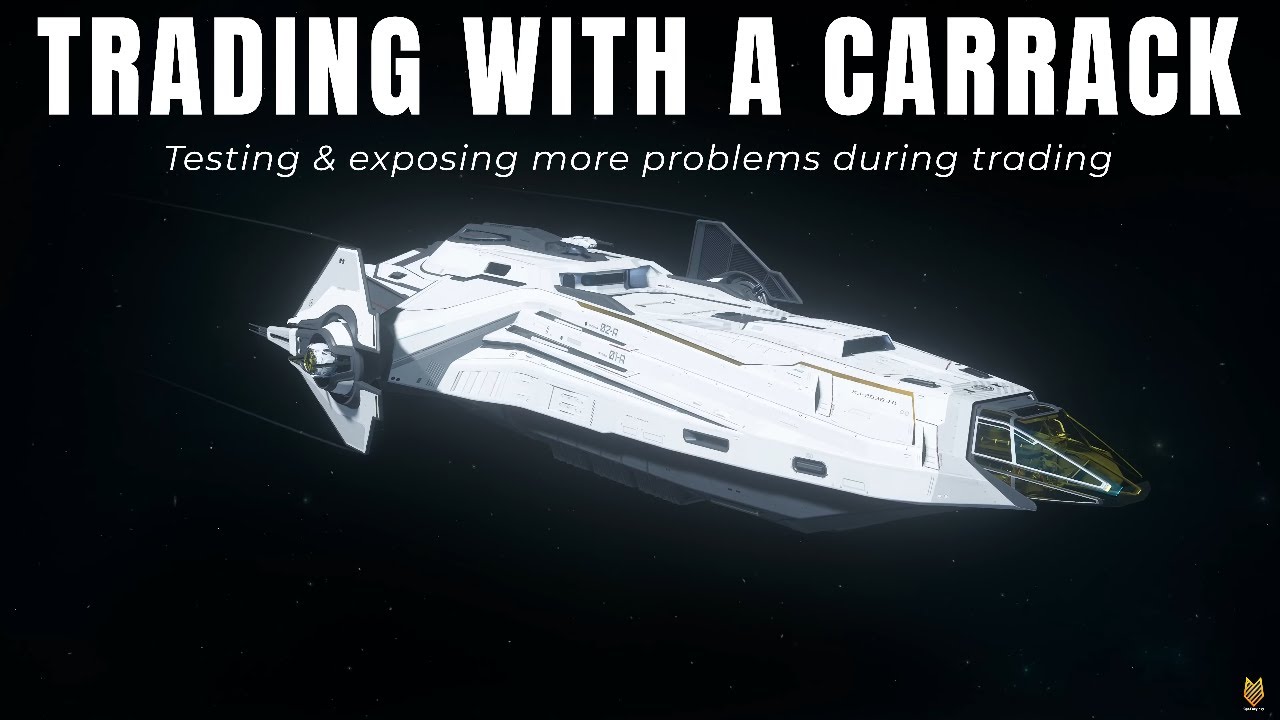
In this video, the creator tests trading in Star Citizen using the Envo Carrack, highlighting challenges like limited commodity inventory, cargo loading difficulties, and technical bugs that hinder smooth trading operations. Despite these issues and modest profits, the creator finds the experience engaging and suggests smaller ships may be more suitable for certain trade routes while looking forward to further trading adventures.
In this video, the creator embarks on another trading run in Star Citizen using the Envo Carrack, a ship with a substantial cargo capacity of 456 AC. Before diving into trading, the creator addresses several viewer questions from a previous video. These include clarifications about deploying the Apollo medband module, inconsistencies in the Armis zone protection system against unauthorized ship boarding, and cargo bugs related to storing and retrieving ships. While some bugs seem partially fixed by a recent hotfix, the creator advises caution and shares a workaround for cargo loss issues.
The creator then explores a trading website called UEX, which helps identify profitable trade routes and commodities. By setting specific filters such as ship type and investment limits, the site provides tailored trading routes with potential earnings and risk assessments. The creator highlights useful features like looped trade routes and autoload functions that optimize trading efficiency. For the current run, the chosen route involves buying bioplastic from Terram in Stanton and selling it at CBD Lurville, a safer and more manageable route within monitored space.
Upon arriving at Terram Hydro Farm, the creator encounters challenges with cargo purchasing and loading. The bioplastic inventory is limited and restocks slowly every 10 to 15 minutes, making it time-consuming to fill the Carrack’s large cargo hold. Loading cargo into the Carrack proves tricky due to spatial constraints and cargo pod positioning, with 8 SU boxes being the easiest to manage. The creator also compares the performance of different tractor beams, noting the max lift’s strength and the small tractor beam’s speed and precision for fine adjustments.
After completing the loading process, the creator returns to CBD Lurville to sell the cargo but faces issues with the terminal not recognizing the bioplastic stored in the freight elevator. To work around this, the cargo is transferred to a Starancer Max, which has a smaller but more manageable cargo capacity. However, selling problems persist, including difficulties with the terminal interface and insufficient stock at the selling location. Despite these frustrations, the creator successfully sells a portion of the cargo and reflects on the challenges encountered.
In conclusion, the trading run was educational but not highly profitable due to inventory limitations and technical bugs. The creator suggests that the Carrack might be too large for certain commodities like bioplastic and that smaller ships such as the Starancer Max or Freelancer Max might be better suited for these routes. Despite bugs and the need to manage risks carefully, the creator finds the trading process immersive and fun, expressing eagerness to explore more trading routes and ships in future videos.