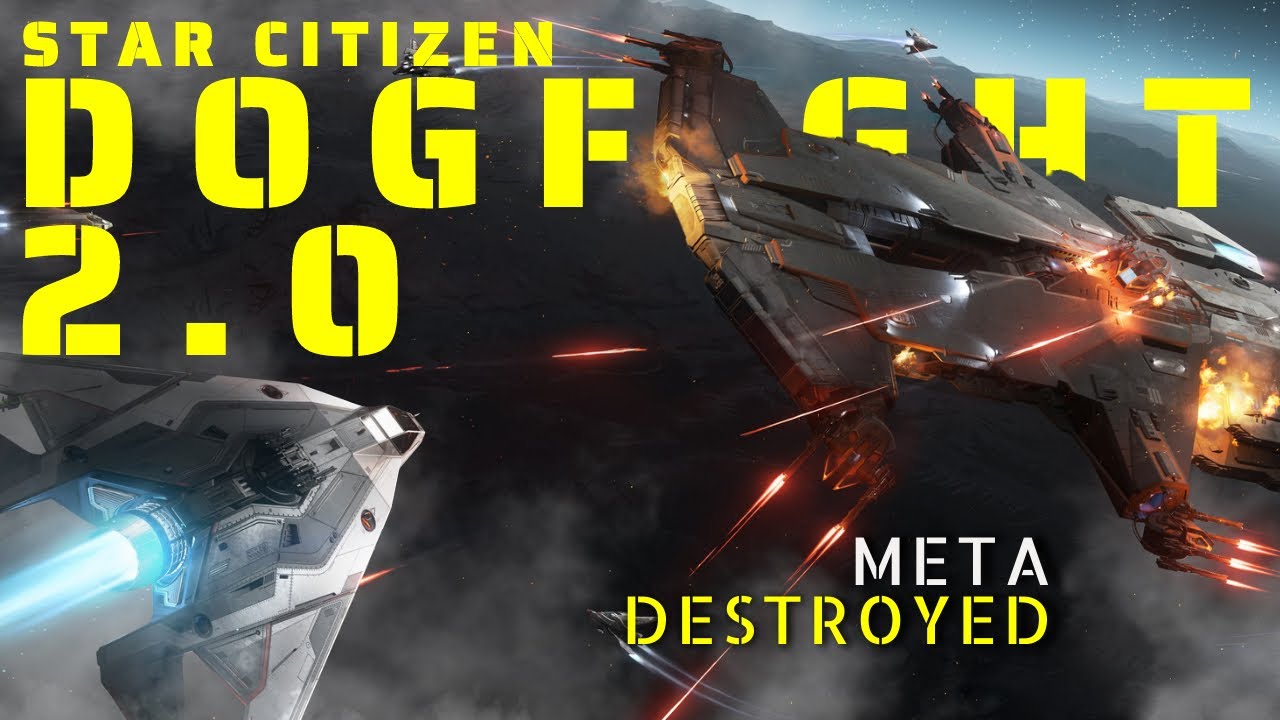
The recent Star Citizen patch 4.4 introduces a major overhaul to the game’s combat system, addressing a long-standing fundamental design flaw related to weapon engagement ranges. Previously, fighters like the Gladius could attack large capital ships such as the Idris from extreme distances (around 2,500 meters), effectively making the larger ships defenseless due to their inability to hit fast, maneuvering targets at that range. This led to unbalanced fights where skill was overshadowed by broken engagement geometry, turning combat into a one-sided shooting gallery. Patch 4.4 drastically compresses weapon effective ranges, forcing fighters to engage much closer (around 1,200 to 1,300 meters), where defensive turrets on capital ships become genuinely threatening and risk is real.
This range compression fundamentally changes combat tactics across all scenarios, from solo bounty hunting to large fleet battles. Fighters can no longer safely “kite” from afar but must perform coordinated, aggressive attack runs, boosting in under 1,200 meters and breaking off before turret fire becomes lethal. Defensive turret gameplay also becomes meaningful, as gunners can now reliably hit incoming targets, increasing the importance of teamwork and positioning. The patch introduces a meaningful trade-off between energy weapons, which have unlimited ammo but shorter range and heat generation, and ballistic weapons, which offer longer range but finite ammunition, adding new layers of tactical decision-making.
Beyond range adjustments, the community highlights the lingering issue of weapon performance parity between pilot-controlled weapons and turret-mounted systems. Proposed solutions include bespoke turret assemblies designed specifically for multi-crew ships with enhanced tracking and projectile velocity or hull bonuses that modify turret weapon stats based on ship class. Both approaches would create asymmetry, making multi-crew ships more strategically valuable and adding depth to fleet composition and ship roles. This shift would finally make multi-crew gameplay rewarding and impactful, addressing a long-standing frustration where turret gunners felt ineffective.
The changes reflect a broader philosophical shift by Cloud Imperium Games (CIG) toward meaningful role differentiation and risk-reward balance in Star Citizen combat. Instead of every ship being viable in every scenario, ships now have defined strengths and weaknesses, encouraging specialized roles and tactical diversity. This approach promises to deepen the game’s combat complexity, requiring players to master engagement geometry, positioning, and coordination rather than relying solely on aim or exploiting broken mechanics. It also revitalizes the social and multiplayer aspects of the game, giving organizations and crews real reasons to coordinate and strategize.
While the range compression is a significant step forward, some challenges remain, such as ensuring turret projectile velocities are sufficient to make hitting maneuvering targets feasible. The community eagerly anticipates further refinements, including potential power management mechanics that dynamically affect weapon performance and integrating armor mechanics that will interact with these changes. Overall, patch 4.4 represents a pivotal moment for Star Citizen, promising a more balanced, engaging, and tactically rich combat experience that finally addresses core issues that have plagued the game since its inception.