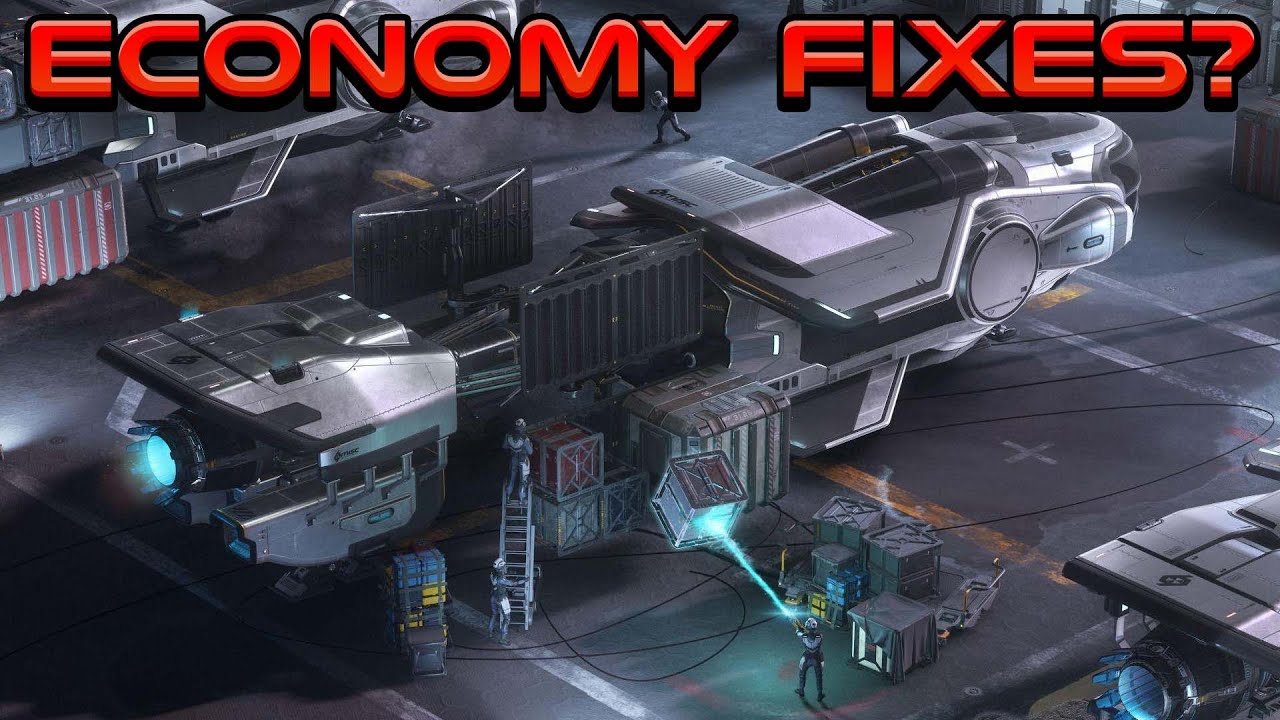
The video discusses a recent economy update post in Star Citizen, focusing on commodity trading and the changes to commodity prices. The speaker expresses skepticism about the current state of the economy, emphasizing that many of the changes don’t matter much until major features like crafting are implemented. Currently, commodity trading is somewhat disconnected from the broader game systems, with players able to make enormous profits through trading rare commodities like karanite, highlighting the imbalance and lack of meaningful economic sinks in the game.
The update reveals that commodity availability has been adjusted into specific size brackets (2, 8, 16, 24, 32 SCU), with the value per unit increasing as the container size decreases. This is intended to create friction for players using large cargo ships to fill them with small-quantity, high-value goods, making trading more challenging and realistic. However, the speaker points out that this friction is not just about inconvenience but also about risk, especially for solo players who must travel to dangerous or remote locations to acquire these high-value small-quantity commodities, which could lead to piracy and increased gameplay tension.
Dynamic pricing based on demand has been tweaked so that if too many players focus on a single commodity, its profit margins drop, encouraging a more varied and balanced trading meta. The example given is Partilium, which was previously an extremely profitable commodity but has been nerfed to bring its value closer to other goods in its bracket, preventing it from dominating the market and becoming a “death trap” for traders. This change aims to foster a more strategic economy where no single commodity is overwhelmingly the best, thus promoting diverse trading routes and interactions.
Despite these changes, the speaker stresses that the current economy system is still very much a work in progress and lacks integration with other planned systems like crafting, resource gathering, and player-driven market dynamics. The NPC-driven commodity distribution and pricing feel artificial and disconnected from a true sandbox economy. The speaker also criticizes the ongoing issue of zero-risk, high-reward contracted cargo missions that allow players to generate significant income without meaningful risk, which encourages repetitive and unengaging gameplay styles known as “murder hobo” behavior.
Finally, the speaker calls for more transparency and concrete plans regarding the future of contracted cargo missions and overall economic balance. They highlight the need for systems that make piracy and trading more meaningful and risky, so the economy feels alive and engaging. While the recent changes to commodity prices and availability are steps in the right direction, the speaker remains cautious and urges the developers to address the root issues of economic sinks, risk-reward balance, and gameplay variety to create a truly dynamic and immersive trading experience in Star Citizen.