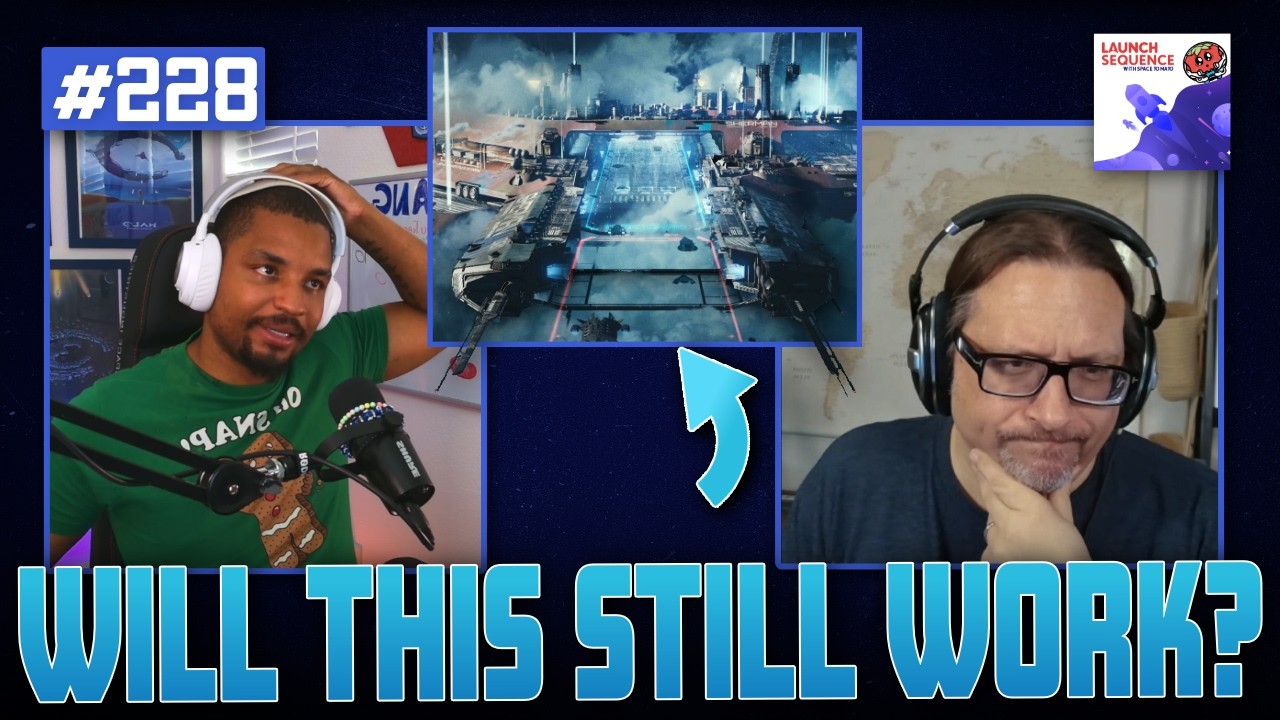
The Launch Sequence Podcast episode delves into the current state and future prospects of Star Citizen, focusing heavily on the game’s server meshing technology and overall playability improvements. The hosts, including the returning expert Grow AF, discuss how server meshing—a technology that allows multiple servers to work together to handle a massive, persistent game universe—is progressing. They note that while initial releases like patch 4.0 introduced server meshing with some glitches and limitations, the technology has since stabilized significantly, improving gameplay experiences and reducing crashes. Although some features like transit systems remain unported, the general consensus is that server meshing is functioning as intended and the game is on a positive trajectory.
The conversation also explores comparisons with other games attempting similar server meshing technologies, such as Ashes of Creation and PAX Day. Unlike Star Citizen’s complex, nested server system, Ashes of Creation uses a grid-based subdivision approach, while PAX Day employs a more traditional Unreal Engine setup. The hosts highlight Star Citizen’s unique dynamic server meshing, which involves servers nested inside servers, allowing for efficient scaling by spinning servers up or down based on player locations. This system ensures continuous player ownership and seamless transitions, a feature not commonly seen in other MMOs, making Star Citizen’s approach particularly ambitious and robust.
Playability improvements beyond server stability are also discussed, with both hosts agreeing that the game feels much more reliable and enjoyable compared to previous years. The incremental updates since 4.0 have significantly reduced frustrations, allowing players to spend longer sessions in-game without major issues. However, they acknowledge that the game is still far from release-ready and that many features and content are still being developed. The introduction of new planetary facilities like Hatheror has enhanced sandbox gameplay, providing more organic player-driven experiences, which the hosts see as a positive step toward fulfilling Star Citizen’s expansive vision.
Persistence remains a critical challenge for the game’s development, particularly regarding how in-game items and player progress are saved across sessions and server instances. The hosts discuss the complexities of maintaining a persistent universe where items like dropped cargo or crashed ships remain in the world realistically without overwhelming server resources. While some forms of persistence, like the “coffee cup” level of detail, may be limited or refined, the developers are working on sophisticated systems to balance immersion with technical feasibility. There are concerns about data loss during patch migrations, but these are seen as typical growing pains in an evolving project.
Looking ahead, the hosts express optimism about upcoming features such as engineering, inventory overhauls, and multi-crew incentives, which promise to deepen gameplay complexity and player cooperation. They emphasize the importance of these systems in shifting the game’s focus from combat-centric mechanics to resource management and survival elements, enhancing the sci-fi experience. While acknowledging the long road ahead, both hosts remain bullish on Star Citizen’s potential to become a fully realized MMO with dynamic server meshing and vast persistent worlds, encouraging listeners to stay engaged as the game continues to evolve.