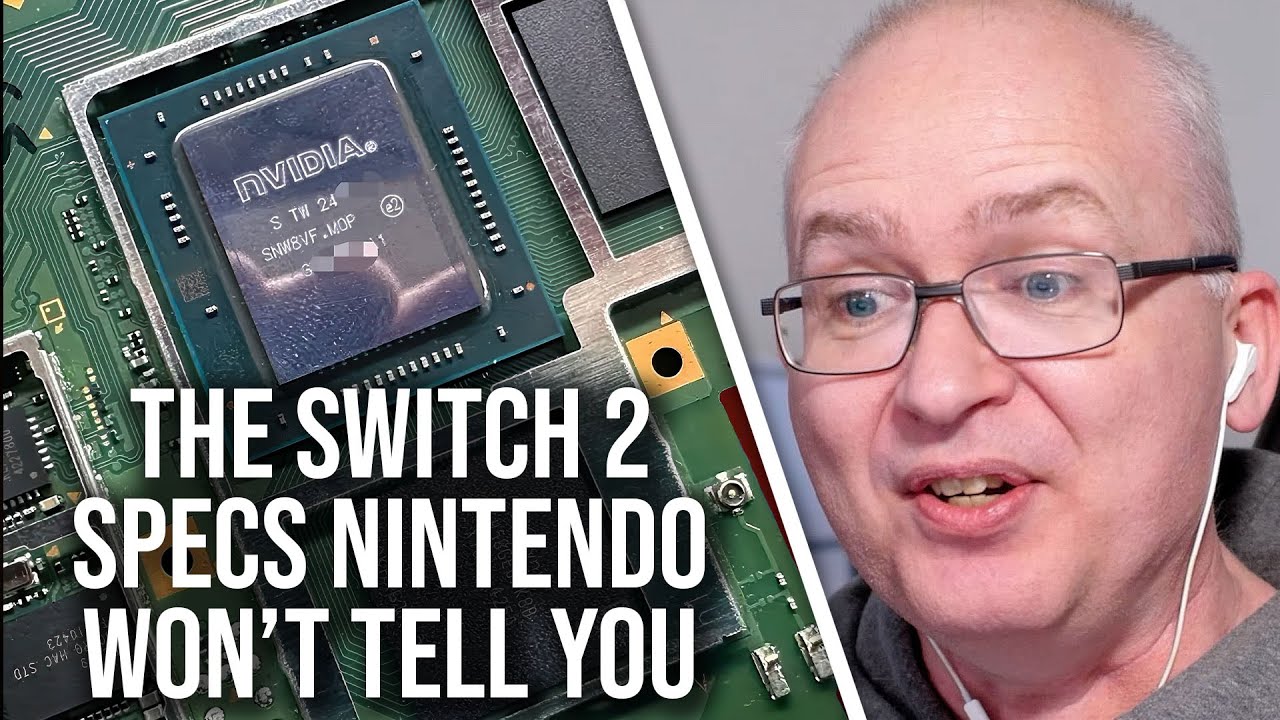
The video analyzes the technical specifications of the upcoming Nintendo Switch 2, highlighting Nvidia’s claims of a tenfold increase in graphics performance compared to the original Switch, while urging caution regarding the actual in-game performance. It discusses the potential benefits of features like DLSS and ray tracing, emphasizing the need for a grounded perspective on the console’s capabilities as developers create games specifically for it.
The video discusses the technical specifications and capabilities of the upcoming Nintendo Switch 2, particularly in relation to Nvidia’s involvement. Initially, there was limited information about the Switch 2’s specs, but Nvidia later released a blog confirming key elements of the system-on-chip (SoC) design and rendering features. This includes support for DLSS (Deep Learning Super Sampling), tensor cores for background removal and face tracking, and ray tracing capabilities. The Nvidia blog also claimed that the Switch 2 has ten times the graphics performance of the original Switch, sparking discussions about the validity of this claim.
One of the main points of debate is how Nvidia arrived at the 10x performance figure. The video hosts analyze the teraflop performance of both the original Switch and the Switch 2, suggesting that while the Switch 2 may have significantly improved performance in theory, the actual in-game performance may not align perfectly with the tenfold increase. They highlight that the Switch 2’s performance is more comparable to that of a PlayStation 4, especially when considering factors like resolution and frame rate improvements in upcoming titles.
The hosts further discuss specific games like “Legend of Zelda: Breath of the Wild” and “Metroid Prime 4,” which are expected to benefit from the Switch 2’s enhancements. They note that while there are promising improvements in resolution and frame rate, the claim of a tenfold increase in graphics performance should be approached with caution. Instead, they suggest viewing the Switch 2 as a generational leap rather than focusing solely on the 10x figure.
In addition to performance, the video touches on the potential use of DLSS in Switch 2 games. The hosts express curiosity about whether developers will be able to effectively utilize the tensor cores and DLSS capabilities, particularly given the computational costs associated with these features. They emphasize that while DLSS can enhance performance, it is not a straightforward solution and may not be fully integrated into games at launch.
Overall, the discussion highlights the excitement surrounding the Switch 2’s capabilities while also urging a grounded perspective on its performance. The hosts acknowledge the potential for significant improvements in graphics and gameplay but caution against overestimating the console’s power based on preliminary claims. As more information becomes available and developers create games specifically for the Switch 2, the true extent of its capabilities will become clearer.