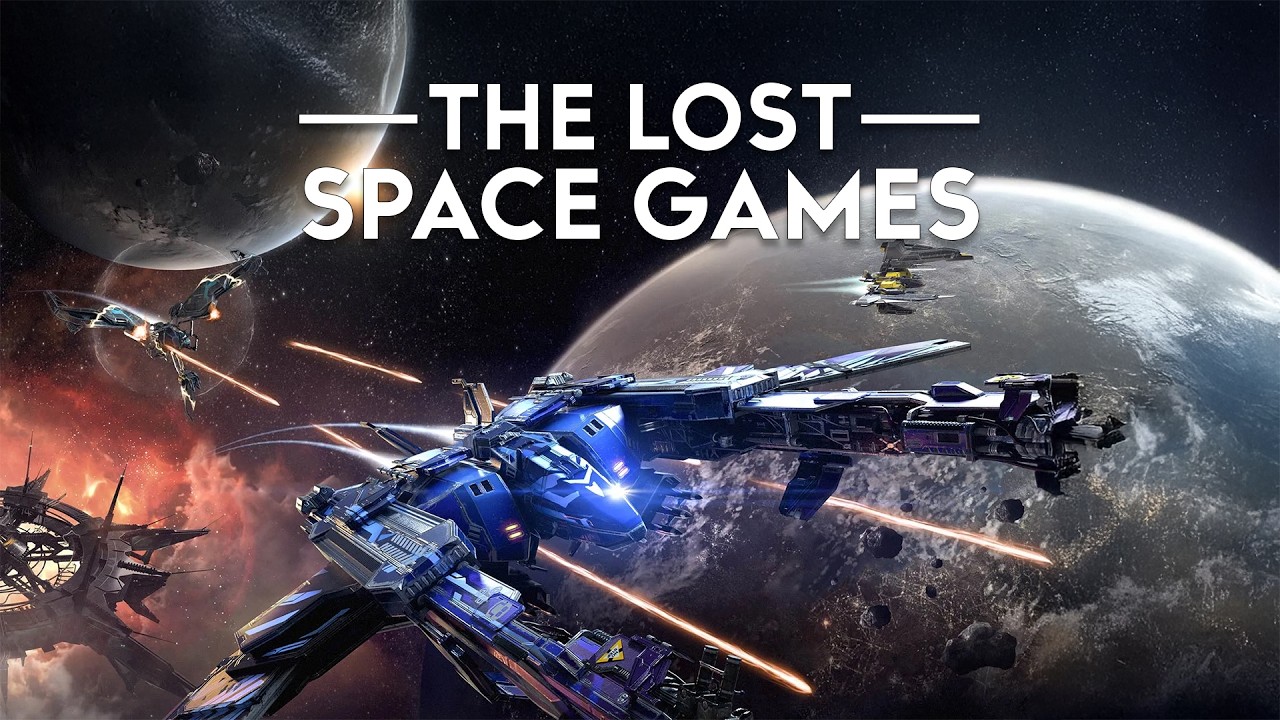
The video explores a fascinating history of impressive space games that never made it to market or were ultimately shut down despite their promise. It begins with Bethesda Softworks’ ambitious 1990s project, “The 10th Planet,” a cinematic space combat simulator tied to Roland Emmerich’s film company. Despite heavy investment in Hollywood-quality FMV cutscenes and a compelling story about an alien invasion from a hidden tenth planet, the project was canceled after several delays due to the in-game graphics failing to match the cinematic trailers, leaving only concept art and story ideas behind. Bethesda would not attempt another space game for decades until the release of Starfield.
The video then highlights several other canceled or lost space game projects, including Sierra’s “Babylon 5: Into the Fire,” a nearly finished space combat sim based on the popular TV series, which was abruptly canceled due to corporate restructuring just months before release. Another example is “Farstar,” an ambitious PlayStation space combat game blending Wing Commander and Star Trek elements, which quietly vanished during development due to technical challenges. The early 2000s saw the demise of “Jumpgate Evolution,” a sequel to the cult MMO “Jumpgate,” canceled after studio upheaval and layoffs despite promising large-scale PvP and faction warfare.
Several other notable projects faced similar fates, such as “Freelancer 2,” which was canceled following Microsoft’s closure of Digital Anvil, and “10 to the Sea,” an indie space sandbox by Minecraft creator Notch that stalled due to creative burnout. The ambitious Kickstarter-funded “Limit Theory,” a procedurally generated infinite space sim developed by a single programmer, also succumbed to development hell and was ultimately canceled after years of progress. These stories illustrate the immense challenges of creating large-scale, innovative space games, especially for small teams or under unstable corporate conditions.
The video also covers space MMOs that launched but had relatively short lifespans, including “Earth and Beyond” by Westwood Studios, which closed after just two years due to low subscriber numbers and corporate restructuring, and “Star Wars Galaxies,” a beloved MMO that added space combat but was shut down in 2011 as licensing expired and competition from newer Star Wars titles emerged. Additionally, “Black Prophecy,” a fast-paced free-to-play space dogfighting MMO, lasted only about a year before shutting down due to insufficient player base and content depth, reflecting the difficulties of sustaining niche online games.
Finally, the video discusses more recent examples like “Battlestar Galactica Online,” a browser-based MMO that enjoyed several million registered players but was closed in 2019 due to licensing and declining revenue, and “Eve Valkyrie,” a pioneering VR space combat game that was praised for its immersive experience but shut down in 2022 due to limited VR adoption and dwindling player numbers. The video concludes by reflecting on the many challenges space games face, from development hurdles to market realities, and how these canceled and lost titles remain legendary “what-ifs” in the genre’s history.