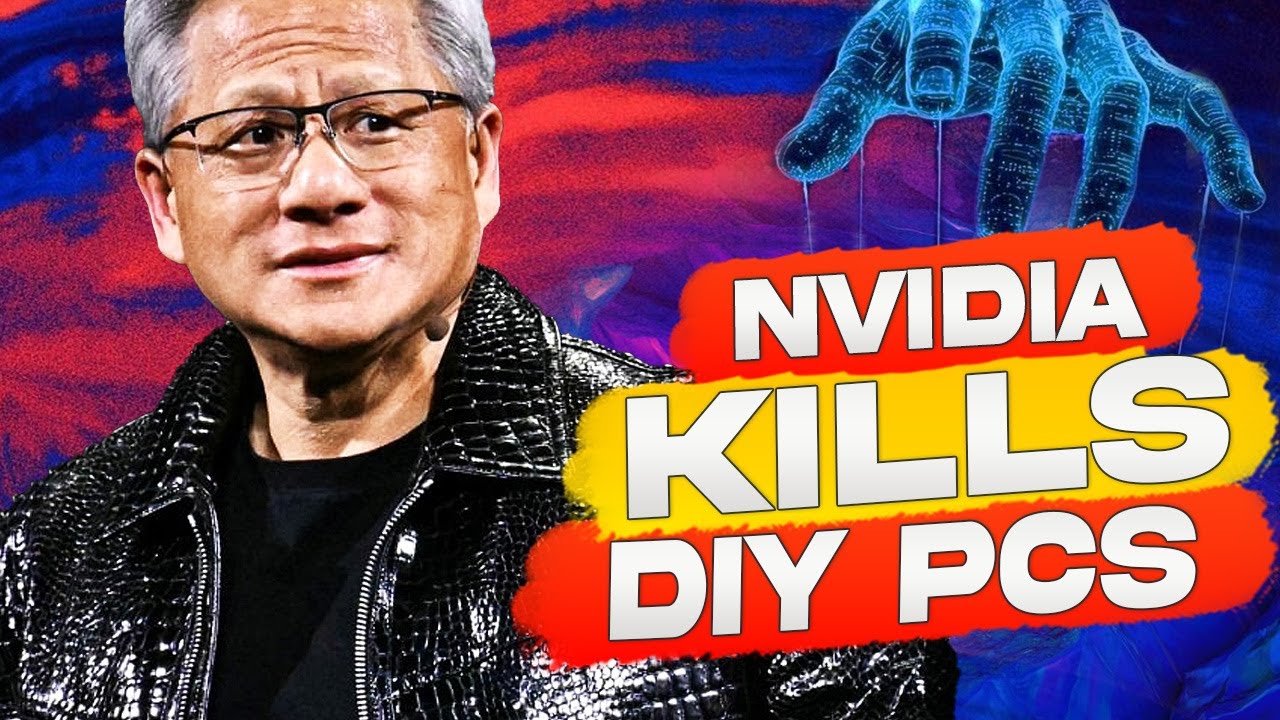
The video discusses the recent leaks of Nvidia’s highly anticipated ARM-based SOC, the N1 Max chip, designed for the consumer PC market. The leaked Geekbench results suggest that this chip offers performance on par with AMD’s popular 9800X3D CPU, with impressive single-core and multi-core scores. The N1 Max is believed to be a mobile-focused chip with a powerful integrated GPU equivalent to an RTX 5070, making it a strong contender in both gaming and professional workloads. Nvidia’s entry into the PC CPU space marks a significant shift as they aim to create a unified hardware ecosystem that could potentially replace traditional AMD and Intel CPUs in RTX GPU-powered systems.
The N1 Max chip features a 20-core CPU configuration with 10 high-performance Cortex X925 cores and 10 efficiency Cortex A725 cores, based on ARM’s off-the-shelf designs rather than custom cores like Apple’s M-series. MediaTek is reportedly the SOC integrator and manufacturer, packaging Nvidia’s GPU technology alongside these ARM cores. Nvidia is expected to continue using ARM cores for now but plans to develop its own RISC-V based SOCs in the future, moving away from ARM entirely. The chip also supports a high amount of RAM and boasts a base clock of 2.8 GHz with a boost up to 4 GHz, which is notable for ARM-based mobile cores.
Comparing Nvidia’s N1X to AMD’s top APU, the Ryzen 9 7950X3D, the Nvidia chip holds a slight edge in single-core performance but falls behind in multi-core due to fewer cores. However, Nvidia’s integrated GPU is significantly more powerful, promising at least 30% better gaming performance than AMD’s flagship APU. With 6,144 CUDA cores, the N1X is also expected to excel in machine learning, 3D modeling, and video editing tasks that leverage CUDA acceleration. This combination of CPU and GPU power in a single SOC positions Nvidia strongly in the consumer PC market, potentially threatening AMD’s dominance.
In response to Nvidia’s move, AMD has partnered with Microsoft to develop an Xbox open ecosystem powered by AMD APUs, aiming to create exclusive software features and maintain a competitive edge in gaming devices. However, Nvidia’s approach targets a broader market beyond gaming, offering general-purpose PCs with high-end gaming capabilities and AI integration. Nvidia is likely to sell these SOCs through OEM partners like Dell, HP, and Lenovo rather than targeting the DIY PC market. This shift towards tightly integrated, ready-built systems could signal the decline of the traditional DIY PC enthusiast scene.
The video concludes by highlighting the potential impact of Nvidia’s strategy on the PC market. Nvidia’s integrated SOCs, combined with exclusive AI-driven software features like DLSS and frame generation, could make ready-built PCs more attractive than custom-built systems. This commoditization of PCs might reduce the appeal and feasibility of building DIY machines, as Nvidia’s ecosystem offers better performance and software integration. While this may bring exciting innovations, it also raises concerns for PC enthusiasts who value customization and competition. The video invites viewers to share their thoughts on whether they would switch to Nvidia PCs or continue building their own.