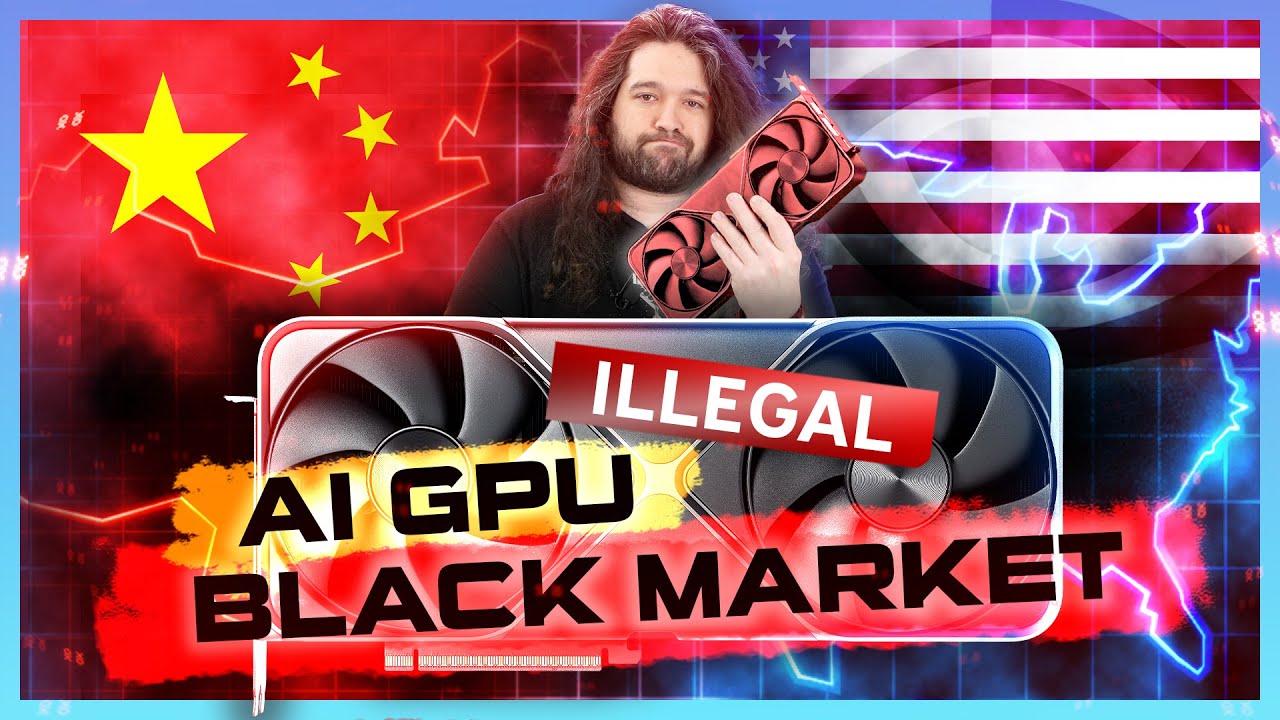
The video investigates the complex and lucrative black market for NVIDIA AI GPUs, focusing on smuggling, corruption, and government restrictions primarily between the United States and China. Due to U.S. export controls aimed at limiting China’s access to high-end AI GPUs like the NVIDIA A100, H100, and others, a clandestine market has emerged. These restrictions are part of a broader technological cold war, with the U.S. government concerned about these chips enabling Chinese military and AI advancements. Despite the bans, GPUs still flow into China through various illicit channels, including middlemen, smugglers, and repair shops that modify or repurpose hardware to bypass restrictions.
The video follows a detailed investigation beginning in Hong Kong and Shenzhen, where the team meets university professors, GPU traders, repair specialists, and smugglers. Universities and research institutions in Hong Kong legally acquire GPUs but face challenges scaling due to export bans. Traders and middlemen operate warehouses filled with both legal and banned GPUs, which are often moved “one at a time” through complex smuggling pipelines involving multiple intermediaries. Repair shops in China not only fix defective GPUs but also modify them, such as doubling VRAM on NVIDIA 4090 cards, creating custom GPUs that Nvidia itself does not officially produce, thus extending the usefulness of scarce hardware.
A significant portion of the smuggling involves breaking down systems or shipping GPUs through third-party countries like Singapore and Malaysia to circumvent U.S. export laws. The video reveals how some GPUs are even smuggled with unusual methods, including hidden in shipments of live lobsters or disguised in other cargo. The investigation also uncovers the role of U.S.-based Chinese nationals who buy GPUs domestically and ship them illegally to China, highlighting the cross-border nature of this black market. Despite arrests and government crackdowns, the black market persists, driven by high demand and significant profit margins.
NVIDIA’s role in this ecosystem is complex and controversial. While the company officially complies with export controls and denies knowingly enabling smuggling, insiders and experts suggest that NVIDIA is aware of the black market activities but chooses to “turn a blind eye” due to the massive profits involved. The company has also been politically active, lobbying against certain restrictions and benefiting from changes in U.S. policy under different administrations. NVIDIA’s CEO Jensen Huang is portrayed as a shrewd operator navigating political and economic pressures to maximize market access, including negotiating revenue-sharing deals with the U.S. government to resume some sales to China.
Ultimately, the video presents a multifaceted picture of the AI GPU black market as a high-stakes intersection of technology, geopolitics, and commerce. It exposes how export controls, while aiming to protect national security, have only partially succeeded, with GPUs still reaching China through smuggling and modification. The story highlights the ingenuity of those involved in the supply chain, from factory defects being repurposed to smugglers carrying GPUs across borders. It also raises critical questions about corporate ethics, government enforcement, and the future of AI competition between global powers, emphasizing the ongoing challenges of regulating cutting-edge technology in a globalized world.