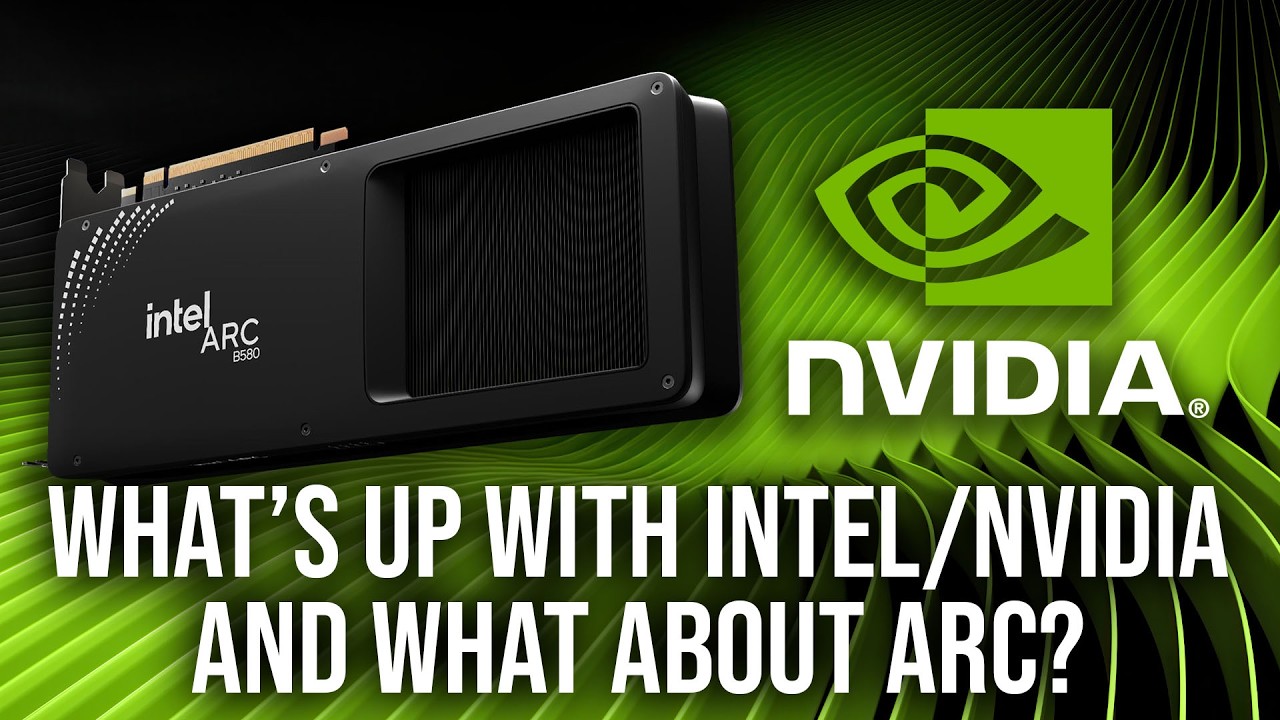
Intel and Nvidia have confirmed a partnership where Intel will produce SoCs integrating Nvidia’s RTX graphics, offering higher performance and Nvidia’s DLSS technology, while Intel’s Arc graphics may be reserved for mid to lower-end products. This collaboration allows Intel to leverage Nvidia’s established GPU technology for high-end devices, potentially reducing focus on Arc development, though the future of Intel’s discrete Arc GPUs remains uncertain.
The collaboration between Intel and Nvidia is confirmed rather than just suspected, with Nvidia owning a significant stake in Intel as part of this partnership. The core concept involves Intel producing system-on-chips (SoCs) for devices like laptops or gaming handhelds that incorporate Nvidia’s RTX graphics instead of Intel’s own Arc graphics. This integration promises potentially higher performance and access to Nvidia’s DLSS technology, which is widely regarded as the best upscaling solution in gaming, enhancing graphics quality and performance.
Intel recently launched gaming handhelds powered by its Arc graphics, and it remains to be seen how these devices perform. However, the collaboration with Nvidia opens up opportunities for co-branded products that could achieve superior graphics performance and better upscaling capabilities. This partnership could allow Intel to offer a more competitive option in the gaming hardware market, especially for higher-end devices that demand powerful GPUs.
The future of Intel’s Arc graphics remains uncertain amid ongoing rumors about its discontinuation in the discrete graphics card market. Internally, there appear to be differing opinions within Intel, with some factions strongly supporting Arc’s development while others may see more value in leveraging Nvidia’s established technology. The collaboration with Nvidia might serve as a strategic alternative for Intel, enabling them to focus less on developing their own high-end GPUs while still maintaining a presence in the graphics market.
This partnership is seen as potentially limited in scale, primarily involving integrated processors combining Intel CPUs with Nvidia GPUs. Historically, Intel has engaged in similar short-lived collaborations, such as with AMD’s Vega GPUs in laptops. Nonetheless, this new collaboration could be more impactful, especially for gaming, as it avoids the complexities of ARM architecture and capitalizes on Intel’s strong CPU cores alongside Nvidia’s GPU technology.
Ultimately, the collaboration likely positions Intel to use Arc graphics mainly for mid to lower-end products, while Nvidia technology powers higher-end systems. This approach allows Intel to maintain a competitive GPU lineup without abandoning Arc entirely. The partnership is expected to offer a high-end graphics option integrated with Intel CPUs, providing a compelling solution for gaming and AI workloads, though the long-term direction of Arc remains a separate and evolving discussion.