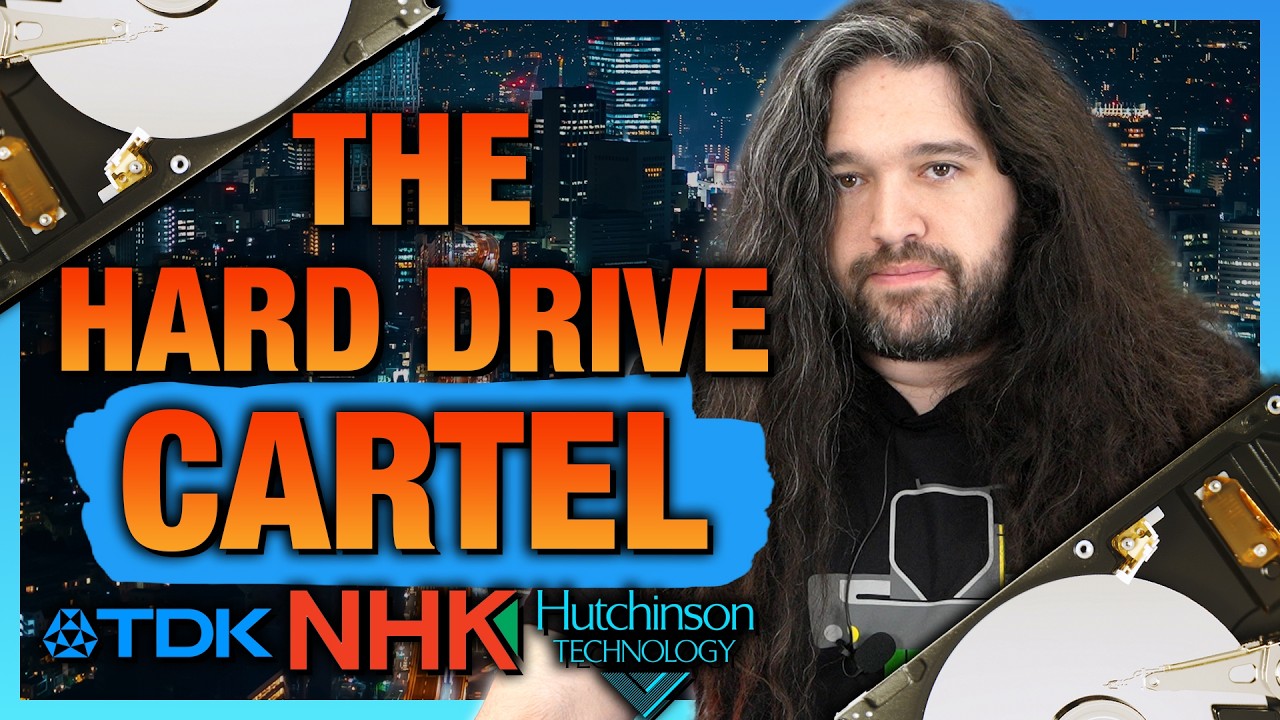
The video discusses a significant cartel conspiracy involving manufacturers of suspension assemblies, a critical component in hard disk drives (HDDs). The conspiracy, which allegedly lasted from 2003 to 2016, involved major players like TDK, NHK Spring, Hutcherson Technology Incorporated (HTI), and Magnamp’s Precision Technologies (MPT). These companies are accused of colluding to fix prices, divide market shares, exchange sensitive pricing information, and suppress competition, thereby artificially inflating prices for consumers. The cartel’s activities have led to multiple investigations and legal actions by the Japanese Fair Trade Commission (JFTC), the U.S. Department of Justice (DOJ), and Brazil’s Administrative Council for Economic Defense (CADE), resulting in fines and indictments.
The hard drive suspension assembly is a specialized part that holds the read/write head just above the spinning magnetic platters, enabling data to be read and written without physical contact. Due to the part’s complexity and critical role in HDDs, the market for suspension assemblies is highly concentrated and susceptible to collusion. Over time, the cartel consolidated the market, with TDK acquiring Magnamp in 2007 and HTI in 2016, leaving only TDK and NHK as dominant suppliers. This consolidation, combined with external factors like the 2011 floods in Thailand and the rise of solid-state drives (SSDs), shaped the hard drive market dynamics during the cartel period.
The conspiracy was maintained through coordinated communication across multiple management layers within the companies, with executives and sales managers regularly exchanging pricing and shipment information. The cartel also formed factions, such as the alliance between TDK and NHK, which worked together to push out competitors like HTI. Despite regulatory scrutiny, including an antitrust review by the U.S. Federal Trade Commission (FTC), the merger between TDK and HTI was approved, further cementing the cartel’s control over the suspension assembly market.
Legal proceedings are ongoing, with a class action lawsuit filed in 2019 seeking damages for consumers who purchased hard drives or computers containing these components during the conspiracy period. The U.S. District Court for the Northern District of California has certified an end-user class, allowing affected consumers to potentially receive settlement payments. However, the case is still in its early stages, and a trial has not yet been scheduled. Past antitrust cases, such as the DRAM cartel litigation, suggest that resolution and compensation may take many years.
Overall, the video highlights the economic harm caused by the hard drive suspension assembly cartel, emphasizing how such collusion undermines consumer interests by inflating prices in a market critical for data storage. It also contextualizes the cartel within broader industry trends, including market consolidation and technological shifts toward SSDs. The video concludes by encouraging viewers to support their investigative work and stay tuned for updates on this and related antitrust cases.