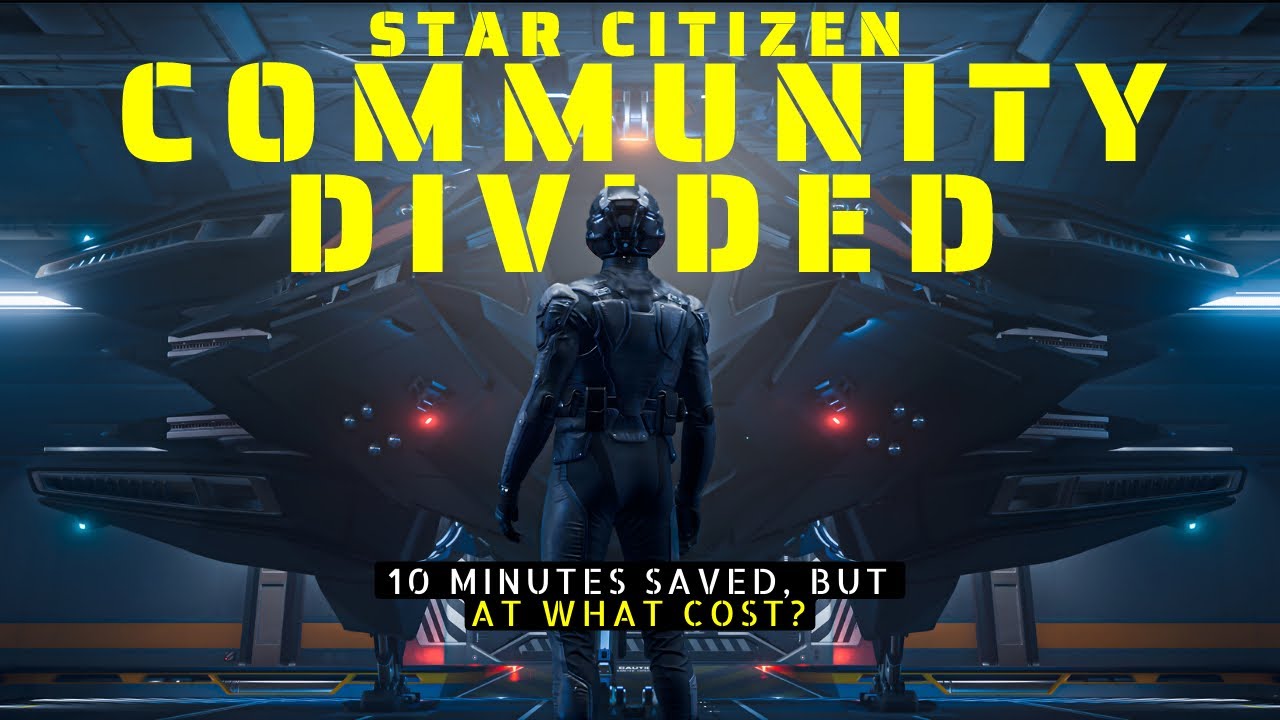
The introduction of hangar spawning in Star Citizen has divided the community by offering a faster, more convenient way to start gameplay while reducing social interactions and immersion in shared spaces. This debate highlights the ongoing tension between prioritizing gameplay convenience and preserving the game’s core simulation and social experience, with players encouraged to choose their spawning methods based on their preferred playstyle.
The recent introduction of hangar spawning in Star Citizen, which allows players to spawn directly in their personal hangers next to their ships instead of starting in a HAB and navigating the transit system, has sparked intense debate within the community. While this change saves players significant time—up to 10 minutes each login—by eliminating long and often buggy commutes through elevators and trams, it has divided players over what it means for the game’s core experience. Some hail it as a much-needed quality of life improvement, while others argue it erodes the social and immersive elements that make Star Citizen unique.
This controversy highlights a deeper tension in Star Citizen’s design philosophy: the balance between simulation and gameplay convenience. The traditional spawning system encouraged organic player interactions in shared social spaces like trams and city centers, fostering spontaneous moments of camaraderie and collaboration. Hangar spawning, by contrast, isolates players in separate instances, reducing these unexpected encounters and making the game feel more solitary despite its large server capacities. This mirrors similar issues seen in other MMOs, where convenience features have led to the decline of vibrant social hubs.
However, the change is not without its drawbacks depending on playstyle. While hangar spawning benefits players focused on quick space travel or cargo runs by streamlining their sessions, it complicates gameplay for those engaged in FPS missions or activities requiring gear preparation. These players now face double the trips between hangers and city centers, turning time savings into time penalties. This also exposes a content design issue: the game’s urban environments are underutilized, serving mainly as shopping zones rather than active social or mission hubs, which diminishes the value of the detailed world-building.
The developers implemented hangar spawning as a temporary fix after delays in transit system improvements, responding to community frustration over lengthy login procedures. Players can mitigate some downsides by choosing spawn points strategically—such as station hubs that balance convenience with social opportunities—or by planning sessions that alternate between hangar and HAB spawning. Additionally, maintaining supply caches can alleviate logistical challenges, allowing players to tailor their experience between efficiency and immersion.
Ultimately, the hangar spawning debate reflects a broader divide within the Star Citizen community about what kind of game it should be—a life simulation with spaceships or a spaceship game with life elements. Both perspectives are valid but inherently conflict, making it difficult to find a perfect balance. The passionate discussions underscore how invested players are in shaping the game’s future. The takeaway is that players should consciously choose their spawning and playstyle to craft the experience they want, embracing the tension between convenience and community rather than expecting one solution to satisfy everyone.