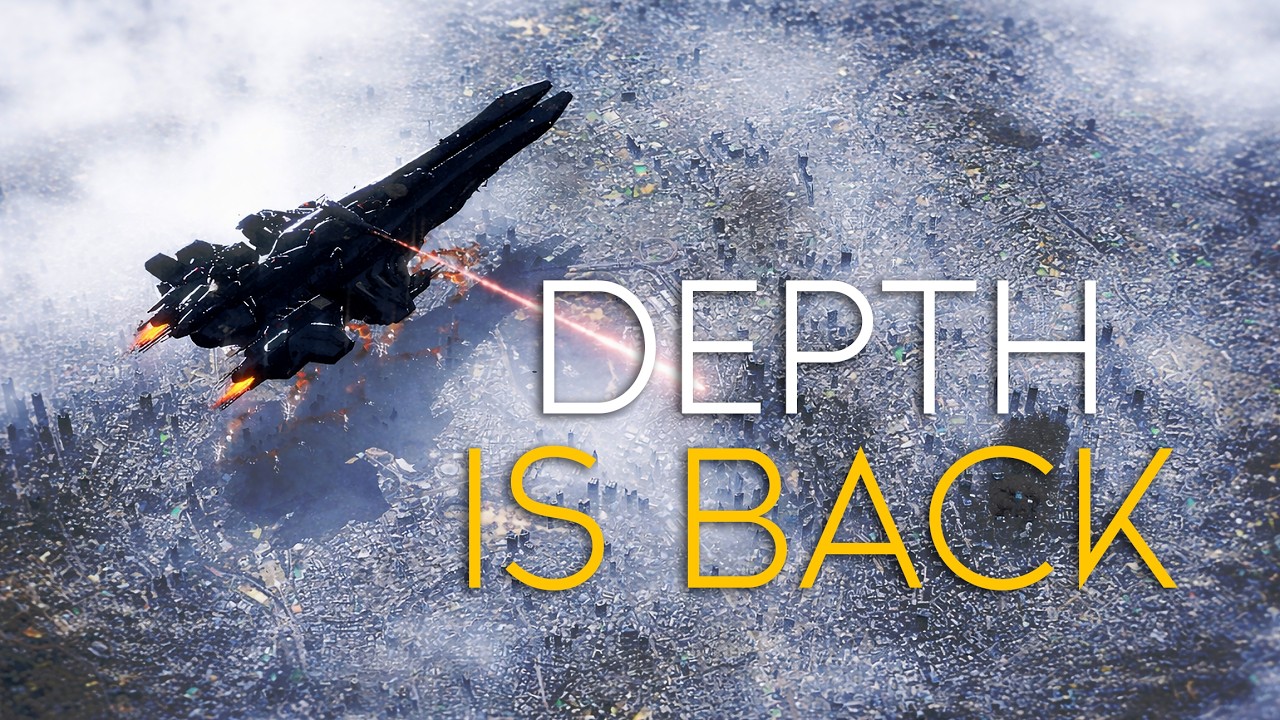
The space game genre is undergoing an exciting transformation, moving away from the traditional vast, empty sandbox experience toward games that emphasize control, management, and operational depth. A new wave of space games is emerging that challenges players to run corporations, command warships, and manage complex systems aboard their vessels. This shift is evident across multiple titles from different studios, signaling a broader trend toward a more dynamic and immersive space setting that offers greater depth than ever before.
One standout example is Space Reign, a game that combines multiple gameplay layers into a cohesive experience. Players represent private corporations competing over resource-rich sectors in space, switching between piloting agile fighters, commanding capital ships, and managing entire fleets from an RTS-style tactical perspective. The game’s unique approach allows players to operate as both a frontline pilot and a strategic commander, while also making high-level decisions about corporate investments and conflict zones, showcasing the genre’s new emphasis on multi-layered control.
Dreadnought: Tartarus takes this concept even further by focusing on commanding a city-sized, modular battleship through a strategic campaign. Players plan routes, select targets, and customize their ship’s weapons, armor, and support systems to adapt to evolving threats. The game’s stylized visuals complement its deep operational gameplay, where every decision impacts the ship’s combat effectiveness and mission success. This title exemplifies the genre’s trend toward immersive management of large-scale space warfare and tactical planning.
No Time Left (NTL) offers a roguelike take on capital ship command, blending real-time 3D combat with tactical pause mechanics and Newtonian physics. Players manage power distribution, shields, weapons, and support modules while navigating environmental hazards like magnetic fields and black holes. The game’s emphasis on resource management, tactical decision-making, and adapting to dynamic environments highlights another facet of the evolving space genre, where player choices carry significant consequences in a challenging, ever-changing galaxy.
Lastly, Solar Expanse presents a non-combat, logistics-focused approach to space gameplay. Players lead a space exploration corporation, balancing orbital mechanics, mission planning, and economic competition to mine and colonize the solar system. The game’s realistic simulation of celestial motions and long-term strategic goals, such as terraforming and interstellar colonization, underscores the genre’s expanding scope. Together, these four diverse games illustrate a bold new direction for space games—one centered on meaningful control, operational complexity, and the weight of player decisions in richly detailed space environments.