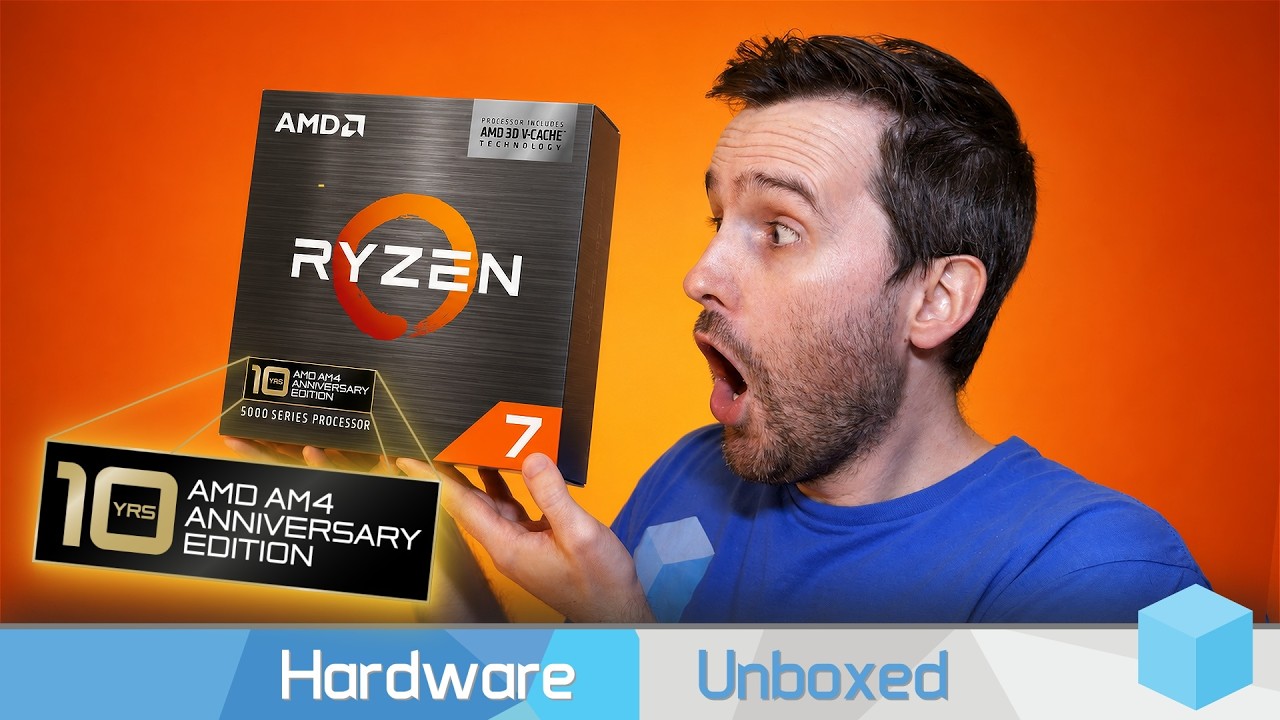
AMD is re-releasing the Ryzen 7 5800X3D as a 10th anniversary edition for the AM4 platform at $349, offering gamers a cost-effective upgrade option amid high DDR5 prices, alongside launching the Ryzen 7 7700X3D for AM5 and introducing new memory and GPU technologies like Expo Ultra Low Latency profiles and the Radeon RX 9070 GRE. Additionally, AMD confirmed extended AM5 socket support through 2029 and plans to bring FSR 4.1 to RX 7000 and 6000 series GPUs, enhancing gaming performance and platform longevity.
AMD is officially bringing back the Ryzen 7 5800X3D as a 10th anniversary edition to provide gamers still on the AM4 platform with a viable upgrade option amid high DDR5 memory prices. This re-release features the same specifications as the original 5800X3D, including eight cores, 16 threads, a 4.5 GHz boost clock, and 100 MB total cache with 64 MB of 3D V-Cache. The anniversary edition mainly adds special branding but no changes to the silicon itself, making it an attractive option for those who want improved gaming performance without the need to invest in a full AM5 platform upgrade.
Priced at $349 US, the new 5800X3D is $100 cheaper than its original launch price but not necessarily a better deal compared to recent market prices where the CPU often sold for less. While it offers competitive gaming performance close to current non-X3D AM5 processors, it is more expensive than some AM5 models like the Ryzen 5 9600X. However, when factoring in the additional cost of DDR5 memory and a new motherboard required for AM5, the 5800X3D’s price point makes sense for AM4 users who want to avoid the high cost of upgrading their entire platform.
Alongside the 5800X3D, AMD also announced the Ryzen 7 7700X3D, a slightly lower-clocked variant of the 7800X3D, launching at $329 US. This model is expected to be about 10% slower than the 7800X3D but will be the cheapest AM5 X3D option available, offering gamers a wider range of choices within the X3D lineup. AMD also confirmed extended support for the AM5 socket through 2029, potentially covering upcoming Zen 6 and Zen 7 architectures, which is a significant boost in longevity for AM5 platform users.
In memory news, AMD introduced Expo Ultra Low Latency (ULL), an enhancement to its Expo memory profiles designed to automatically tighten secondary and tertiary timings for improved gaming performance. AMD claims a 4% performance boost over standard Expo profiles and a 13% increase compared to stock JEDEC speeds. This technology will be available on memory kits from June 2026, promising better performance for gamers using AMD Ryzen platforms.
Finally, AMD re-announced the Radeon RX 9070 GRE graphics card for global availability, a cut-down version of the RX 9070 with fewer compute units and reduced memory bandwidth. Priced at $549 US, it slots below the RX 9070 but above the RX 9600 XT in the current market. AMD positions this card as a competitor to Nvidia’s RTX 5060 Ti, claiming better performance at a slightly lower price. Additionally, AMD plans to bring FSR 4.1 to RX 7000 series GPUs in July 2026 and RX 6000 series in early 2027, enhancing performance for owners of older Radeon cards.