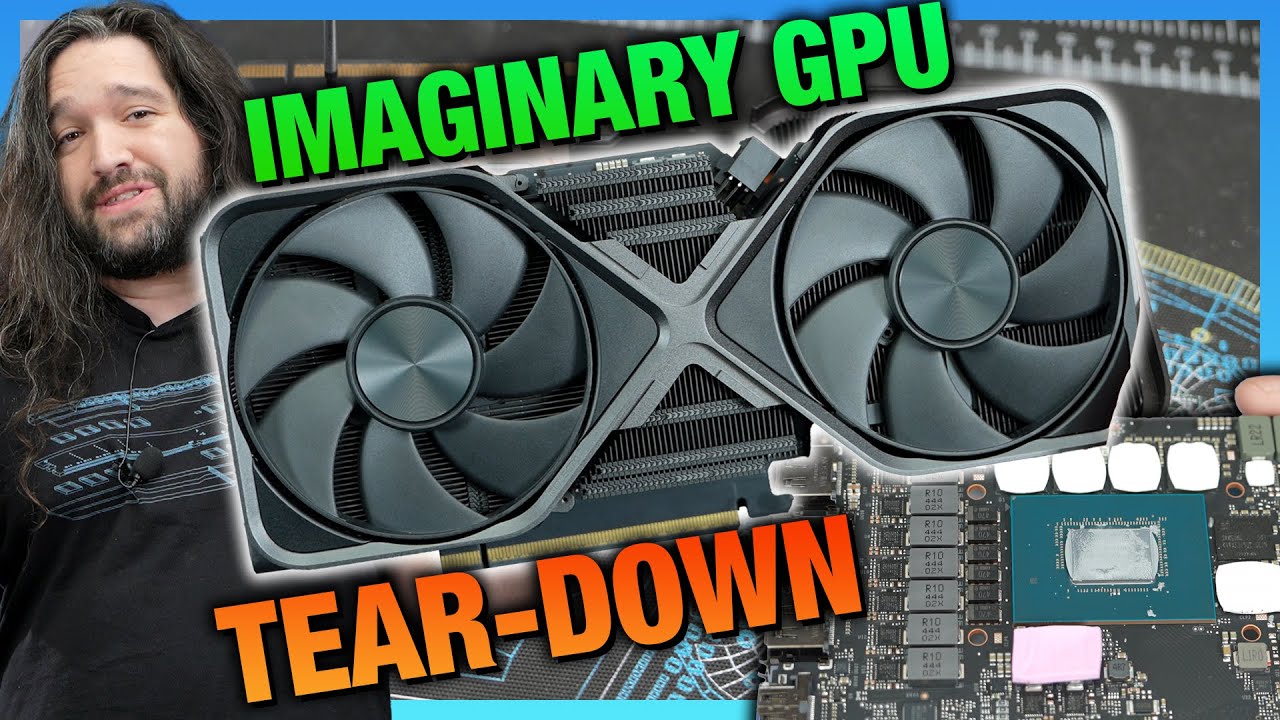
In the video, the host disassembles the RTX 5070 Founders Edition GPU, highlighting its smaller size and traditional cooling design compared to higher-end models, which features a blocked-off side and standard exhaust. The teardown reveals improvements in assembly efficiency and cooling effectiveness, showcasing thoughtful design choices that enhance airflow and thermal management, despite the card not being the most powerful in Nvidia’s lineup.
In the video, the host conducts a detailed disassembly of the RTX 5070 Founders Edition GPU, highlighting its unique features and design choices. The primary focus is on the card’s smaller size compared to its predecessors, such as the RTX 5080 and 5090. Unlike the dual flow-through design seen in higher-end models, the RTX 5070 reverts to a traditional cooling approach with a blocked-off side and a standard exhaust, which is a significant change in design philosophy. The video aims to explore the internal components and cooling mechanisms of the GPU, providing insights into its assembly and performance.
The host discusses the external features of the card, noting the smaller fans and the more traditional height slot. The cooling design is emphasized, as the exhaust plays a critical role due to the blocked side, which differs from the airflow strategy employed in other models. The host also mentions the use of a dual eight-pin power connector and the quality of the cables, which have improved from previous generations. Overall, the size and cooling design are highlighted as the main differentiators for this model.
As the disassembly begins, the host utilizes various tools, including a guitar pick and pry bar, to carefully open the card. The process is described as relatively straightforward compared to previous models, with fewer screws involved in the assembly. The host notes the improvements in the assembly process, crediting Nvidia for making the disassembly easier while still maintaining a solid construction. The video emphasizes the importance of understanding the internal layout and thermal management of the card for future repairs or upgrades.
Upon removing the backplate, the host discovers that the cooling solution is more effective than previous designs, with an aluminum block that has been finned for better surface area utilization. The thermal pads connecting to the capacitors are also highlighted, indicating a thoughtful approach to heat dissipation. The video points out the design choices that allow for better airflow and cooling efficiency, which are critical for maintaining optimal performance during operation.
Finally, the host examines the GPU die and PCB, comparing it to previous models and discussing the implications of die size on performance and cost. The overall takeaway from the tear-down is that while the RTX 5070 may not be the most powerful card in Nvidia’s lineup, it showcases significant improvements in cooling design and assembly efficiency. The host encourages viewers to subscribe for more content and to check out additional reviews, emphasizing the balance of critique and praise for Nvidia’s engineering efforts in the GPU market.