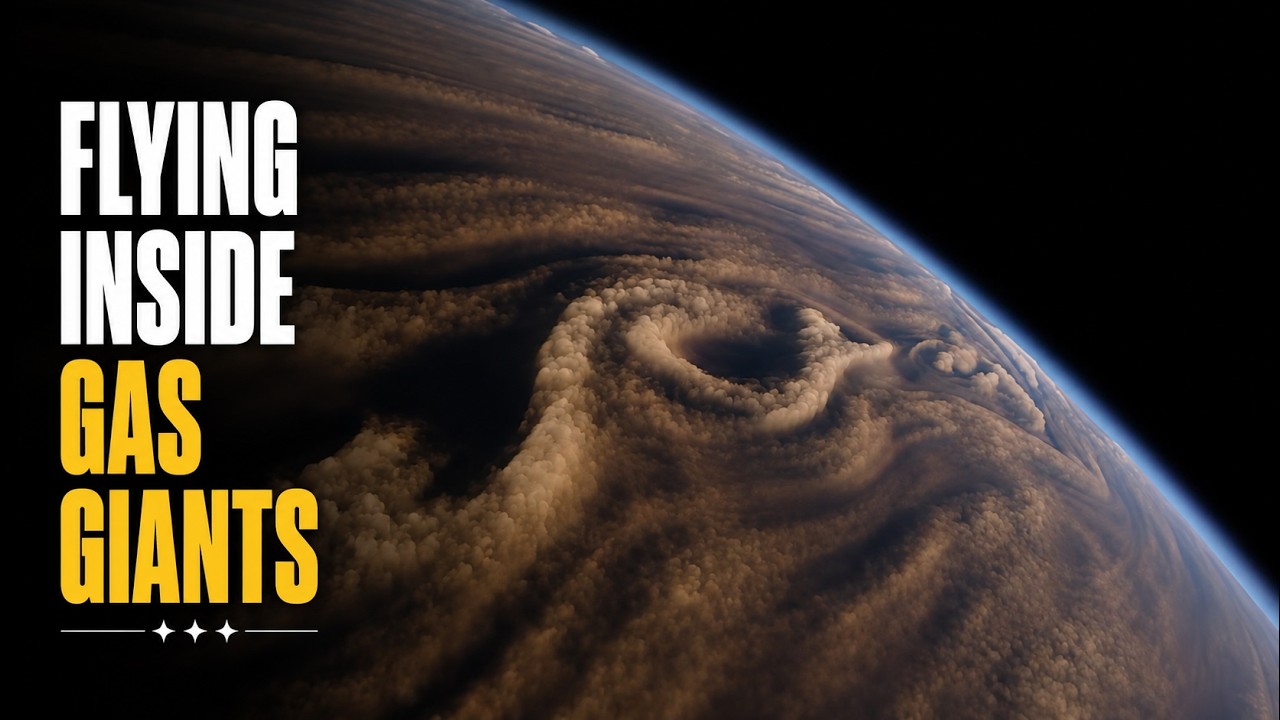
Starship Simulator is an ambitious space game that aims to push the boundaries of planetary and space exploration visuals and gameplay. Unlike many space games that focus on static backgrounds or simple graphics, Starship Simulator offers dynamic, realistic planetary weather systems and cloud effects that are deeply tied to real-world physics. For example, the game models planetary weather using climate cells, with Earth having six due to its rotation speed, while slower-spinning planets like Mars and Venus have fewer. This system not only impacts the planet’s appearance but also affects gameplay elements such as weather behavior and cloud patterns, creating diverse and immersive environments.
A standout feature of the game is its detailed approach to gas giants, where players can refuel by skimming the upper cloud decks to harvest helium and deuterium. This activity is designed to be a core gameplay loop, but unlike similar mechanics in other games, each gas giant is unique due to variations in size, density, and atmospheric conditions based on real physics. Players will face challenges navigating these environments, requiring upgrades like better shielding and sensors to safely explore deeper layers where more valuable resources and scientific data can be found. The atmospheric conditions and weather patterns directly influence the difficulty and methods of fuel harvesting, adding depth and realism to the experience.
Lighting effects in Starship Simulator are also highly advanced, especially in dual-star systems where planets receive illumination from two different stars. This creates unique visual phenomena, such as unusual terminator zones where day and night boundaries behave differently than on single-star planets. The game’s volumetric approach extends beyond clouds to stars themselves, allowing players to theoretically fly into stars, experiencing increasing brightness and three-dimensional sunspots. This level of detail aims to make stellar bodies feel tangible and explorable, turning what is usually distant background scenery into interactive environments.
Beyond planets and stars, the game also features volumetric nebulae and ring systems around planets, complete with shepherd moons that carve gaps in the rings as they orbit. These rings are dynamic and visually detailed, with wave effects along the edges of the gaps, enhancing the realism and immersion. While the game is still in development and some features like atmospheres and glowing planets are not yet fully polished, the developer is actively working on improvements. The current state includes a Kickstarter-backed development build, with an early access release planned for Q2 2027 and a new public demo expected beforehand.
Overall, Starship Simulator promises a richly detailed and scientifically grounded space exploration experience that encourages players to constantly explore and discover new worlds. Its focus on realistic physics, volumetric visuals, and meaningful gameplay mechanics sets it apart from other space games. The game’s evolving development and upcoming early access phase offer hope for a fresh, engaging space sim that truly makes players want to see what lies beyond the next horizon in the galaxy.