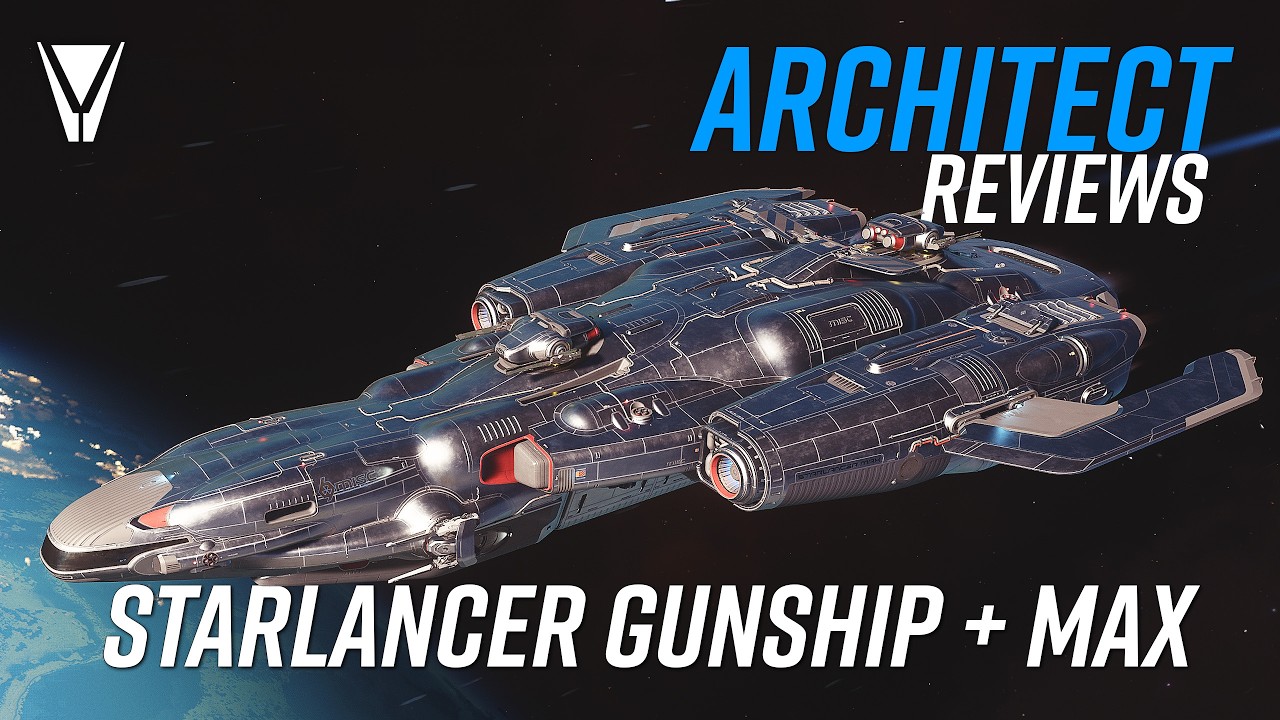
The video provides an in-depth architect review of the Starlancer series of ships in Star Citizen, specifically focusing on the TAC (military) and Max (cargo) variants from MISC. The reviewer draws a nostalgic connection to the Freelancer ship lineage, appreciating the refined design language that the Starlancer continues. While both variants share a similar exterior silhouette and aluminum finish reminiscent of old aircraft, they differ notably in armaments, cargo capacity, and propulsion systems. The TAC is more combat-focused with additional turrets and maneuvering thrusters, whereas the Max prioritizes cargo capacity and speed with extra fuel tanks and main thrusters.
The exterior design is praised for its cohesive and industrial yet refined aesthetic, with interesting material choices such as corrugated rubber for heat stress relief and burnished orange-red accents that highlight important features like thrusters. However, the TAC’s lower turrets are criticized for their limited range of motion, which undermines their defensive capabilities, especially on the vulnerable underside of the ship. Both variants feature multiple ingress points including an airlock intended for future docking functionality and a clever drop-down lift for quick access to the cockpit.
Inside, the Max variant emphasizes cargo handling with double drop-down cargo decks and a spacious cargo bay, while the TAC variant replaces this space with military-specific features such as a medbay, troop drop seats, and a hangar bay for a small fighter. The interior design balances exposed mechanicals with refined paneling and incorporates practical elements like windows for situational awareness. However, some interior areas, particularly the habs, are critiqued for poor space utilization, lack of windows, and outdated design elements borrowed from older ships.
The recreation and crew areas differ significantly between variants, with the Max offering a larger, well-appointed recreational space featuring a pool table and skylights to boost crew morale on long journeys. In contrast, the TAC’s crew quarters are more cramped, reflecting its combat focus, though individual storage and weapon lockers are provided. The flight deck is notable for its panoramic wraparound canopy and side-by-side pilot and co-pilot seats, but the placement of multifunction displays is inconvenient, making it difficult to monitor ship systems without diverting attention from flying.
Overall, the reviewer expresses strong appreciation for the Starlancer’s design and utility, highlighting the Max’s speed and cargo efficiency alongside the TAC’s robust ground support capabilities and troop deployment features. Despite some criticisms—such as turret limitations, interior lighting, and bridge ergonomics—both ships offer valuable roles depending on player preferences. The reviewer invites viewers to share their thoughts on the ships and looks forward to the upcoming build variant, which promises additional gameplay functions related to crafting and base building.