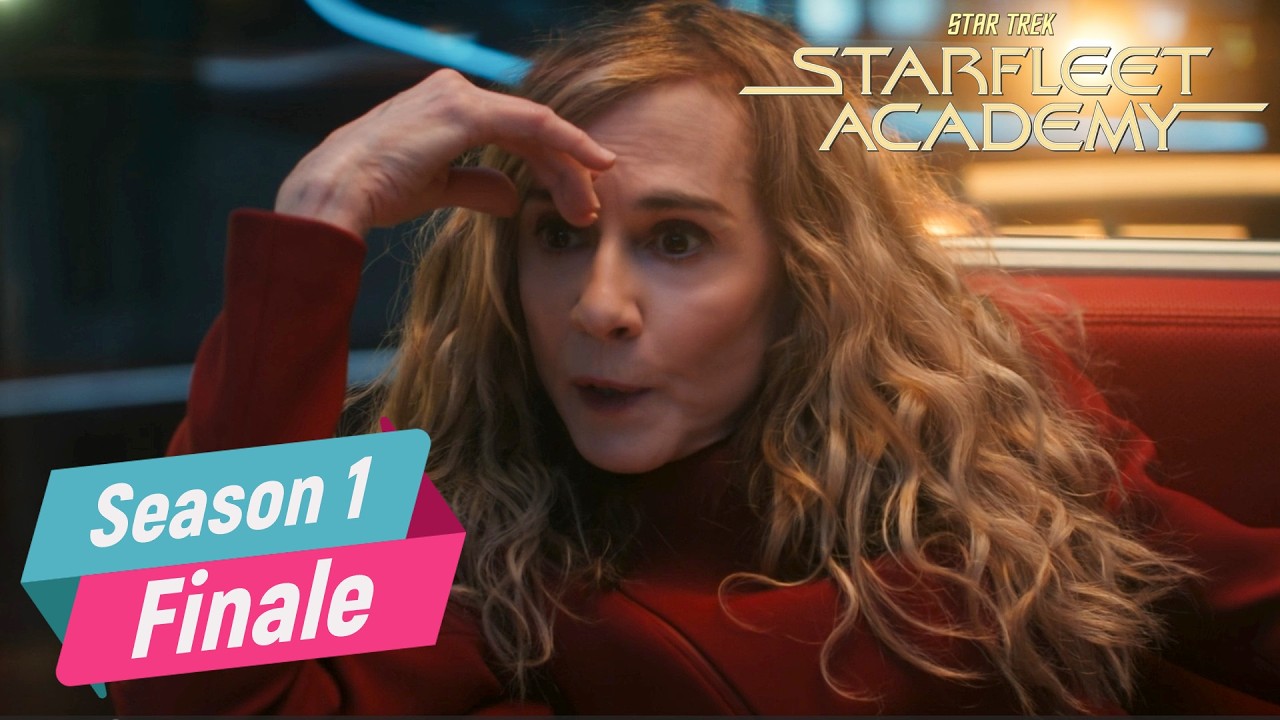
The season finale of Starfleet Academy, Episode 10, is met with intense frustration and disappointment by the reviewer. After ten weeks of following the series, the reviewer expresses deep dissatisfaction with the show’s writing, character development, and plot logic. The episode picks up with a convoluted storyline involving Caleb’s mother, who has undergone a strange transformation and is involved in a chaotic conflict where the entire Federation border is mined with deadly devices capable of killing billions. The reviewer criticizes the implausibility of the plot and the inconsistent character motivations, especially the sudden rise of a criminal mastermind who now controls a massive threat to Federation space.
The reviewer lambasts the characters, particularly the cadets, for their lack of competence, maturity, and likability. The supposed Starfleet Academy trainees fail to demonstrate any meaningful skills or leadership qualities, instead engaging in trivial or nonsensical activities. The chain of command is portrayed as non-existent, and the female characters, especially Holly Hunard and another central female character, are depicted as “girl boss” stereotypes with no real merit or justification for their authority. The reviewer is particularly scathing about the show’s political and ideological undertones, accusing it of prioritizing identity politics and woke messaging over coherent storytelling and character development.
A major point of contention is the episode’s handling of science fiction elements and Star Trek lore. The reviewer finds the scientific explanations and technological aspects laughably inaccurate, such as the use of “space magic” to stabilize the Omega molecule and the nonsensical depiction of warp drives and ship systems. The show’s attempts at drama and tension fall flat due to poor writing and absurd scenarios, including a trial that is a thinly veiled propaganda event and characters broadcasting their personal traumas in a way that feels forced and unearned. The reviewer also criticizes the visual design of the ships and sets, describing them as cheap and uninspired.
The interpersonal dynamics and character arcs are heavily criticized for being shallow, inconsistent, and unengaging. The reviewer highlights the lack of meaningful growth or relatable traits among the main characters, who come across as self-centered and emotionally immature. Relationships and conflicts are portrayed as petty and exaggerated, with no real stakes or emotional payoff. The reviewer is particularly harsh on the portrayal of Caleb and his mother, whose storyline is confusing and contradictory, and on the character Jaden, whose identity and behavior are used more for political signaling than genuine narrative purpose.
In conclusion, the reviewer finds Starfleet Academy Season 1, and particularly its finale, to be a fundamentally flawed and unenjoyable show. It is described as a failure in terms of writing, character development, and respect for the established Star Trek universe. The reviewer expresses hope that if a second season is made, it will be significantly improved but remains skeptical. The overall tone is one of exasperation and disappointment, with a strong recommendation for viewers to avoid the series due to its poor quality and lack of meaningful content.